
Reviewed · ICELAND VOLCANO TOURS
Volcano Movie – Experience the Latest Eruptions in Iceland
Iceland’s volcanoes are not a distant chapter in a textbook. They have closed European airspace, reshaped coastlines, and forced communities to act quickly. This film at the LAVA Centre brings those events together in sharp 4K footage, from the 2010 Eyjafjallajökull eruption to the less widely known Holuhraun eruption of 2014 and 2015. I like the clear historic sweep and the decision to let real eruption sounds carry the story. I also like that the film includes recent Fagradalsfjall eruptions, so the subject feels current rather than frozen in the past.
The lack of a voice-over is both a strength and a possible drawback. You get an intense, uncluttered presentation of fire, ash, smoke, and moving earth, but you will not have a narrator explaining every scene. The free earthquake and volcano information at the entrance helps fill that gap. One practical note: food and drinks are not allowed in the cinema, though the in-house Katla restaurant and shop provide an option before or after the screening.
Key points to know before you go
- See Iceland’s eruption story in 4K: The film uses footage shot in 4K or better, giving you a close look at lava, ash, smoke, and volcanic activity.
- Follow a century of eruptions: The program begins with Katla in 1918 and moves through Hekla, Askja, Surtsey, the Westman Islands, Krafla, and later events.
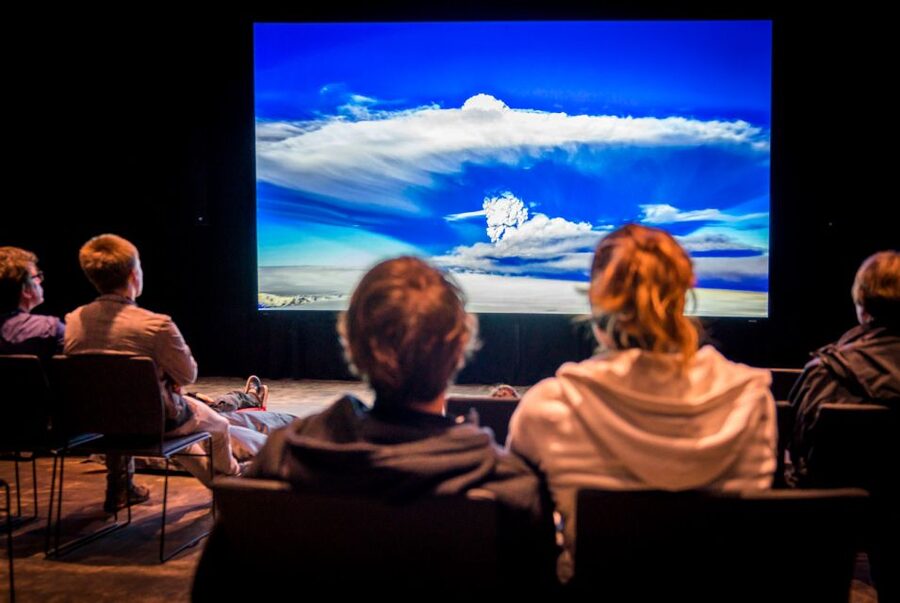
- Understand the 2010 air-traffic shutdown: Eyjafjallajökull receives special attention, along with the earlier Fimmvörðuháls eruption.
- Learn about Holuhraun: The 2014 to 2015 eruption was enormous, even though it received less international attention than Eyjafjallajökull.
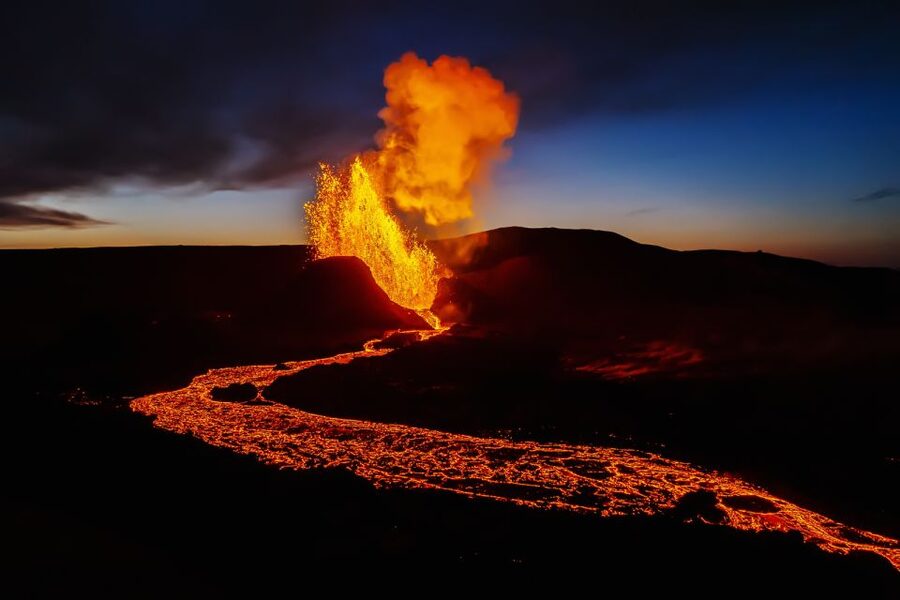
- Watch recent Fagradalsfjall eruptions: The film closes with Iceland’s modern series of eruptions, known locally as Fagradalseldar.
- Pay $16 for a focused stop: The ticket covers cinema admission, while free educational material and the Katla restaurant make it easy to pair with a South Iceland drive.
A century of Icelandic fire in one film
The film opens with a brief history of eruptions in Iceland, beginning with Katla in 1918. That starting point gives you useful context: volcanic activity here is not unusual, and it is not confined to one famous mountain.
From there, the program moves through Hekla in 1947, Askja in 1961, Surtsey in 1963, the Westman Islands in 1973, and Krafla in 1975. These names may sound like a list at first, but they represent very different types of volcanic events. Some affected settled areas. Others changed the coastline or created new land. Together, they show why Icelanders treat earthquakes and volcanic warning signs as part of daily life.
I like this opening because it prevents the film from becoming just a highlight reel of spectacular lava. You see that eruptions can be sudden, remote, prolonged, or deeply disruptive. The broader timeline also helps you understand why the country’s residents have such practical respect for the forces below their feet.
The opening history is likely most useful if you have little background in Icelandic geology. If you already know the main eruption dates, it may feel familiar, but the high-quality moving images remain the reason to watch.
More Iceland Volcano Tours in Vik:
- Ice Cave by Katla Volcano Super Jeep Tour from Vik
★ 4.5 · 1,100 reviews - Lava Centre Interactive Volcano Exhibition
★ 4.5 · 209 reviews - Katla Volcano Ice Cave – Super Jeep Tour from Vik
★ 4.5 · 199 reviews
Why the no-narrator format matters
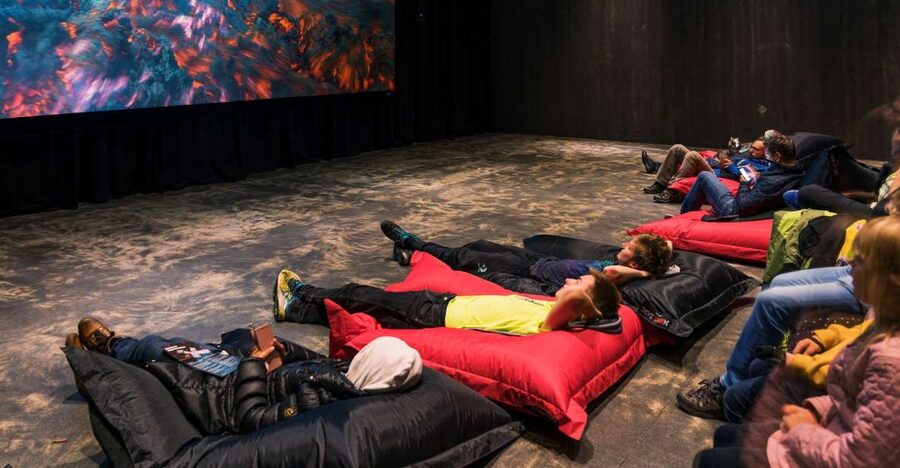
There is no spoken narration. Instead, the film uses video and sound to tell its story. That means the roar of an eruption, the movement of smoke, and the changing surface of lava become the main guide.
I find this approach appealing because it leaves room for you to watch without a constant stream of explanation. Volcanic footage can lose its force when every image is covered by a lecture. Here, the raw sound and clean picture are allowed to do more of the work.
The tradeoff is simple. If you want detailed explanations of geology, evacuation planning, or the science behind each eruption, this film alone may not answer every question. Read the free information about earthquakes and major volcanoes at the entrance, and consider pairing the movie with the wider LAVA Centre experience if you have time.
The English and Icelandic support at the site is useful, but the movie itself does not depend on a spoken language. That makes the presentation easy to follow even when you are not fluent in English or Icelandic.
Fimmvörðuháls and Eyjafjallajökull in 2010
The 2010 sequence is the film’s most familiar chapter for many people. It begins with the Fimmvörðuháls eruption and then moves to Eyjafjallajökull, the eruption that disrupted air traffic across Europe for days.
You may remember the headlines, but the movie helps connect those headlines to the physical event. The point is not just that flights were canceled. It is that ash from an Icelandic eruption traveled far enough, and posed enough risk to aircraft, that a large part of European air traffic had to stop.
This section gives the film a strong human scale. You see an eruption that became a global news story, then consider the people living close to it. Iceland’s eruptions can be visually beautiful, but they can also affect farms, roads, air travel, and public safety.
I like that the program includes Fimmvörðuháls rather than treating Eyjafjallajökull as a single isolated event. It shows how one eruption sequence can develop and change. For anyone planning to visit South Iceland, this section adds meaning to the region’s volcanoes and glaciers.
Do not expect a technical lecture on aviation or ash chemistry. The film’s focus is visual and atmospheric. It gives you a stronger sense of scale and consequence, not a detailed scientific course.
The Holuhraun eruption that received less attention
The Holuhraun eruption of 2014 and 2015 is one of the most useful parts of the program because it corrects a common imbalance. Eyjafjallajökull became famous around the world, while Holuhraun was massive but far less familiar to international audiences.
The film lets you compare the two events. One became a household news story because of its effect on air traffic. The other was an immense eruption in Iceland that did not produce the same global disruption. That contrast is a good reminder that media attention and physical size are not the same thing.
For you, this section adds substance. You are not simply watching the eruptions most often shown in travel brochures. You are also seeing an event that helps explain the range of volcanic activity across Iceland.
The Holuhraun material is especially helpful if you want to understand the country beyond its famous attractions. Iceland is not just waterfalls, black-sand beaches, and glacier views. It is an active volcanic island where events can continue for months and affect people in very different ways.
Same island, a completely different kind of day:
- Reykjavik: Jokulsarlon Glacier Lagoon Full-Day Guided Trip
★ 4.7 · 3,302 reviews - South Coast Classic: Full-Day Tour from Reykjavik
★ 4.6 · 2,457 reviews - From Vik: Katla Ice Cave and Super Jeep Tour
★ 4.6 · 2,110 reviews - Skaftafell: Ice Cave Tour and Glacier Hike
★ 4.5 · 1,746 reviews
Recent eruptions at Fagradalsfjall
The film ends with the more recent eruptions at Fagradalsfjall, part of the series known as Fagradalseldar. Including these events keeps the program connected to present-day Iceland.
The Fagradalsfjall material is likely to be the most immediately relevant for people who have followed recent Iceland news. It also makes the film feel current. You are not watching only archival footage from the twentieth century. You are seeing a continuing story of an island that remains geologically active.
This final section should appeal to anyone who has visited or plans to visit the Reykjanes area. The film does not promise a live eruption or a field trip to an active site, so keep your expectations in the right place. You are watching recorded footage in a cinema, with no guarantee of what volcanic activity may be occurring outdoors on the day of your visit.
That distinction matters. This is a dependable way to see major eruptions in controlled conditions. It is not a substitute for an outdoor hike, and it does not put you near flowing lava. For many people, that is an advantage.
What the $16 admission gives you
At $16 per person, this is a modest paid stop for a South Iceland sightseeing day. The ticket covers entrance to the cinema only. You are paying for a focused film presentation rather than a guided excursion, transport, meal, or full-day activity.
The value depends on how much you want from your visit to Hvolsvöllur. If you are already driving along the South Coast or visiting the LAVA Centre, the movie adds a clear visual explanation of Iceland’s volcanic past and present. It can also give structure to the rest of your day, especially when rain, wind, or poor visibility makes outdoor sightseeing less pleasant.
You should not book it expecting a long, guide-led program. The stated duration is one day, which refers to the ticket’s validity rather than the exact running time of the film. Check the available starting times before you go so you can fit the screening around your route.
The cinema admission does not include food. However, the Katla in-house restaurant and shop offer a practical place to eat or pick up something before or after the movie. Since food and drinks are not allowed inside, plan your snack stop outside the screening room.
Finding the LAVA Centre in Hvolsvöllur
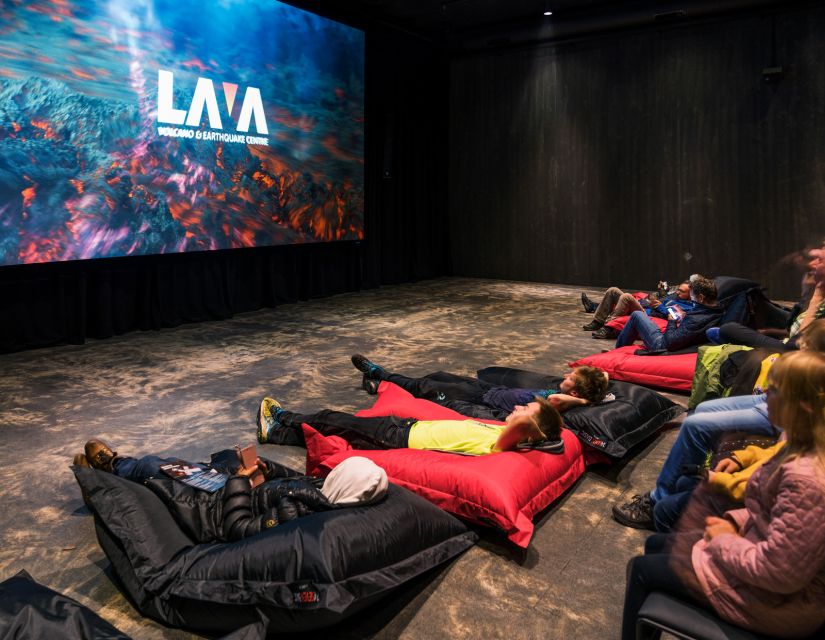
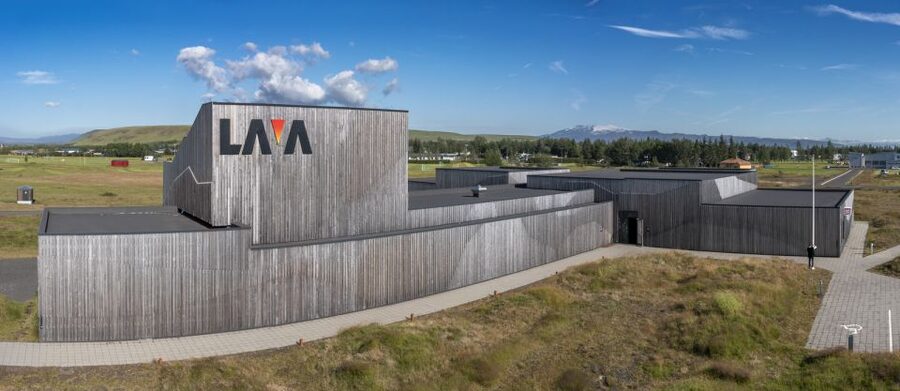
The meeting point is easy to identify: the LAVA Centre at Austurvegur 14 in Hvolsvöllur. It is the first building on the left when you come from Reykjavík or the Golden Circle, and the location is designed to be hard to miss.
That makes this experience particularly convenient for a self-drive itinerary. You do not need to arrange a separate meeting point in a busy town center, and you can combine the film with other South Iceland stops. The information provided does not include transport from Reykjavík, so you should plan to reach Hvolsvöllur independently.
The location also gives the movie a sensible setting. You are not watching a volcano film in an unrelated indoor attraction. The LAVA Centre is devoted to Iceland’s volcanic and earthquake activity, so the free material at the entrance can prepare you for the screening.
If you have limited time, allow enough room to find the building, check the available screening time, and read the entrance information. The film itself is only one part of what makes the stop useful.
Who will get the most from this experience
I would recommend the film to you if you want a clear introduction to Iceland’s eruptions without committing to a long lecture. It suits first-time visitors, families who want a visual explanation, and anyone planning to explore the South Coast by car.
It is also a good choice for people who have already visited Iceland but want more context. Seeing the 2010 eruption, Holuhraun, and Fagradalsfjall together helps you connect places and events that can otherwise seem scattered across the country.
The no-voice-over format may work especially well for viewers who prefer images and natural sound. It is less suitable if you need constant spoken explanation or want to ask a guide questions during the presentation. There is no named guide provided for the film, though English and Icelandic host or greeter support is available at the site.
The experience is wheelchair accessible, which makes it a practical indoor option for a wide range of visitors. It also offers a welcome change of pace after several hours on the road.
Planning your visit without locking in your whole day
You can reserve now and pay later, which helps if your Iceland route may change with weather or road conditions. Free cancellation is available up to 24 hours in advance for a full refund.
The ticket is valid for one day, and you should check the available starting times when booking. Since the film is tied to a specific screening schedule, do not assume you can arrive at any hour and walk straight in.
I would place this stop before or after a South Coast drive, depending on your route. Coming from Reykjavík or the Golden Circle, the building is on your left as you enter Hvolsvöllur. The Katla restaurant and shop make it easy to use the site as a short break rather than a stand-alone destination.
The strongest available assessment describes the experience as short, lively, and interesting. That matches the main appeal: it gives you a compact burst of volcanic power without demanding a full day of your itinerary.
Should you book the Volcano Movie?
Book it if you want to understand why Iceland’s volcanoes matter, not just photograph them. For $16, you get high-quality eruption footage, a useful timeline from 1918 to the present, and a strong section on Eyjafjallajökull, Holuhraun, and Fagradalsfjall.
Skip it if you are looking for an outdoor adventure, a live volcano sighting, or a detailed narrated science lesson. The film is a cinema experience with no voice-over, and the admission does not include a meal or guided tour.
For most self-drive visitors passing through Hvolsvöllur, I think it is a sensible, weatherproof stop. Read the free volcano information at the entrance, grab food at Katla outside the screening, and use the film to give the rest of your South Iceland route more meaning.
FAQ
How much does the Volcano Movie cost?
Admission costs $16 per person.
Where is the Volcano Movie shown?
It is shown at the LAVA Centre, Austurvegur 14, 860 Hvolsvöllur, Iceland. The building is the first one on the left when coming from Reykjavík or the Golden Circle.
How long is the experience valid?
The ticket is valid for one day. You should check availability for the available starting times.
Is the movie narrated?
No. The film has no vocal narrative or voice-over. It uses video and sound to present the eruption story.
What languages are available?
Host or greeter support is available in English and Icelandic. The film itself does not use spoken narration.
Which eruptions are included?
The film covers eruptions including Katla in 1918, Hekla in 1947, Askja in 1961, Surtsey in 1963, the Westman Islands in 1973, Krafla in 1975, Fimmvörðuháls and Eyjafjallajökull in 2010, Grímsvötn in 2011, Holuhraun from 2014 to 2015, and the Fagradalsfjall eruption series.
Is food included?
No. Food is not included, but you can buy food at the Katla in-house restaurant and shop.
Can I bring food or drinks into the cinema?
No. Food and drinks are not allowed inside.
Is the cinema wheelchair accessible?
Yes. The experience is wheelchair accessible.
Just added around Vik
- Vik: Guided Sólheimajökull Glacier Hike★ 4.7 · 233 reviews
- Private Day Trip in Landmannalaugar South Region area on a 4×4 truck★ 5.0 · 7 reviews
- Private Thorsmork Day Hike by Super Jeep★ 5.0 · 7 reviews
- Thorsmork by Super Jeep with Optional Hike★ 5.0 · 74 reviews
- Thorsmork Hike Day Tour★ 5.0 · 79 reviews
- Þórsmörk Buggy Adventure Tour in Southern Iceland★ 5.0 · 4 reviews
- Tandem Paragliding Flights from Vik★ 5.0 · 63 reviews
- Ancient Historical Site Tour at the Caves of Hella★ 4.5 · 191 reviews
Iceland Volcano Tours, compared.
Golden Circle with Kerid Volcanic Crater Day Tour from Reykjavik
Read our review →
Golden Circle, Volcano Crater and Blue Lagoon Small-Group Tour
Read our review →
Ice Cave by Katla Volcano Super Jeep Tour from Vik
Read our review →
Volcano Eruption Site and Reykjanes Hiking Tour
Read our review →
Guided Afternoon Hiking Tour to New Volcano Site
Read our review →
Golden Circle and Kerid Volcanic Crater Small-Group Day Tour
Read our review →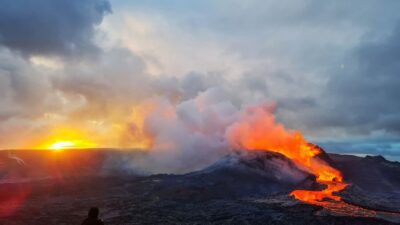
Browse the lists this tour appears in