
Reviewed · GLACIER HIKES
Vik: Guided Glacier Hike on Sólheimajökull
Walking on Sólheimajökull is the kind of Iceland experience that makes a normal hike feel wonderfully strange. You cross a glacier lagoon, strap on crampons, and follow a guide onto ice streaked with volcanic ash and glowing blue in the cracks. I especially like the small-group feel often provided by David the Guide and the chance to see formations you would miss alone. The main catch is that you need proper hiking boots, and the weather can turn a beautiful outing into a cold, wet one.
I also like that this is a non-technical glacier hike, not a mountaineering course. Guides such as Kamila, Elias, O’Neal, Agnes, and Önundur have been praised for clear safety instructions, patience, and good photo stops. Still, group size can vary, the meeting point has caused some confusion, and a slower group may reduce time on the ice.
Key points at a glance
- Sólheimajökull is easy to reach: The meeting point is at the glacier parking lot just off Iceland’s Ring Road, near Vik.
- You get the important gear: A helmet, harness, crampons, and ice ax are supplied, but you must bring hiking boots.
- The route is adventurous but non-technical: You walk over snow and ice with a guide rather than climb vertical walls or use ropes for technical climbing.
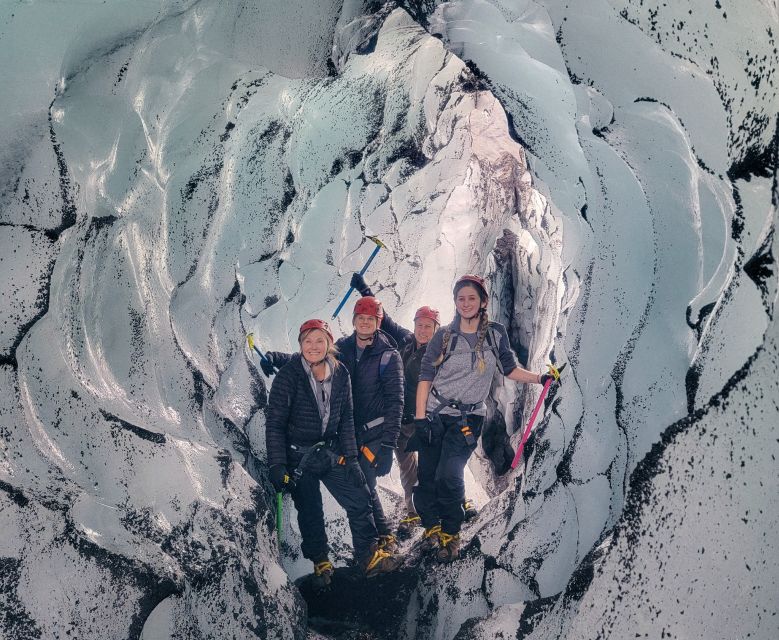
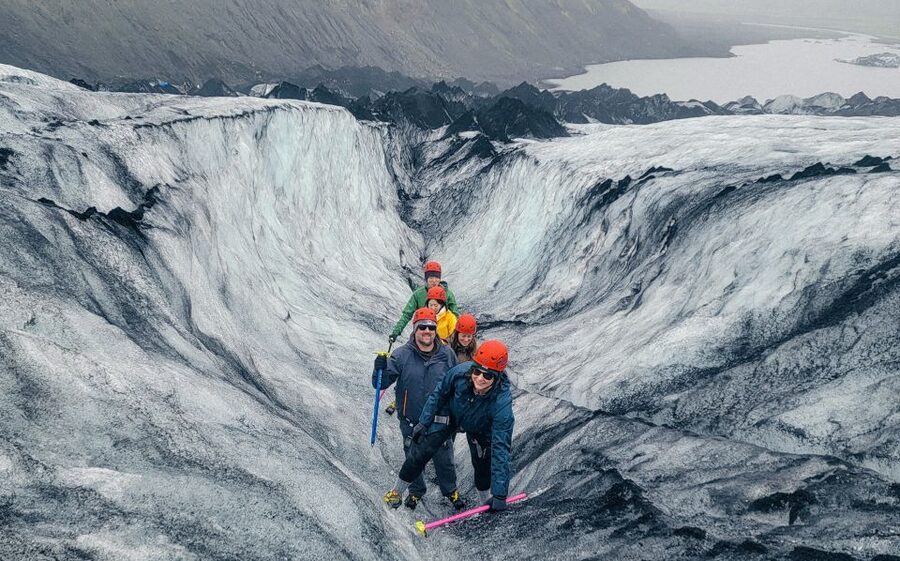
- The ice keeps changing: Look for black volcanic ash, blue ice, icicles, crevasses, ice walls, and possibly small ice caves.
- Guides shape the experience: Kamila, Elias, O’Neal, Agnes, and Önundur have all been singled out for warmth, safety, and good explanations.
- Weather matters: Bring warm, waterproof clothing, and consider spare clothes because rain and wet glacier surfaces are possible.
Why Sólheimajökull makes a fine first glacier hike
Sólheimajökull is an outlet glacier from Mýrdalsjökull, one of Iceland’s large ice caps. That gives you the drama of a major glacier without requiring a long expedition to reach it. From the parking area, the ice is close enough for a three-hour introduction, making this a practical stop on a South Coast day.
The glacier is not a smooth white field. It carries dark ash from past eruptions, and its surface changes with the weather, meltwater, and movement of the ice. You might see bright blue channels, hanging icicles, rough walls, deep cracks, and small ice caves. The exact route depends on current conditions, so you should think of the outing as a guided exploration rather than a fixed sightseeing walk.
That changing route is one reason a guide adds real value. The safest and most interesting path is not always obvious from the parking lot. A trained guide knows how to read the surface, avoid unsafe ice, and adjust the route as conditions change. Several guides have also taken groups away from crowded areas when possible, giving you quieter moments on the glacier.
More Glacier Hikes in Vik
- Skaftafell: Ice Cave Tour and Glacier Hike
★ 4.5 · 1,746 reviews - Sólheimajökull: Guided Glacier Hike
★ 4.7 · 1,123 reviews - Sólheimajökull Glacier Hike – Adventure in a Small Group
★ 5.0 · 799 reviews
From the parking lot to the glacier edge
You meet your guide in the parking lot at Sólheimajökull, about 20 meters from Highway 1. Look for the David the Guide logo on the guide’s clothing or equipment, and arrive at least 20 minutes early. That extra time is not wasted. The guide uses it to explain the route and fit the safety gear.
The meeting instructions deserve attention. One person specifically found the main parking area easier to understand than the wording about a spot just off the highway. Another group had a small miscommunication at the start. I would not treat this as a serious problem, but I would arrive early and ask other guides or staff for help if you cannot immediately find the correct group.
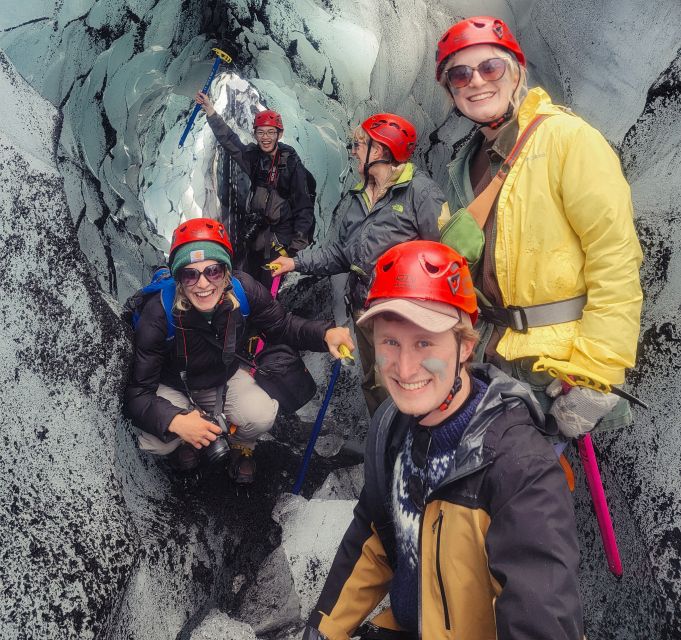
You receive a helmet, harness, crampons, and an ice ax. The guide explains what each item does and how to walk in crampons before setting off. The equipment matters because glacier ice is uneven, slippery, and full of small changes in height. The crampons give your boots grip, while the ax provides balance and helps you feel more secure on the surface.
Your own footwear is the key requirement. Bring sturdy hiking boots that can accept glacier crampons. Athletic sneakers may not fit properly, and the activity provider asks you to contact them in advance if you need to rent boots. One person completed the walk in hiking shoes, but the official advice is still clear: use proper hiking boots.
Crossing the lagoon and stepping onto the ice
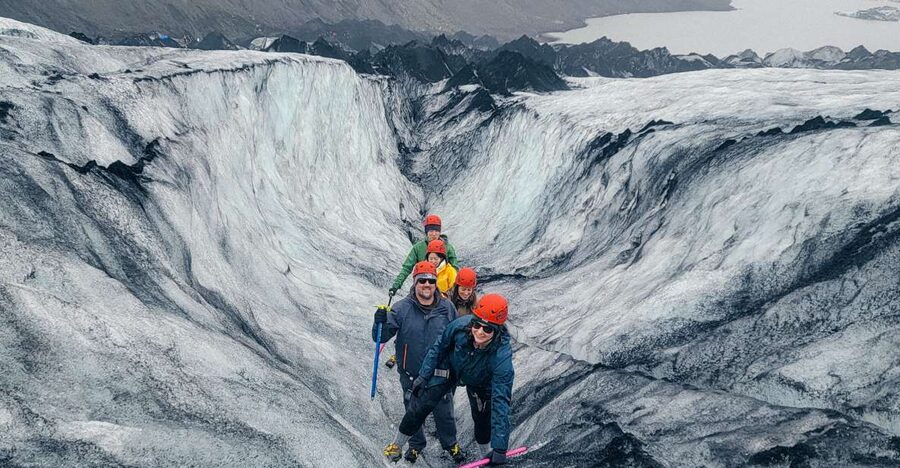
The first part takes you around the murky glacier lagoon toward the snowy edge of Sólheimajökull. This approach gives you a useful sense of scale. You are not simply stepping from a bus onto a photo prop. You are walking toward moving ice, meltwater, and a glacier that reaches down from the larger ice cap.
Once on the glacier, the guide sets the pace. The walk is described as non-technical, but it is still a physical outing. One assessment called it manageable but a workout at times. The surface can be wet, uneven, or tiring, especially when the weather is poor. You should be comfortable walking for several hours in outdoor conditions.
The guides appear to handle mixed ability well. Önundur was praised for helping a participant who had knee pain before the hike, while Agnes encouraged someone who was not used to hiking. Kamila was also praised for adjusting her approach to different needs in the group. That does not make the activity suitable for every ability level, though. It is not recommended for people with mobility impairments, and you should consider your own balance, knees, and stamina before booking.
Children under eight cannot join, and the activity is not suitable for pregnant women. The minimum age rule is useful for families planning a South Coast day, since one nine-year-old was included successfully in a group. The hike remains an outdoor adventure, not a gentle family stroll.
Reading the glacier’s colors and shapes
The best part of the outing is not simply being able to say you walked on ice. It is learning to look at the glacier properly. White snow may be marked with black ash from earlier eruptions, while old or compressed ice can show strong blue tones. Meltwater cuts channels across the surface, and the ice can form walls, arches, and hollows.
Your guide explains how glaciers form, move, and melt, along with the risks facing Iceland’s ice caps. This gives the scenery more meaning. You begin to notice that the glacier is not frozen in place in the ordinary sense. It is a changing mass of ice, shaped by weather and gravity, with meltwater running through and beneath it.
Several guides have made the science approachable with stories and humor. O’Neal was praised for explaining the glacier’s past, present, and possible future while keeping the group relaxed. Kamila has been praised repeatedly for mixing facts about ice formation with stories about Iceland. A few people wanted more precise scientific information about glaciology and climate, so you should expect a strong general introduction rather than a university lecture.
The glacier can also open a window onto Iceland’s volcanic past. The black ash within the ice is a direct reminder that fire and ice are neighbors here. You may be able to see how layers of ash become trapped in snow and later appear as dark bands in the glacier.
Same island, a completely different kind of day:
- Reykjavik: Jokulsarlon Glacier Lagoon Full-Day Guided Trip
★ 4.7 · 3,302 reviews - South Coast Classic: Full-Day Tour from Reykjavik
★ 4.6 · 2,457 reviews - From Vik: Katla Ice Cave and Super Jeep Tour
★ 4.6 · 2,110 reviews - From Vik: Katla Ice Cave and Super Jeep Tour
★ 4.6 · 1,310 reviews
Ice caves, crevasses, and the route that changes
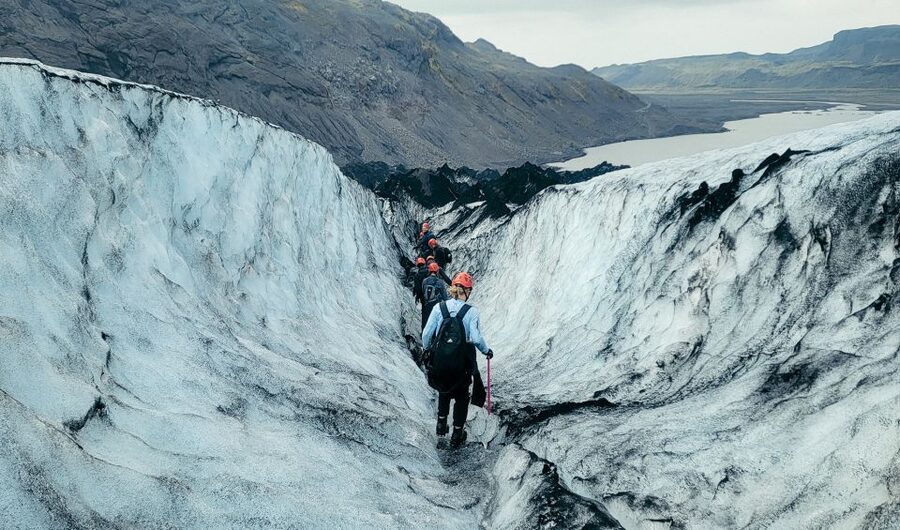
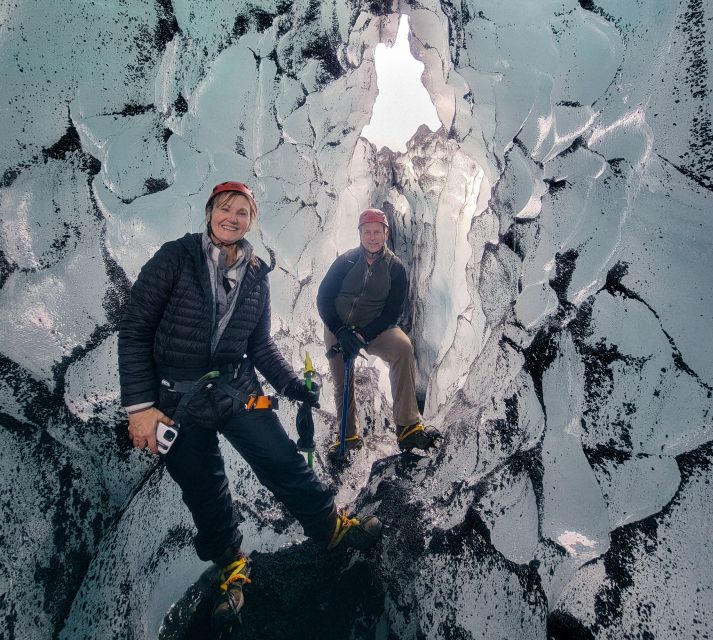
The advertised highlight is a non-technical hike, not a guaranteed ice-cave tour. Still, groups have visited small newly formed caves and underground passages when conditions allowed. One October outing included striking ice caves, while another group saw a small new cave in spring.
That qualification matters. Ice caves and crevasses are not attractions to enter on your own, and their presence changes with temperature and glacier movement. Your guide decides what is safe and what is not. If the route does not include a cave, you should still expect plenty to see in the open ice.
The guide may point out deep crevasses, but you will not be left to wander near them. Safety briefings and controlled routes are central to the trip. The presence of a helmet, harness, crampons, and ice ax should not make you think this is a dangerous stunt. It means the operator takes the setting seriously.
At the same time, do not mistake the word non-technical for effortless. The glacier surface can be rough, and the return walk may feel more demanding than the approach. A steady pace is usually part of the experience. One group found the pace comfortable, while another felt it became slow with 14 people and rain. Group size and weather can affect how much ground you cover.
Glacier water and big South Coast views
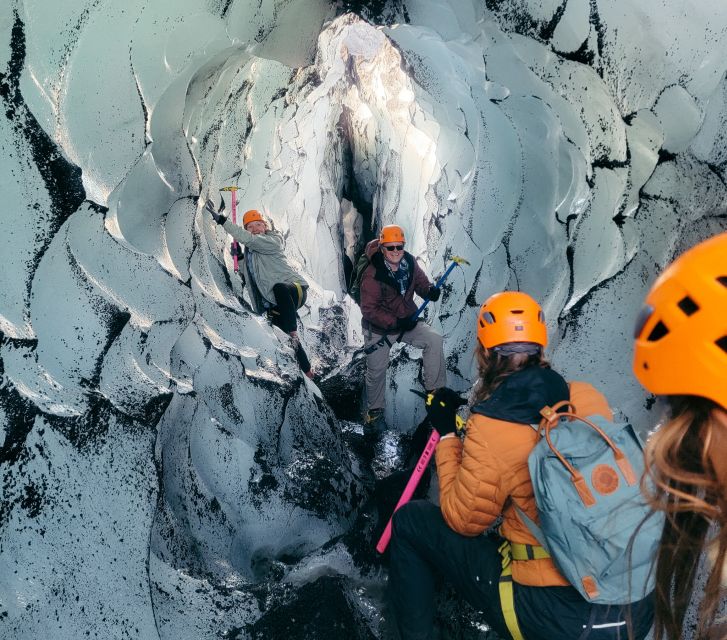
As the ice melts, freshwater streams can run across the glacier. You may be able to refill your water bottle from one of these streams. It is a small moment, but a memorable one: your drinking water comes directly from the ice beneath your feet.
Bring your own bottle because snacks and drinks are not included. You should also eat before the activity if you need steady energy. The three-hour duration includes the equipment briefing, approach, glacier walk, explanations, and return, so it is long enough to feel substantial but short enough to fit into a South Coast itinerary.
As you gain height, the views can open across the surrounding region. In clear weather, you might see mountains, the Westman Islands, the black sands of the South Coast, and lava fields. Do not build your entire decision around a distant panorama, though. Clouds and rain are common possibilities, and the ice itself is the main attraction.
Photo opportunities are frequent. Guides have taken photos for groups at good viewpoints, which is helpful when everyone is wearing gloves and handling an ice ax. You will want waterproof protection for your phone or camera. Rain, meltwater, and wet clothing are all possible, particularly in the shoulder seasons.
What the $120 price really buys you
At $120 per person, this is one of the more expensive short activities you might add to an Iceland trip. The value comes from access and safety rather than transportation. You are paying for a private guide, specialist equipment, route choice, and instruction on a surface you should not explore independently.
The price does not include transport to the glacier, snacks, or drinks. You need to reach the parking lot yourself, usually as part of a South Coast driving plan. That is an advantage if you have a rental car and want to control your schedule. It is less convenient if you are relying on a bus tour, since this activity does not pick you up from Reykjavik or Vik.
I think the cost is reasonable if walking on a real glacier is high on your Iceland list. The experience gives you several hours on the ice, not just a quick viewpoint stop. It is less compelling if you only want to see a glacier from a distance or if you already have a packed day of paid activities.
Small groups improve the value. A group of five allows more questions, better attention, and less waiting while the guide checks equipment. Some departures can be larger, and one group of 14 felt slower in wet conditions. If the booking system shows group details, pay attention to them.
Weather, clothing, and comfort
Iceland can give you clear skies, rain, wind, and cold within a short period. On the glacier, those shifts matter more because you are exposed and often moving across wet ice. Wear warm layers and waterproof outer clothing. Waterproof trousers are particularly useful.
Proper boots are essential, but they are not the whole clothing plan. Bring gloves, a warm hat, and clothing that can handle spray and rain. One person wished for a second set of clothes after getting wet. I would pack spare socks and a dry layer in the car.
The activity provider lists hiking shoes as something to bring, then clarifies that hiking boots are required. Treat the stricter instruction as the one that counts. If your footwear is borderline, contact David the Guide before arriving rather than hoping the crampons will fit.
Weather can also affect the mood and the views. A sunny day may reveal mountains and islands, while rain can make the glacier feel stark and atmospheric. One person joked that poor weather was beyond the guide’s control, which is fair. The guide can manage safety and pace, but not the sky.
How the guides shape the day
The strongest part of this experience is the human side. Guides have included Kamila, Elias, O’Neal, Önundur, Agnes, Agnieszka, Jon, Norbert, Jesse, and Susanna. Names and assignments can change, but the pattern is clear: the guide is not just there to lead a line across the ice.
A good guide checks that everyone is comfortable, gives clear instructions, answers questions, and knows when to slow down. Önundur’s patience with a participant’s sore knee shows the kind of care you want in this setting. Elias has been praised for combining enthusiasm with attention to safety. Kamila has received repeated praise for her energy, stories, and ability to include different fitness levels.
The small family character of David the Guide also suits this type of activity. The company presents itself as a group of local adventurers who enjoy sharing Iceland’s natural features. That personal approach comes through in guides who take photos, find good viewpoints, explain the ice, and make time for questions about Iceland beyond the hike.
You should still be ready for normal variation. One guide may focus more on science, another on stories, and another on keeping the group moving. If exact glaciology is your main interest, ask questions and listen closely, but do not expect every explanation to be equally technical.
Who should book this glacier hike
I would recommend this to you if you want a first glacier experience without technical climbing. It suits active families with children aged eight and up, couples, solo visitors, and anyone building a South Coast route around Vik.
It is especially good for people who value instruction and access over speed. You will learn how to walk in crampons, see ice from close range, and reach formations that you could not safely find alone. The guide also makes the experience less intimidating if you have never used glacier gear.
I would hesitate if you dislike cold, wet weather, uneven ground, or a steady physical outing. It is also a poor choice if you need accessible terrain or cannot comfortably walk in boots for several hours. The activity is not suitable for people with mobility impairments, pregnant women, or children under eight.
The three-hour length is a useful middle ground. You get enough time to feel that you have actually explored the glacier, yet you can still visit other South Coast sights the same day. Just leave room for weather and road conditions in your wider plan.
Should you book Sólheimajökull with David the Guide?
Book it if you want to stand on a genuine Icelandic glacier, learn how the ice works, and have a trained guide choose the safest route. At $120, it is not a casual add-on, but the equipment, personal guidance, and time on the glacier make it a fair splurge for the right person.
Bring serious footwear, waterproof layers, spare socks, and your own water bottle. Arrive early at the parking lot and confirm the meeting spot. If you can accept changing weather and a route that may include an ice cave but cannot promise one, this is a memorable and practical way to experience Sólheimajökull.
FAQ
How long does the Sólheimajökull glacier hike last?
The activity lasts three hours, including the equipment briefing, walk to the glacier, time on the ice, and return.
How much does the glacier hike cost?
The listed price is $120 per person.
Where do I meet the guide?
Meet in the parking lot at Sólheimajökull Glacier, about 20 meters off Ring Road, Highway 1, near Vik. The guide should have the David the Guide logo on their gear.
How early should I arrive?
Arrive at least 20 minutes before the starting time so the guide can explain the tour and the equipment.
What equipment is included?
A private guide, helmet, harness, crampons, and an ice ax are provided.
Do I need hiking boots?
Yes. Hiking boots are required because athletic sneakers may not fit the crampons. Contact the activity provider if you need to arrange boot rental.
Is transportation to the glacier included?
No. You must arrange your own transportation to the meeting point.
Is the tour conducted in English?
Yes. The live guide speaks English.
Can children join the glacier hike?
Children under eight cannot join. The available information also describes a successful outing that included a nine-year-old child.
Can I cancel and receive a refund?
You can cancel up to 24 hours before the activity for a full refund. You can also reserve now and pay later.
More Hiking & Trekking in Vik
- Solheimajokull Glacier 3-Hour Small-Group Hike
★ 5.0 · 501 reviews - Sólheimajökull Glacier Hike – Small Group Blue Ice Adventure
★ 5.0 · 497 reviews - Zipline and Hiking Adventure Tour in Vík
★ 5.0 · 336 reviews - Vik: Guided Sólheimajökull Glacier Hike
★ 4.7 · 233 reviews
Just added around Vik
- Volcano Movie – Experience the Latest Eruptions in Iceland★ 3.6 · 3 reviews
- Vik: Guided Sólheimajökull Glacier Hike★ 4.7 · 233 reviews
- Private Day Trip in Landmannalaugar South Region area on a 4×4 truck★ 5.0 · 7 reviews
- Private Thorsmork Day Hike by Super Jeep★ 5.0 · 7 reviews
- Thorsmork by Super Jeep with Optional Hike★ 5.0 · 74 reviews
- Thorsmork Hike Day Tour★ 5.0 · 79 reviews
- Þórsmörk Buggy Adventure Tour in Southern Iceland★ 5.0 · 4 reviews
- Tandem Paragliding Flights from Vik★ 5.0 · 63 reviews
Glacier Hikes, compared.
Glacier Hike, Waterfalls and Black Sand Beach
Read our review →
Glacier Hike and South Coast Small-Group Tour from Reykjavik
Read our review →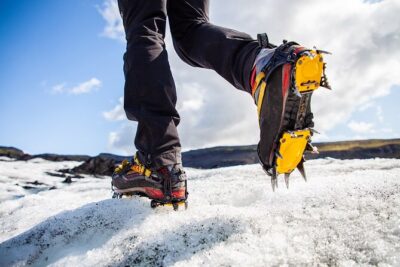
Sólheimajökull Glacier Hike – Adventure in a Small Group
Read our review →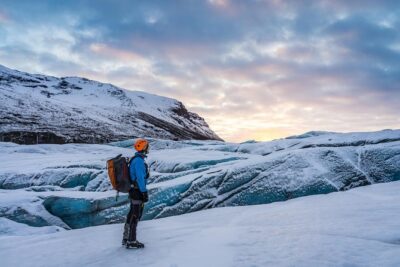
Browse the lists this tour appears in