Reviewed · ICE CAVE TOURS
Jökulsárlón: Vatnajökull Ice Cave Guided Tour
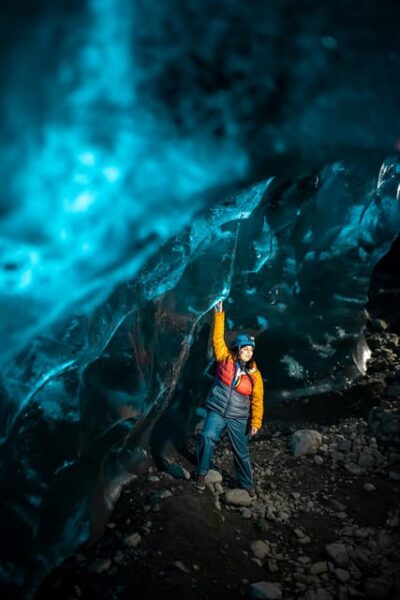
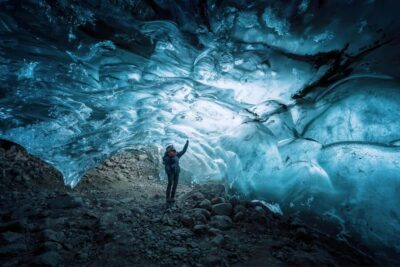
Vatnajökull’s ice caves are temporary rooms of blue ice, shaped by meltwater and winter weather beneath Europe’s largest glacier. Inside, the ice can glow cobalt, turquoise, or clear white, with walls and ceilings that change from year to year. I love the raw, short-lived nature of the caves, and I love that your guide chooses the safest available cave rather than sending every group to one fixed site.
The local guides are a major strength. Guides such as Axel, Fannar, Alex, Johann, and Mr B have been praised for clear safety instructions, glacier stories, and a good sense of humor. The main drawback is the rough ride to the glacier, which can be very bumpy, and a popular cave may feel crowded or rushed on a busy day.
Key points to know before you book
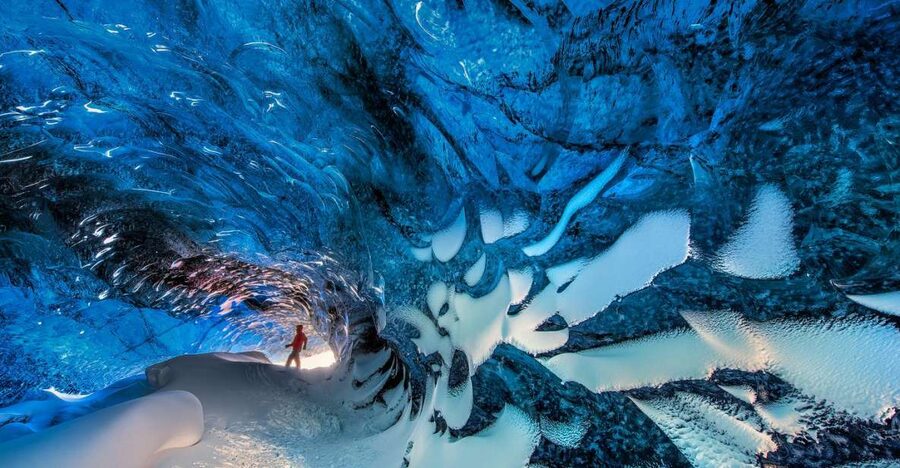
- Blue ice formed over centuries: The cave walls show compressed glacier ice in colors that are often far more striking in person than in photographs.
- The cave changes every year: Guides search for new formations each autumn, so the cave you enter depends on current conditions.
- A short walk leads to the ice: Expect a 5 to 15 minute walk over rugged ground after a 20 to 30 minute Super Jeep ride.
- You get serious scenery without a long trek: Up to 1.5 hours is set aside for the glacier and cave, but the walking itself is limited.
- The ride is rough: The track toward the glacier is famously potholed, and motion sickness medicine may help.
- The tour costs $164: That is fair for a three-hour guided glacier outing with transport, equipment, and safety supervision, though the price feels less attractive if the cave is small or crowded.
Why Vatnajökull’s ice caves are special
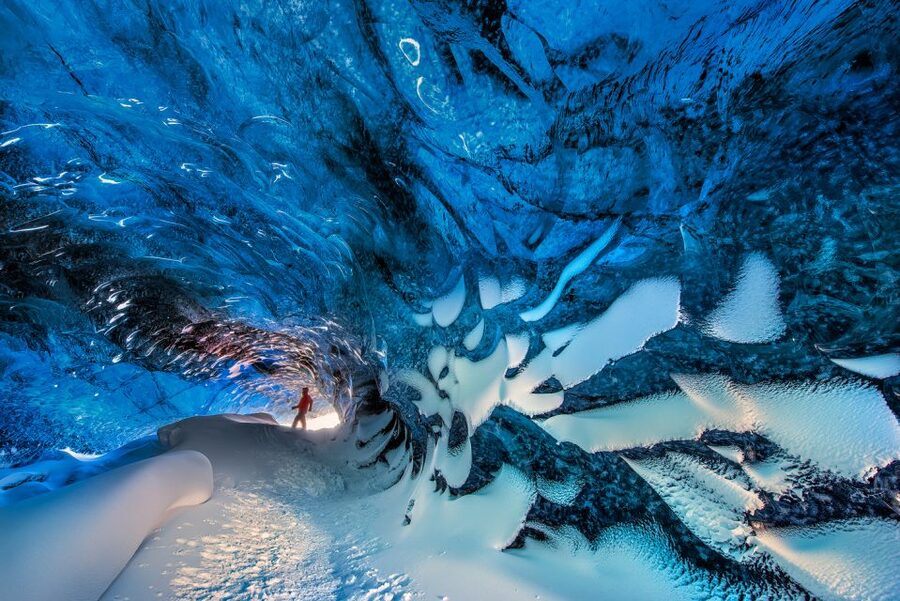
An ice cave is not a permanent attraction with a fixed entrance and painted signs. It is a hollow formed by moving water inside or beneath a glacier, and its shape can shift with freezing, melting, and drainage.
That change is part of the appeal. A cave found one winter may be gone or unsafe the next. Guides look for new caves each autumn and select the best available option on the day of your tour. You should book this experience for the chance to see real glacial ice, not for a guarantee that it will look exactly like a particular photograph.
The blue color comes from dense ice. Over long periods, snow is pressed into glacier ice and much of the air is squeezed out. Light then moves through the ice differently, often bringing out blue tones. Some sections may be intensely blue, while others can be gray, white, muddy, narrow, low, or partly melted.
That last point matters. The experience is strongest in the colder season, but tours can operate at other times when conditions allow. Summer ice caves may contain more mud or meltwater, and the cave may be less dramatic than the famous winter images. Even so, walking through any natural opening in the glacier gives you a close look at ice that has been forming for centuries.
More Glacier Lagoon and Diamond Beach Tours in Vatnajokull
- Jökulsárlón: Crystal Ice Cave Super Jeep Tour
★ 4.1 · 1,681 reviews - Jökulsárlón: Vatnajökull Glacier Guided Hiking Tour
★ 4.7 · 921 reviews - From Jökulsárlón: Vatnajökull Glacier Blue Ice Cave Tour
★ 4.6 · 866 reviews
Meeting at Jökulsárlón Glacier Lagoon
You meet at the café beside Jökulsárlón Glacier Lagoon, about 390 kilometers east of Reykjavík. This is a remote part of South Iceland, so the tour works best as part of a longer journey along the south coast rather than as a quick outing from the capital.
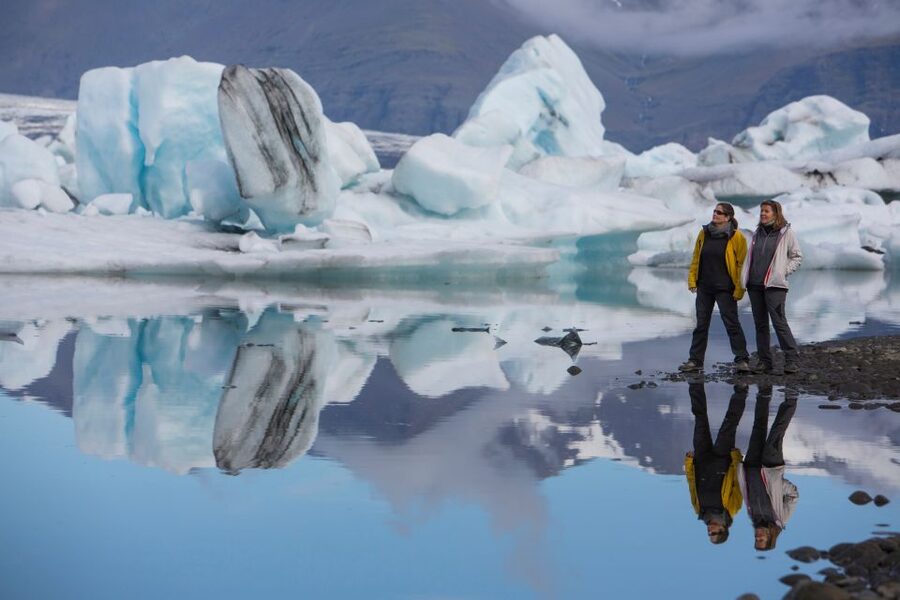
The meeting point is useful because Jökulsárlón itself is one of the area’s major sights. If you arrive early, you can look across the lagoon before the tour, then visit Diamond Beach across the road. Ice from the lagoon often washes onto the black sand there, creating one of Iceland’s most memorable contrasts.
Do not underestimate the driving distance. Some people make the trip from Reykjavík in roughly five hours, depending on stops and road conditions. The journey can be worth it, but adding the ice cave tour to a same-day Reykjavík return would make for a very long day and leaves little room for weather delays.
At the café, look for guides in orange, yellow, or blue jackets marked Guide to Iceland. The staff will check you in and direct you to the correct vehicle and guide. If you are unsure where to go, ask promptly rather than waiting around.
The Super Jeep ride across rough ground
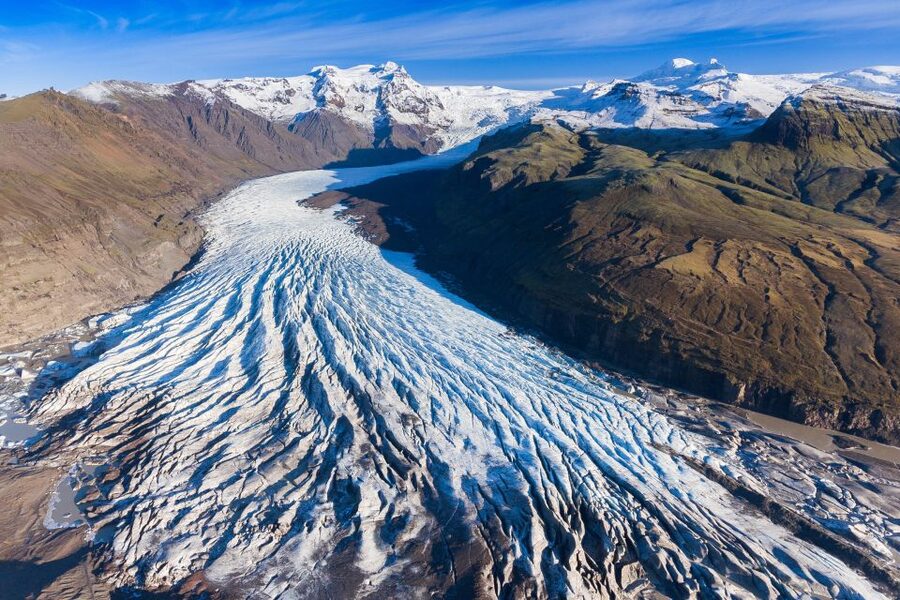
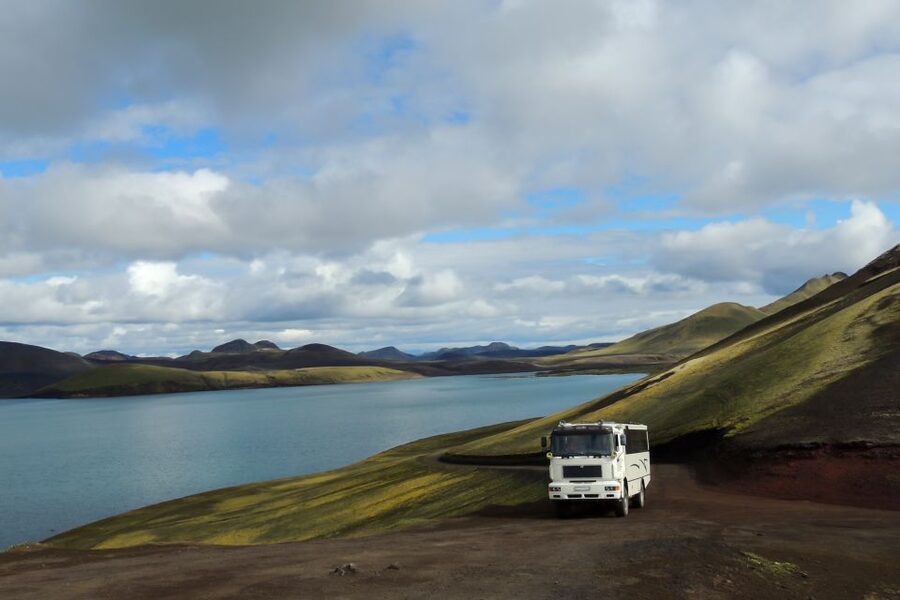
The first major part of the adventure is the 20 to 30 minute ride toward the glacier. The vehicle is a large Super Jeep or SUV built for rough ground, and it takes you along a track that ordinary cars cannot use.
This saves your legs. Without the vehicle, reaching the ice would require a much longer approach over difficult ground. The ride also gives you wide views of Vatnajökull and the surrounding winter scenery before you even reach the cave.
It is not a smooth transfer. The track has deep potholes and uneven sections, and several people have described the drive as a pounding workout for your teeth and kidneys. Another report found the vehicle surprisingly comfortable despite the rough road, so your experience will depend partly on the driver, road conditions, and your tolerance for jolts.
If motion tends to make you sick, take that seriously. One useful tip is to ask for a front seat if available and consider bringing motion sickness medicine such as Dramamine. The ride is not dangerous simply because it is bumpy, but it can be uncomfortable.
Vehicle capacity can also affect the mood. Groups have sometimes numbered around 10 to 13, and one person found four passengers in a vehicle uncomfortable. Ask about seating if space matters to you, especially if you have back problems. Guides have assisted people with mobility concerns, but this remains a rugged outdoor activity, not an easy-access sightseeing ride.
The 5 to 15 minute walk to the cave
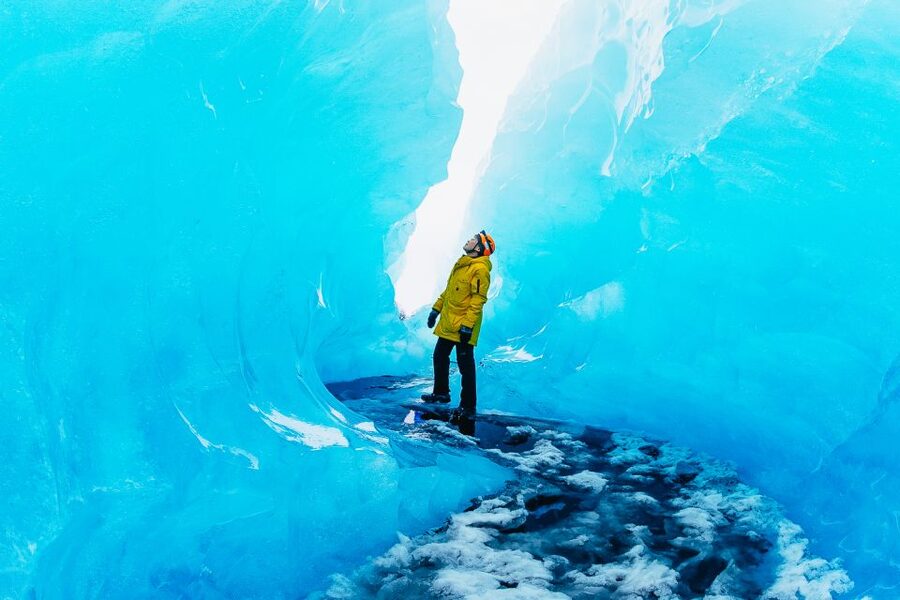
After the vehicle stops, you walk toward the glacier entrance. The walk usually takes about 5 to 15 minutes, but the ground is rugged and conditions can be icy, wet, or uneven.
The distance is short enough for many people who do not want a long glacier trek. Still, you need proper hiking shoes and steady footing. The tour provides safety gear, including crampons and helmets. Crampons are small traction devices that attach to your boots and make walking on hard ice much easier.
Your guide will fit the equipment and explain how to walk safely. Follow those instructions closely. A person unfamiliar with ice may feel nervous at first, but crampons make a noticeable difference when used correctly.
Bring warm layers, rain gear, and shoes that can handle wet ground. The cave is cold even when the weather outside feels manageable. Gloves are especially useful for holding a camera and touching the ice only when the guide says it is safe.
More Ice Cave Tours in Vatnajokull
- Jökulsárlón: The Original Ice Cave Tour on Vatnajökull
★ 4.6 · 846 reviews - Skaftafell: Blue Ice Cave & Glacier Hike on Vatnajökull
★ 4.7 · 643 reviews - From Jökulsárlón: Crystal Blue Ice Cave Super Jeep Tour
★ 4.5 · 540 reviews - Blue Ice Cave Adventure
★ 5.0 · 418 reviews
Inside the cave for up to 1.5 hours
The entrance can be modest. Do not expect a giant tunnel every time. Natural caves vary in height and width, with some sections reported at about three feet tall and others rising above 12 feet.
That variety is part of the experience. You may need to bend or crouch in one section, then walk into a larger chamber where the blue ice opens around you. The cave is shaped by nature, so the route may not be long or uniform.
Inside, your guide explains how the glacier formed and why the cave looks the way it does. Guides such as Fannar, Axel, Johann, Alex, Ragnar, and Bjarni have been praised for mixing glacier facts with stories about Iceland, volcanoes, and local history. English is the tour language, so you will get more from the experience if you can follow spoken English comfortably.
You can expect up to 1.5 hours for the glacier visit and cave exploration, though time inside the actual cave can be closer to an hour. The rest includes walking, safety instructions, and time around the ice. That is normal for a natural cave. You are not spending three full hours underground.
Photography is a big part of the appeal. The ice can show bands, ripples, cracks, and clear blue sections that change with the light. Bring a camera with a charged battery, but also make time to look up from the screen. The cold, the close walls, and the sound of meltwater are difficult to capture in a photograph.
Some guides take photos for the group, which can be helpful when you are wearing gloves and working in tight spaces. Do not count on a formal photo service, but asking politely may get you a few good shots.
Crowds, timing, and changing conditions
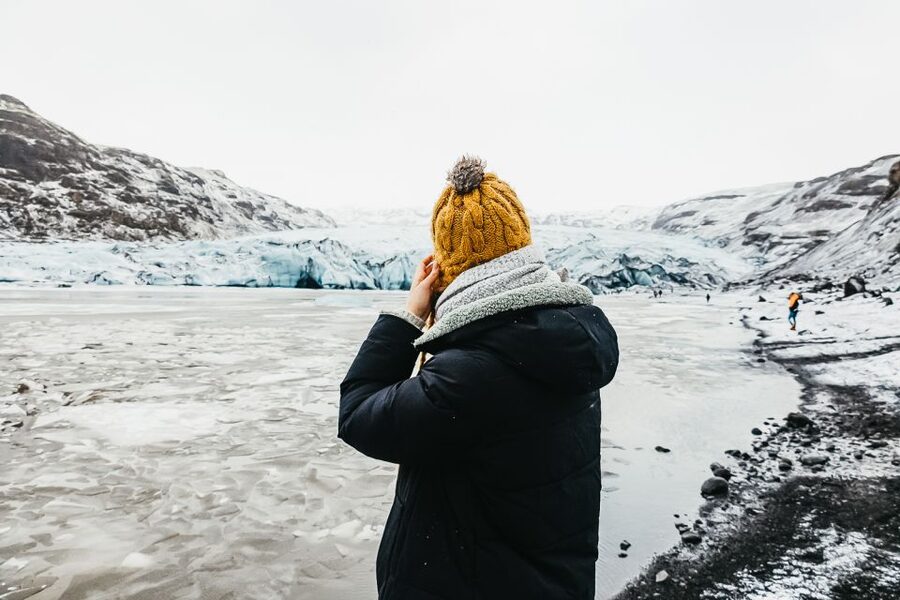
This is a popular activity, and a good-weather day can bring several groups to the same cave. The cave itself may feel busy, particularly at the entrance or in narrow passages.
Groups generally share the space and take turns at the best viewpoints, but the pace can vary. Some people find the visit perfectly relaxed, while others feel it moves too quickly. If photography is your priority, tell your guide early and be ready to take pictures efficiently.
The size and color of the cave are not fixed. One day may offer large blue chambers. Another may bring a smaller cave with less vivid ice. Mud can appear during warmer periods, and melting can change the route.
This is the trade-off for visiting a natural glacier cave. A commercial attraction can promise a predictable room. Vatnajökull cannot. The guide’s job is to find a safe and worthwhile cave, not to recreate an old image.
Safety must come first. Your guide may choose a different cave or adjust the route if conditions change. That can be disappointing if you arrive hoping for a famous crystal-blue chamber, but it is the right call in an unstable environment.
What the $164 price really covers
At $164 per person, this is not a cheap add-on. The price includes the ice cave tour, an English-speaking guide, the Super Jeep ride, and safety gear. You are paying for access to difficult terrain, a specialized vehicle, equipment, and someone trained to judge changing glacier conditions.
I consider the price reasonable if you already plan to visit the Jökulsárlón area and want a close encounter with Vatnajökull. The transport alone adds real value because it carries you over the rough approach and saves you a long walk.
The value is less clear if you expect a huge cave or a private experience. A crowded cave, a short route, or a muddy summer interior may leave you feeling that the price is high. The tour is best understood as a chance to see a changing natural feature, not a guaranteed blue-ice show.
The three-hour length is practical. It leaves time for Jökulsárlón and Diamond Beach, and it fits more easily into a driving day than a full-day glacier trip. Just build in extra time around the tour if you are driving, since road conditions and meeting delays can affect your schedule.
Free cancellation is available up to 24 hours before departure, and you can reserve now and pay later. Starting times vary, so check availability for your date before planning the rest of the day.
Who will enjoy this tour most
I would choose this tour if you want to step inside a real glacier without committing to a long technical hike. The walk is short, the ride does the hard approach, and the guide provides the equipment and instructions.
It suits adults, older children aged eight and above, photographers, and anyone fascinated by geology or changing natural features. It is also a strong choice for a special Iceland trip, since the experience feels different from waterfalls, beaches, and scenic drives.
It may not suit children under eight, people who struggle with cold or uneven ground, or anyone who gets badly motion sick. Back problems are another consideration because of the rough vehicle ride. If you have limited mobility, ask the operator what level of walking and vehicle access is suitable before booking.
You should also have realistic expectations about the word ice cave. It might mean a low passage, a small blue chamber, or a larger tunnel system. The cave is not guaranteed to be large, bright blue, or free of mud.
Practical advice for a better visit
Wear several warm layers instead of one bulky coat. You can remove a layer during the vehicle ride, then add it before walking onto the glacier.
Use sturdy hiking shoes. Trainers are a poor choice for icy, wet ground, even with crampons. Bring waterproof outer layers because rain, melting ice, or wet ground can soak ordinary clothing.
Keep your phone or camera protected from moisture and cold. Batteries drain faster in low temperatures, so bring a spare if you have one. A simple lens cloth is useful around meltwater.
Arrive at the café with enough time to find the check-in point. Guides in the marked colored jackets can direct you. If your departure time changes, the operator may offer an earlier slot with notice, so keep some flexibility in your schedule.
The best plan is to pair the tour with Jökulsárlón and Diamond Beach, not squeeze it between a long list of distant sights. The lagoon and beach give you open views and easy walking, while the cave gives you a close, enclosed look at the glacier.
Should you book the Vatnajökull ice cave tour?
Book it if you are already near Jökulsárlón, want a rare glacial experience, and accept that nature controls the final result. The guides, safety equipment, Super Jeep access, and short approach make this a practical way to see Vatnajökull from the inside.
Skip it if you dislike bumpy rides, cold conditions, crowds, or uncertain results. You may also want to wait if your schedule cannot handle a change in departure time or a longer day on the road.
For most people who reach this remote part of Iceland, I think the tour is worth serious consideration. The blue ice is special, the guides add useful context, and even a smaller cave can make the long trip feel worthwhile. Just book for the experience of entering a living glacier, not for a promise that it will look like a postcard.
FAQ
Where does the tour meet?
The meeting point is the café by Jökulsárlón Glacier Lagoon in South Iceland, about 390 kilometers east of Reykjavík.
How long does the tour last?
The total duration is three hours.
How long is the drive to the glacier?
The Super Jeep or SUV ride takes about 20 to 30 minutes each way, depending on conditions.
How far do I walk to the ice cave?
The walk from the vehicle to the cave entrance usually takes about 5 to 15 minutes over rugged terrain.
How much time do I spend inside the cave?
You can have up to 1.5 hours to explore the glacier and ice cave, take photos, and listen to the guide.
Is the tour offered in English?
Yes. The tour includes a live English-speaking guide.
What should I bring?
Bring warm clothing, hiking shoes, and rain gear. The cave is cold, and the approach crosses rugged ground.
Can children join the tour?
Children under eight are not permitted on this activity.
Just added around Vatnajokull
- Vatnajökull: Short Glacier Encounter Walk with 4×4 Transfer★ 4.9 · 201 reviews
- Skaftafell: Half-Day Vatnajökull National Park Glacier Hike★ 4.9 · 83 reviews
- Skaftafell: Glacier Hike & Ice Climbing Adventure★ 5.0 · 28 reviews
- Jökulsárlón Glacier Lagoon, Diamond Beach and secret glaciers (from Djúpivogur)★ 4.0 · 6 reviews
- Airplane flight over glacier lagoons and Iceland’s highest peak★ 5.0 · 3 reviews
- Skaftafell: Blue Ice Cave & Glacier Hike on Vatnajökull★ 4.5 · 114 reviews
- Half-Day Vatnajokull Glacier Small Group Tour from Skaftafell★ 5.0 · 149 reviews
- Skaftafell Ice Caving & Glacier Hike★ 5.0 · 229 reviews
Ice Cave Tours, compared.
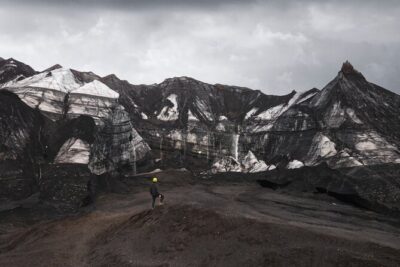
Ice Cave by Katla Volcano Super Jeep Tour from Vik
Read our review →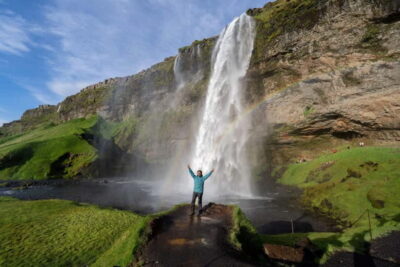
Katla Ice Cave & South Coast Waterfalls Tour
Read our review →