
Reviewed · MUSEUMS
Geothermal Energy Exhibition Entry Ticket
The most interesting part of this visit is seeing Iceland’s geothermal system explained inside one of the world’s largest single-site geothermal power plants. You won’t walk through the working plant, but you can look into its turbine halls and see the machinery from observation areas. I especially like the hands-on displays and the clear explanation of how hot water, steam, and cold water move through the process.
I also like that you can set your own pace and stop for as little as an hour during a South Iceland drive. Free parking makes this an easy roadside break. The main thing to understand before booking is that this is an exhibition, not a guided plant tour, and access to the operating areas is restricted for safety.
Key points at a glance
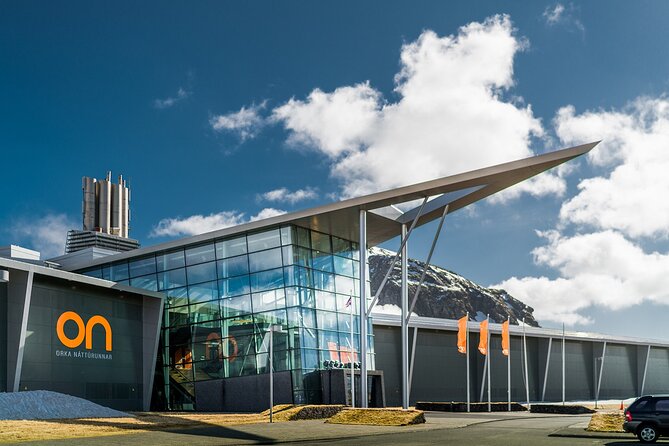
- See geothermal power in action: Look into the high and low pressure turbine halls from the third floor.
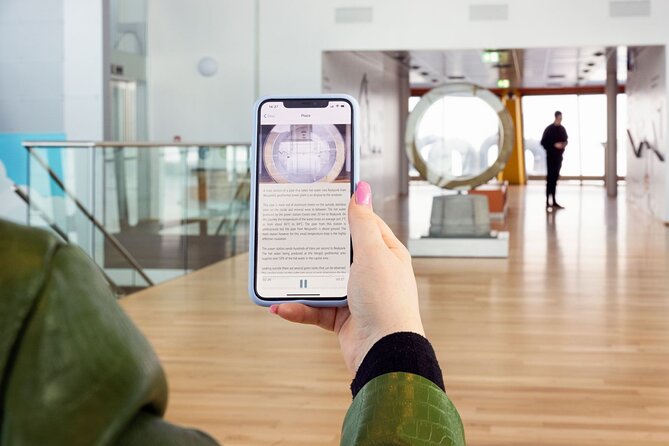
- Use the free audio guide: Download the ON Geothermal Exhibit app or scan the code at the front desk for more detail than the display panels provide.
- Try the water and steam controls: An interactive display shows how cold water, hot water, and steam fit into the power process.
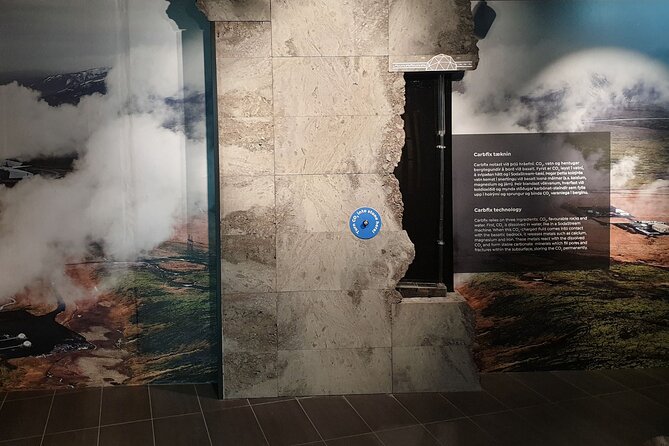
- Learn about carbon sequestration: A multimedia section explains how Iceland can address carbon emissions alongside renewable energy production.
- Plan about one hour: Most people can cover the exhibition in roughly an hour, though you can stay for up to two hours.
- Pair it with nearby stops: Its location makes it practical on a South Iceland round trip, and it is close to MegaZipline.
What the Hellisheiði exhibition actually is
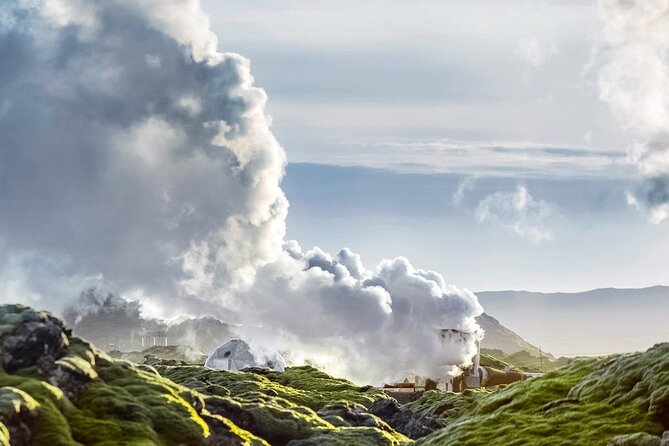
The Geothermal Exhibition sits at the Hellisheiði ON Power plant in the Icelandic countryside. This is a working power facility, but your ticket gives you access to the public exhibition and viewing areas, not the plant floor.
That distinction matters. If you expect a hard-hat walk through pipes, generators, and control rooms, this experience will feel limited. If you want a clear introduction to geothermal energy, with real plant views and interactive media, it makes much more sense.
I find that this kind of stop works well in Iceland because geothermal power is not an abstract idea here. It is part of daily life and a major source of the country’s energy. The exhibition helps connect Iceland’s volcanic setting with the practical work of producing electricity and hot water.
The displays explain the process in plain terms. You see how underground heat is brought up, how steam is used, and how different water temperatures play their part. One interactive station uses cold water, hot water, and steam valves to show the sequence. It is a small feature, but it makes a complicated system easier to grasp.
A few more Iceland trips to weigh up
- Reykjavik: Perlan Museum Wonders of Iceland Entrance Ticket
★ 4.7 · 2,575 reviews - Reykjavík: Hop-On Hop-Off Bus and Perlan Museum Entry Ticket
★ 4.3 · 719 reviews - Reykjavik: Whales of Iceland Museum Entrance Ticket
★ 4.4 · 493 reviews
Following the self-guided route
There is no scheduled guide leading a group from room to room. You arrive, receive admission, and explore independently. Staff are available at the front desk to answer questions, but the main visit is self-guided.
For the fullest experience, download the ON Geothermal Exhibit app or use the code at the front desk to access the audio guide. The audio adds detail that you will not get from the display boards alone. Bring a phone or another internet-connected device that can download the guide. Headphones are useful if you want to listen without disturbing others, but the key requirement is a device, not simply a set of headphones.
This setup gives you freedom. You can move quickly through familiar material, spend extra time at the science displays, or pause to watch the educational film. Families can let children explore the interactive parts while adults follow the audio at their own speed.
The quiet, independent format will suit you if you like reading and watching exhibits without a group around you. It may feel less satisfying if you want a guide telling stories, answering questions as you go, or keeping a formal tour moving.
The turbine halls from the third floor
The best connection to the actual power plant comes from the third floor. From there, you can see into both the high pressure and low pressure turbine halls.
You do not enter those halls, and you should not expect to inspect the equipment at close range. Still, seeing the turbines through the viewing areas gives the exhibition some scale and purpose. You are not only looking at diagrams. You are looking toward the machinery used in the power-generation process.
The view also helps explain why safety rules are strict. The working plant is an industrial facility, not a museum floor. Only certified employees who have completed the required training and safety courses can enter the operating areas. Even exhibition staff cannot go inside.
That limitation is easy to miss if you read the experience as a general power plant tour. I would treat the turbine views as an added feature of the exhibition, not as the main promise of the ticket.
Outdoor decks, pipes, and cooling towers
The back decks provide another useful look at the facility. From outside, you can see pipe systems, separation tanks, a steam regulator, cooling towers, and a scrubbing tower.
These views are especially helpful after you have seen the indoor explanations. The equipment outside gives you physical reference points for the process described in the displays. You can begin to match the names and functions with real structures around you.
The decks also open the visit to the surrounding Icelandic countryside. The setting is part of the appeal, particularly if you are driving between South Iceland stops and want a break from the road. Weather will affect how long you want to stay outside, so allow flexibility in your visit.
The outdoor viewing areas do not turn the exhibition into a plant walk. You are observing from designated spots, not moving through the machinery. That is the safe and realistic way to see a working geothermal facility.
Same island, a completely different kind of day:
- Reykjavik: Golden Circle Full-Day Tour with Kerid Crater
★ 4.8 · 24,485 reviews - Reykjavik Food Walk – Local Foodie Adventure in Iceland
★ 5.0 · 18,952 reviews - Iceland: Northern Lights Bus Tour from Reykjavik
★ 4.1 · 11,161 reviews - Reykjavík: South Coast Waterfalls, Black Sand & Glacier Tour
★ 4.8 · 11,030 reviews
Multimedia displays and carbon sequestration
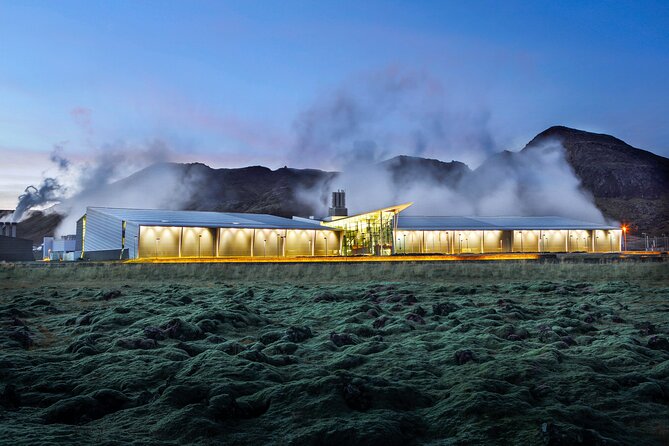
The exhibition uses multimedia rather than relying only on printed panels. Educational films, visual displays, and video art add variety to the visit. The presentation has a modern feel, and the subject is easier to follow when the moving parts are shown rather than described in long blocks of text.
The section on carbon sequestration is one of the more distinctive features. It expands the story beyond electricity and hot water, showing how technology can address carbon emissions. You do not need a science background to follow the basic idea, though people with a strong interest in geology, energy, or natural science will likely spend the most time here.
I appreciate that the exhibition presents geothermal energy as a working system with benefits and technical challenges. It is not simply a display saying renewable energy is good. You get a better sense of the equipment, the flow of water and steam, and the engineering needed to use heat from below the ground.
Children can also get something from the visit. The interactive controls make the subject less abstract, and the displays are designed to explain geothermal technology in accessible language. Younger children may move through quickly, but the stop can work well for families who are already making an educational day of South Iceland.
How long should you allow?
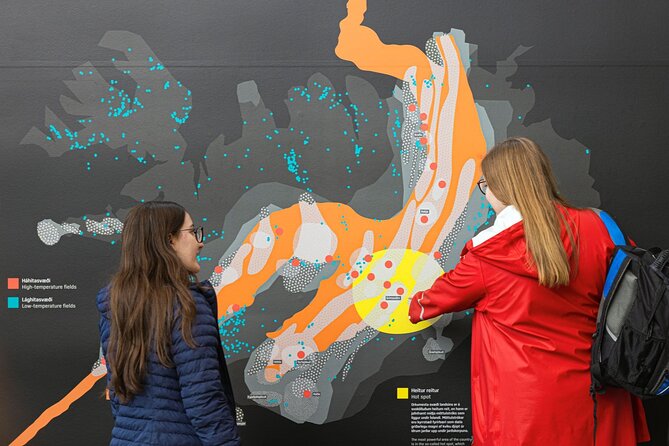
The stated visit time is about one to two hours. In practice, an hour is a sensible target for the main exhibition, the audio guide, the film, the turbine views, and a look at the outdoor decks.
You could finish sooner if you read only the main panels. You could stay longer if you listen to the complete audio guide, ask questions at the desk, and spend time with the multimedia sections.
The flexible timing is useful on a driving itinerary. You do not have to fit into a departure schedule, and you can decide on the day how much attention you want to give the exhibition. Free parking removes another small complication.
I would not make this your only planned activity for a half-day. The exhibition is fairly compact, and its value comes from the quality of the explanation rather than the size of the building. It works better as one thoughtful stop among other South Iceland sights.
Price and practical value at $21.69
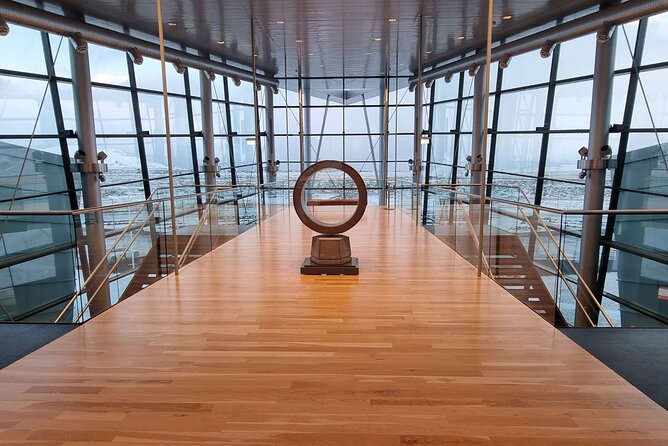
At $21.69 per person, the ticket is reasonably priced if you use the audio guide and take time with the interactive displays. The value is weaker if you simply walk through the rooms, glance at the panels, and leave without looking into the turbine halls or visiting the decks.
The price includes admission to the exhibition and access to the self-guided audio material. You also get free parking, which helps when you are already driving in the area.
For me, the strongest value comes from the clarity of the presentation. You are paying for an educational stop that explains a major part of Iceland’s energy system, not for a long guided excursion. It is a good use of the fee for curious adults, families, students, and anyone who wants more context for Iceland’s volcanic power.
The value drops if your main goal is industrial access. You cannot walk around the working plant, enter the turbine halls, or inspect the equipment from floor level. Read the experience as a science exhibition connected to a power plant, and the price is easier to judge fairly.
Fitting it into a South Iceland day
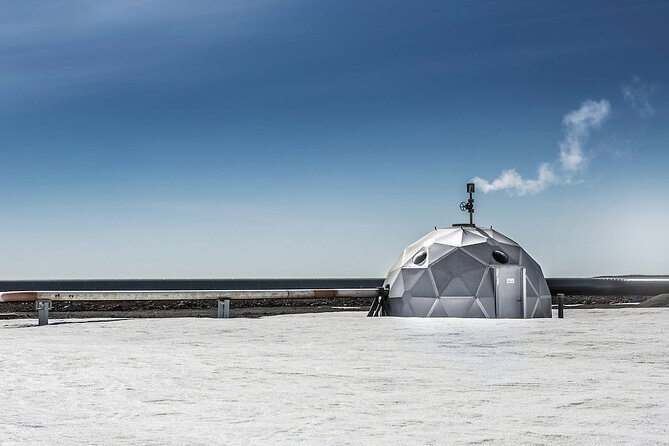
This stop is designed for a self-drive itinerary. Its location makes it a practical break during a South Iceland round trip, especially if you are already passing through the area.
You can pair it with the nearby MegaZipline, which is close enough to make both activities possible in one outing. The exhibition provides a quiet, educational contrast to more active outdoor stops.
I would check the weather before deciding how much time to spend on the decks. The indoor exhibition remains the core of the visit, but the outside views add useful context. Poor weather may make the outdoor portion less comfortable, and the activity has a weather-related cancellation policy.
Because the ticket is mobile, you can keep the admission on your phone. Confirmation is provided at booking. Free cancellation is available up to 24 hours before the start time for a full refund. Changes or cancellations inside 24 hours are not refunded, and the same 24-hour cut-off is based on local time.
Who will enjoy this most?
I would recommend the exhibition to you if you enjoy practical science, engineering, geology, or environmental questions. It is also a good choice for families with children who learn best by pressing buttons, watching demonstrations, and seeing real equipment rather than reading a textbook.
It suits an independent sightseeing style. You can set the pace, choose which explanations to hear, and ask the staff questions when needed. The audio guide is important, so plan to use it rather than relying on the panels alone.
This is less suitable if you want a lively group tour or direct access to an industrial facility. There is no regular guided walk through the plant, and the working areas remain off limits. The exhibition is also small enough that visitors looking for a major attraction may finish earlier than expected.
People with mobility needs should note the stated participation guidance: most people can take part, and service animals are allowed. The supplied information does not give detailed access information for every area, so you should contact the provider if you need a specific accommodation confirmed.
Tips for getting more from the visit
- Bring a charged phone: The audio guide is downloaded to a phone or another suitable device.
- Use the audio guide: It provides more detail than the storyboards alone.
- Ask at the front desk: Staff are on site and can answer questions during your visit.
- Allow one hour minimum: This gives you time for the main displays, film, turbine views, and a short outdoor look.
- Manage expectations: You are visiting an exhibition attached to a power plant, not entering the operating plant.
- Save time for the back decks: The pipes, tanks, cooling towers, steam regulator, and scrubbing tower help connect the indoor lesson to the real facility.
Should you book the Geothermal Energy Exhibition?
Book it if you want a clear, self-paced explanation of how Iceland uses geothermal heat. The interactive water and steam display, multimedia material, carbon sequestration section, turbine-hall views, and outdoor decks give the visit more substance than a basic roadside museum stop.
I would especially choose it for a South Iceland drive when you want an indoor activity that adds meaning to the rest of your trip. At $21.69, it is a fair educational stop when you use the audio guide and stay for about an hour.
Skip it if your only goal is to walk through a working power plant. You will not have that access. The right reason to book is the exhibition itself, supported by real views of Hellisheiði’s machinery and surrounding facility.
FAQ
Where is the Geothermal Energy Exhibition located?
It is at the Hellisheiði ON Power plant in South Iceland, in the Icelandic countryside.
How long does the visit take?
The expected duration is about one to two hours. Some visitors complete the main experience in roughly one hour.
Is this a guided tour of the power plant?
No. The ticket provides a self-guided exhibition visit. Audio guides are available to download, and staff are on site to answer questions.
Can I enter the actual operating power plant?
No. Safety and security rules prevent visitors from entering the working plant. You can view both turbine halls from the third floor and see equipment from the outside decks.
What can I see from the outdoor viewing decks?
The decks provide views of pipe systems, separation tanks, a steam regulator, cooling towers, and a scrubbing tower.
Do I need a phone or other device for the audio guide?
Yes. You can download the ON Geothermal Exhibit app or use the code at the front desk. You need a phone, tablet, or another device that can connect to the internet.
Is parking included?
Yes. Free parking is available at the exhibition.
Can I cancel for a refund?
Yes, if you cancel at least 24 hours before the experience start time, you can receive a full refund. Cancellations or changes made less than 24 hours before the start time are not refunded, and poor weather may lead to a different date or a full refund.
Just added around Iceland
- Akureyri: Whale Watching Shore Excursions★ 4.6 · 250 reviews
- Reykjavik: Whale and Puffin Watching RIB Boat Tour★ 4.6 · 179 reviews
- Akureyri: Whale Watching Tour & Forest Lagoon Entrance★ 3.8 · 4 reviews
- Reykjavik: Whale Watching Express★ 4.3 · 227 reviews
- Reykjavik: Whale Watching & Lava Show★ 5.0 · 4 reviews
- West Glacial River Family Rafting★ 5.0 · 9 reviews
- Reykjavik: Whale & Marine Adventure Tour★ 4.3 · 71 reviews
- From Reykjavík: Viking Horseback Tour in Hafnarfjörður★ 4.9 · 112 reviews
Museums, compared.

Perlan Museum Wonders of Iceland Entrance Ticket
Read our review →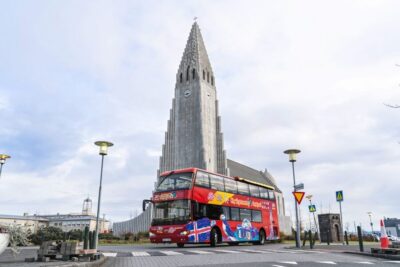
Hop-On Hop-Off Bus and Perlan Museum Entry Ticket
Read our review →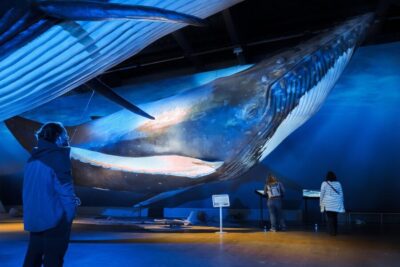


Aurora Reykjavík, The Northern Lights Center Museum Visit
Read our review →
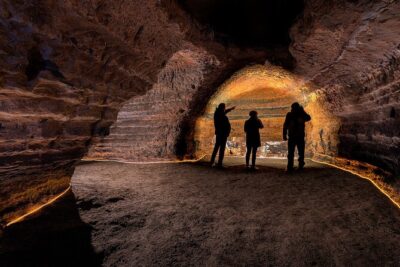
Ancient Historical Site Tour at the Caves of Hella
Read our review →
Browse the lists this tour appears in