
Reviewed · WHALE WATCHING
Reykjavik: Whale and Puffin Watching RIB Boat Tour
The thrill begins as the RIB leaves Reykjavik’s Old Harbour and picks up speed. You skim across Faxaflói Bay toward puffin islands, then range farther out in search of whales, dolphins, and porpoises. The small boat gets close to the water, and the ride itself is part of the fun.
I like the 12-person limit, which gives you a better chance to hear the guide and get a clear view when an animal surfaces. I also like the practical gear: warm overalls, gloves, and goggles are provided, so you can focus on the bay instead of worrying about the Icelandic wind.
The catch is simple: wildlife follows its own schedule. You may see humpback or minke whales, dolphins, puffins, and many seabirds, but no sighting is promised. The RIB can be lively in rough water, and the excursion is not suitable for pregnant women, people with mobility impairments, children under 10, or anyone under 145 centimeters tall.
Key points to know before you book
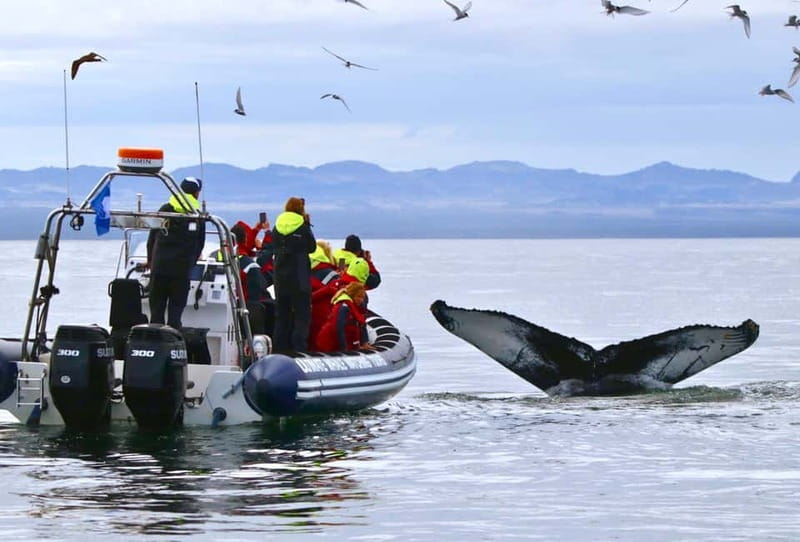
- A fast, small RIB: The boat covers more water than a larger sightseeing vessel and can maneuver close to wildlife without approaching carelessly.
- Puffins are seasonal: The puffin period runs roughly from April 20 through mid-August, with the supplied tour details listing August 15 and August 20 as end dates.
- Marine guides lead the search: Your guide explains animal behavior and helps scan the water. Guides named in past outings include Matt, Kylie, Emily, Max, Marie, and Mike.
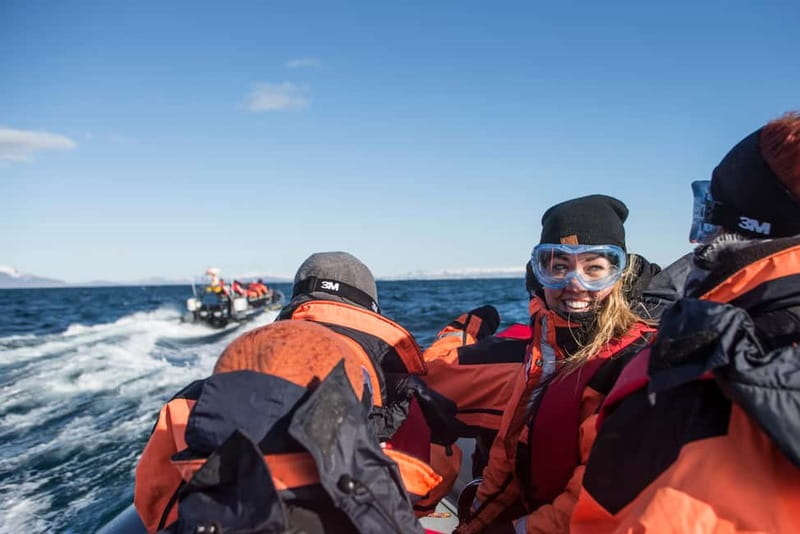
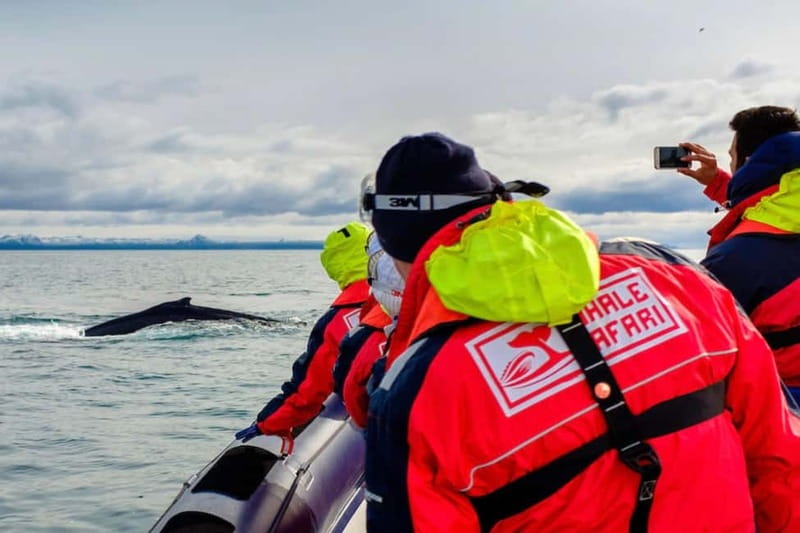
- Warm gear is included: Expect protective overalls, gloves, goggles, and safety equipment, but still bring proper layers and sturdy shoes.
- The city view comes at the end: Harpa Concert Hall, the Sun Voyager sculpture, and Reykjavik’s shoreline look different from the bay.
- Wildlife sightings vary: Some trips see several humpbacks and dozens of dolphins. Another may see one whale and still offer a fine puffin and seabird outing.
Leaving Reykjavik from the Old Harbour
You meet at the ticket office in Reykjavik’s Old Harbour. This is a handy starting point if you are staying in the city center, and the tour returns to the same place after about two hours.
The harbor departure gives the trip a nice sense of place. Instead of being whisked straight to open water, you first pass Reykjavik from the bay. The view takes in the city shoreline, with Harpa Concert Hall and the Sun Voyager sculpture as memorable markers.
The boat carries a small group of no more than 12 people. That matters on a wildlife trip. You are not trying to see over rows of heads, and the guide can speak to the group without shouting across a packed deck. The compact size also helps the captain search a broader part of the bay during the limited two-hour outing.
Before setting off, you receive the required safety instructions and protective clothing. You must sign a waiver. High-heeled shoes are not allowed, and hiking shoes are recommended. Bring weather-ready clothing even though the operator supplies outer protection. The wind at sea can feel much colder than it does on land.
More Puffin Watching Tours in Reykjavik:
- Reykjavik: Puffin Watching Boat Tour
★ 4.6 · 1,052 reviews - Puffin Cruise with Expert Tour Guide from Reykjavik
★ 4.5 · 636 reviews - Reykjavik: 1-Hour Puffin Watching Tour
★ 4.5 · 305 reviews
The RIB ride is part of the attraction
This is not a slow harbor cruise. The specially designed RIB is built for speed and stability, with seating intended to soften the bumps from the waves. Several outings have been praised for comfortable seats, but you should still expect a spirited ride rather than a calm ferry crossing.
The captain uses the boat’s speed and maneuverability to search a wider area. A larger whale-watching vessel may offer more room and indoor shelter, but this RIB can reach likely wildlife areas faster within the two-hour window. Its low position near the water also gives you a close view when a whale, dolphin, or porpoise surfaces nearby.
That low ride has a tradeoff. You feel the movement of the sea more directly, and you need to hold on when the captain accelerates or turns. The operator supplies goggles, and you will be glad to have them when the boat is moving quickly. Some people also find sunglasses useful in bright conditions.
The reviews of the ride are especially strong because the boat provides excitement even on a quieter wildlife day. One outing saw minke whales and dolphins along with puffins. Another had a captain who added a playful burst of speed near the end. The experience is not just a wildlife checklist. It is also a brisk trip across Icelandic water.
Puffin islands and the first wildlife search
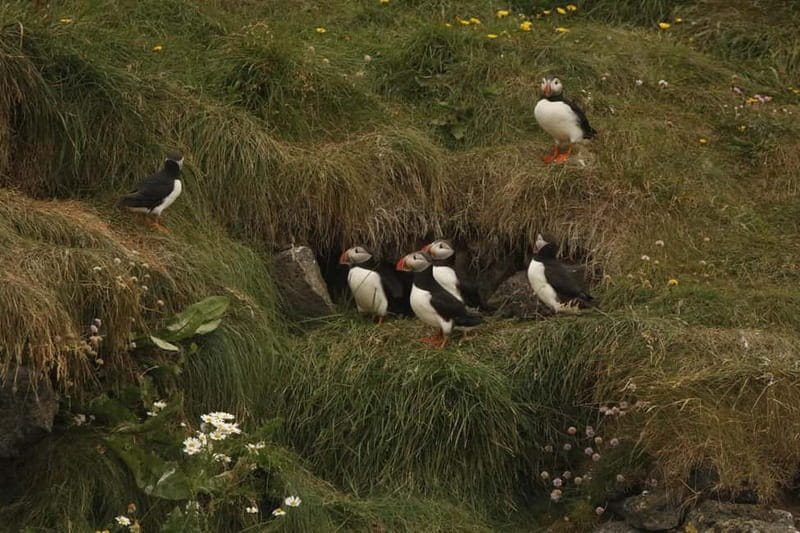
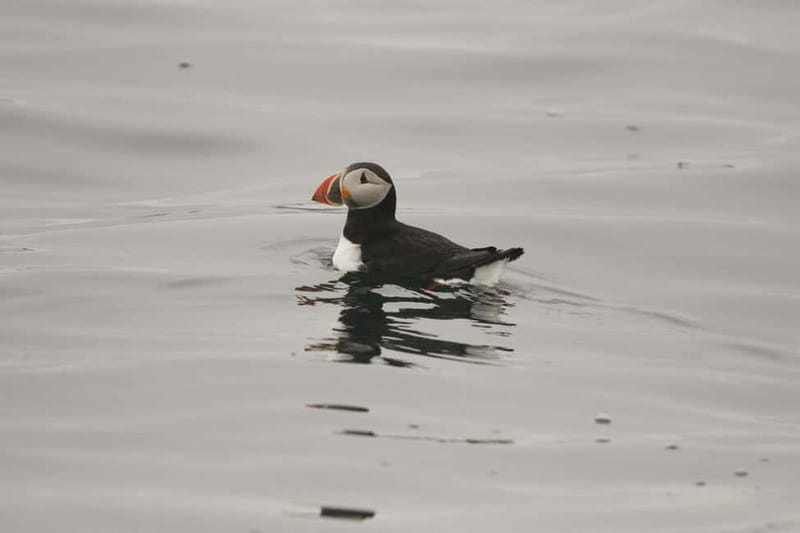
The first major aim is the puffin islands. The timing matters. Puffins are present only during their nesting season, listed for this experience as approximately April 20 to August 15 or August 20. The full operating period runs from April 1 through October 31, so a late-season departure may still offer whales and dolphins but not puffins.
Near the islands, the guide helps you watch for puffins in their natural setting. You may see large numbers of birds gathered around the nesting area, along with other seabirds. The boat allows you to approach the surroundings without turning the visit into a land stop or disturbing the colony.
The puffins are a strong reason to choose this trip if seeing them in the wild is high on your Iceland list. They are small, quick, and easy to miss from a moving boat, so listen to the guide and keep scanning. A good camera with a strong zoom helps, but keep your attention on the water and cliffs rather than spending the whole time behind a screen.
Puffin numbers and behavior can change with the season and conditions. You might see hundreds, or you might get a shorter look. The guide’s value is not only in pointing out birds, but also in explaining what you are seeing and where to look next.
Searching Faxaflói Bay for whales and dolphins
After the island visit, the captain heads farther out in search of larger marine animals. The crew uses its knowledge of the area and current conditions to decide where to look. Your guide may be a marine biologist, as in the case of Max, or another specially trained wildlife guide such as Emily, Matt, Kylie, Mike, or Marie.
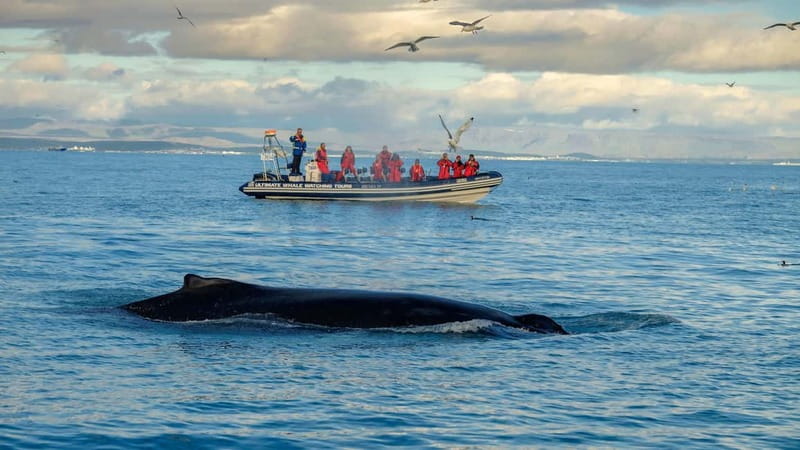
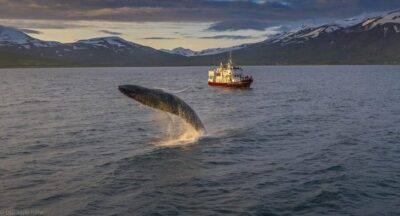
The exact sighting list can vary widely. Trips have produced minke whales, humpback whales, dolphins, porpoises, and large groups of seabirds. Some outings have seen humpbacks close to the boat, including one animal that swam beside the RIB. Another particularly fortunate trip recorded more than 60 whales.
You should treat those excellent sightings as possibilities, not promises. One outing saw only a single whale, but the puffins, white-beaked dolphins, scenery, and guide’s stories still made the trip worthwhile. That is the honest way to view any whale tour. The sea is not a zoo, and even a skilled captain cannot order an animal to appear.
The boat’s size can make a close encounter feel more immediate. You are near the waterline, so a surfacing whale may seem surprisingly close, and you may hear the animal exhale. The crew still has to keep a respectful distance and avoid chasing wildlife. The best moments often come when the captain stops and lets the animals decide how near they want to come.
Keep your eyes moving. Whales may show only a small part of their back before disappearing again. Dolphins and porpoises can be easier to spot when they travel in groups, sometimes racing alongside the boat. The guide’s trained eye gives you a much better chance of seeing movement that you would miss on your own.
A few more Reykjavik trips to weigh up
- Reykjavík: Whale Watching and Marine Life Cruise
★ 4.6 · 9,838 reviews - Reykjavík: Whale Watching Cruise on the Amelia Rose Yacht
★ 4.5 · 2,911 reviews - The Original Classic Whale Watching from Reykjavik
★ 4.5 · 2,626 reviews - Reykjavik: Whale Watching Tour with Expert Guide
★ 4.2 · 2,307 reviews
Why the guide makes a real difference
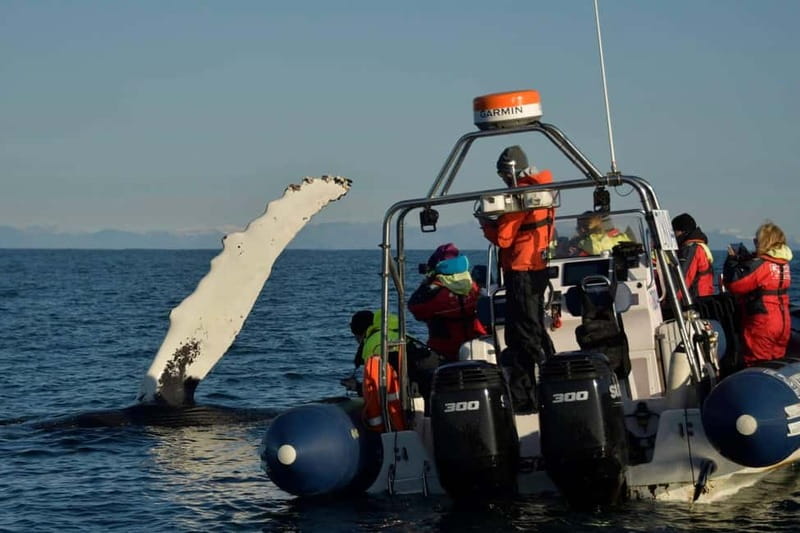
A marine guide changes the tone of the trip. You are not simply driven to a point on the bay and left to stare at open water. The guide explains animal behavior, identifies species, and gives context about the birds and marine life around Reykjavik.
You can also ask questions in a small group. Guides such as Emily and Max have been praised for clear explanations and strong interest in marine biology. The names are not a promise about who will lead your departure, but they give you an idea of the specialist background available on this experience.
The guide also helps manage expectations. If the boat spends time searching without a whale appearing, you can understand why the crew changes direction or slows down. That makes the quiet stretches feel like part of a real wildlife search, not wasted time.
Crew photography is another useful extra. The staff take pictures during the outing when possible and send them afterward, sometimes within a few hours or by the following day. This lets you watch the water instead of trying to handle a camera while the boat is moving. It is not a guarantee of a perfect portrait, but it is a welcome way to preserve the outing.
Returning past Harpa and the Sun Voyager
The return leg brings the focus back to Reykjavik. From the water, Harpa Concert Hall has a different presence than it does from the city streets. Its glass facade catches the light, while the Sun Voyager sculpture gives the shoreline a distinctive human-made landmark.
This final stretch balances the wildlife search with a city view. If the animals are quiet, you still get a useful look at Reykjavik from the bay. If the trip has produced whales, puffins, and dolphins, the shoreline becomes a calm finish after the faster open-water ride.
The excursion ends where it began at the Old Harbour. Since the total time is about two hours, you can fit it into a day that also includes museums, restaurants, or a walk around central Reykjavik. Check the available departure times when booking, since the schedule can affect how easily it fits with the rest of your plans.
What to wear for two hours on the water
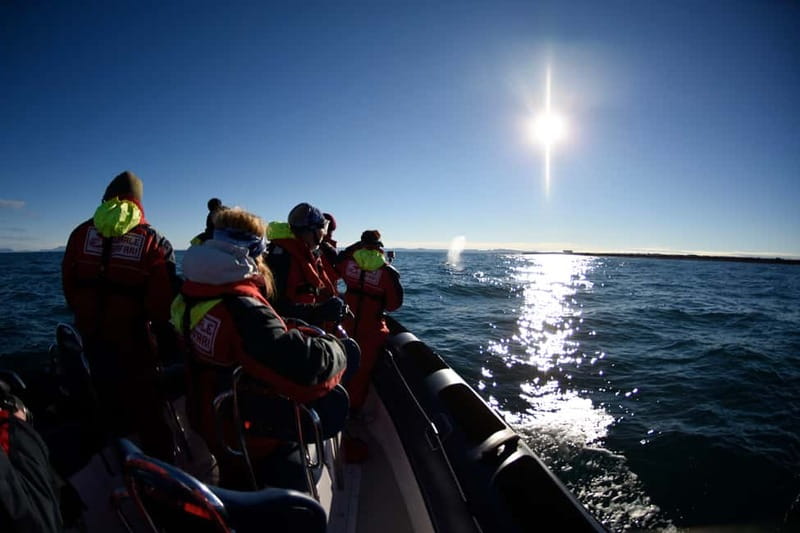
Do not judge the weather from the harbor. Once the RIB is moving, wind chill can be strong even on a pleasant day. Wear warm layers under the supplied overalls, and bring sturdy footwear suited to the harbor and boat access.
The operator provides warm overalls, gloves, and goggles, plus the safety equipment needed for the trip. Several people still found a puffy coat, wool layers, personal gloves, and a hat useful. The supplied clothing is a helpful base, not a reason to arrive in light city clothes.
Bring sunglasses if you have them. Goggles are available, but eye protection matters when the boat is moving quickly. Do not bring high heels. The tour is also a poor match for anyone who needs step-free access or has difficulty staying seated and holding on during a brisk ride.
There are no toilets on the boat, and food is not provided. Use facilities before departure and eat beforehand if you need a meal. Two hours is a manageable length, but the lack of a restroom is worth noting for careful planners.
Price, timing, and who gets good value
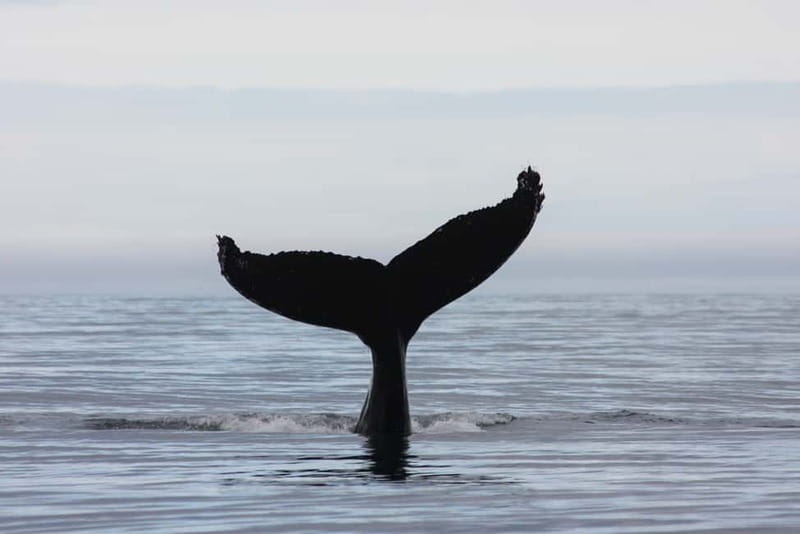
At $191 per person, this is a premium short excursion. You are paying for a small group, a fast RIB, a trained guide, supplied protective gear, and the chance to cover a wide area in two hours. The price makes the most sense if you value the boat ride itself as much as the possibility of seeing wildlife.
A larger whale-watching boat may appeal more if you want indoor space, a steadier ride, or facilities on board. This RIB is the better fit if you want speed, a close-to-the-water view, and a more active outing. You are also paying for personal attention that is harder to provide on a crowded vessel.
The best value comes during puffin season if puffins are a priority. Book between roughly April 20 and mid-August for the best chance of combining puffins with whales and dolphins. Outside that period, the trip still runs during the wider April to October season, but puffins are not part of the expected wildlife mix.
The free-cancellation policy allows you to cancel up to 24 hours before departure for a full refund. You can also reserve now and pay later, which helps if your Iceland plans are still shifting. Weather can force a change, and good communication about rearranged trips is important on a boat activity.
Who should choose this RIB tour?
I would recommend it to an active adult, older child, or teenager who meets the minimum age and height rules and wants a compact, exciting wildlife outing. It suits someone who likes natural history but does not want a long, slow cruise.
It is also a strong pick for photographers who prefer being near the water and want crew images afterward. The small group helps, though a fast boat and moving animals still make photography difficult. Watch first, shoot second.
Families should check the limits carefully. The minimum age is 10, the minimum height is 145 centimeters, and the maximum weight is 140 kilograms. The activity is not suitable for children below those limits, pregnant women, people with mobility impairments, or people over 75.
Anyone prone to seasickness should consider the conditions before booking. Some people found the seating comfortable and the RIB steady, but others describe a thrilling ride over the waves. Calm weather can make a major difference, yet the boat’s speed still means you will feel movement.
Should you book the Reykjavik whale and puffin RIB tour?
Book it if you want a fast, small-group wildlife search with a real chance of seeing puffins, whales, dolphins, and porpoises in two hours. The guide, flexible captain, warm gear, and crew photos add practical value, while the views of Harpa and the Sun Voyager give the outing a clear Reykjavik connection.
Do not book it expecting guaranteed humpbacks or a gentle cruise. Wildlife sightings change from day to day, and the RIB can be cold and lively. For the right person, though, the combination of speed, open water, expert commentary, and seasonal puffins makes the $191 price defensible, especially during the puffin months.
FAQ
Where does the tour start and finish?
You meet at the ticket office in Reykjavik’s Old Harbour. The tour ends back at the same meeting point after approximately two hours.
How long is the whale and puffin tour?
The activity lasts two hours. Starting times depend on availability, so check the schedule when selecting your date.
When is puffin season?
Puffin season is listed as running from April 20 to August 15 or August 20, depending on the tour information. The overall tour season runs from April 1 through October 31.
What animals might I see?
The tour searches for puffins, whales, dolphins, porpoises, and seabirds. Sightings are not guaranteed because the animals are wild.
Is the tour suitable for children?
The minimum age is 10 years, and the minimum height is 145 centimeters. Children under either limit cannot join the activity.
What clothing and equipment are provided?
The operator provides warm overalls, gloves, goggles, and all necessary safety equipment. You should also bring weather-appropriate clothing and hiking shoes.
Are there toilets or food on the boat?
No. Toilets and food are not available on board, so plan to use facilities and eat before departure.
Can I cancel the booking?
You can cancel up to 24 hours in advance for a full refund. The reserve-now, pay-later option lets you hold a place without paying immediately.
Just added around Reykjavik
- Reykjavik: Whale Watching Express★ 4.3 · 227 reviews
- Reykjavik: Whale Watching & Lava Show★ 5.0 · 4 reviews
- Reykjavik: Whale & Marine Adventure Tour★ 4.3 · 71 reviews
- From Reykjavík: Viking Horseback Tour in Hafnarfjörður★ 4.9 · 112 reviews
- Reykjavík: Horse Riding Tours★ 4.9 · 127 reviews
- Luxury Private Transfer from Reykjavik to Keflavik Airport★ 5.0 · 9 reviews
- Day Trip to Snæfellsness Peninsula from Reykjavik★ 5.0 · 7 reviews
- Winter South Coast Day Tour by Minibus from Reykjavik★ 5.0 · 109 reviews
Whale Watching, compared.

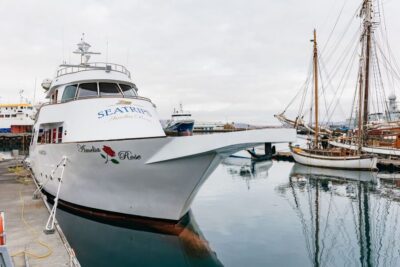
Whale Watching Cruise on the Amelia Rose Yacht
Read our review →
The Original Classic Whale Watching from Reykjavik
Read our review →
Traditional Whale Watching by Local Family Company
Read our review →
Browse the lists this tour appears in