
Reviewed · PUFFIN WATCHING TOURS
Reykjavik: 1-Hour Puffin Watching Tour
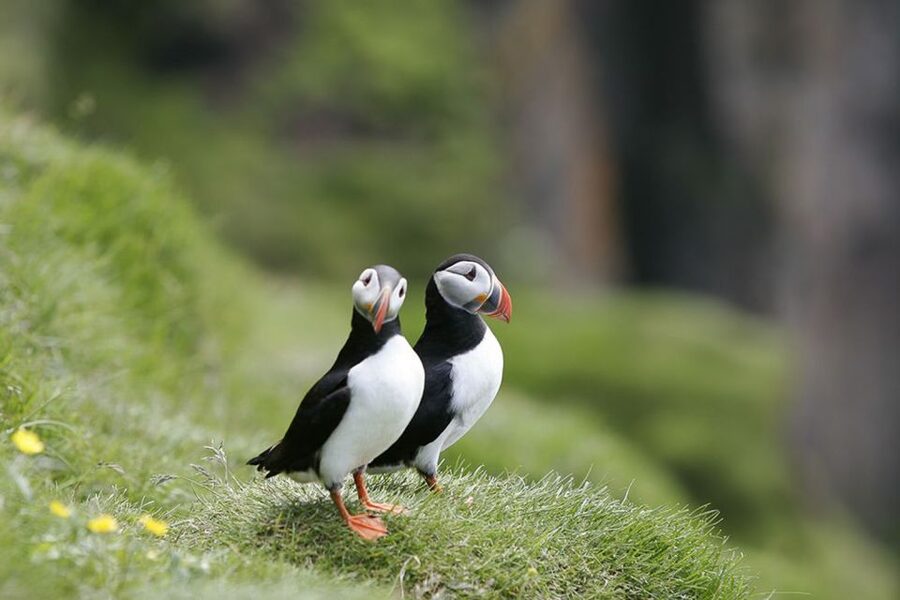
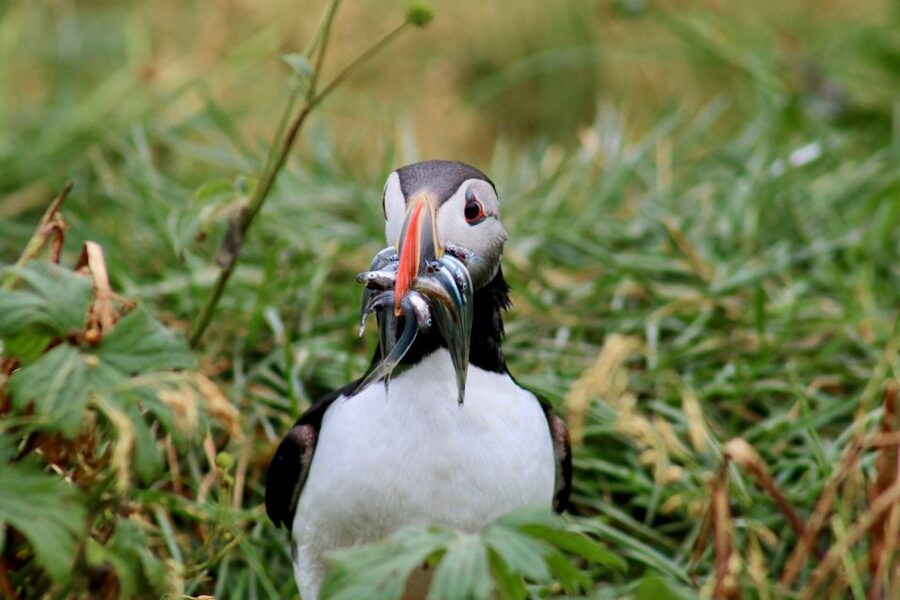
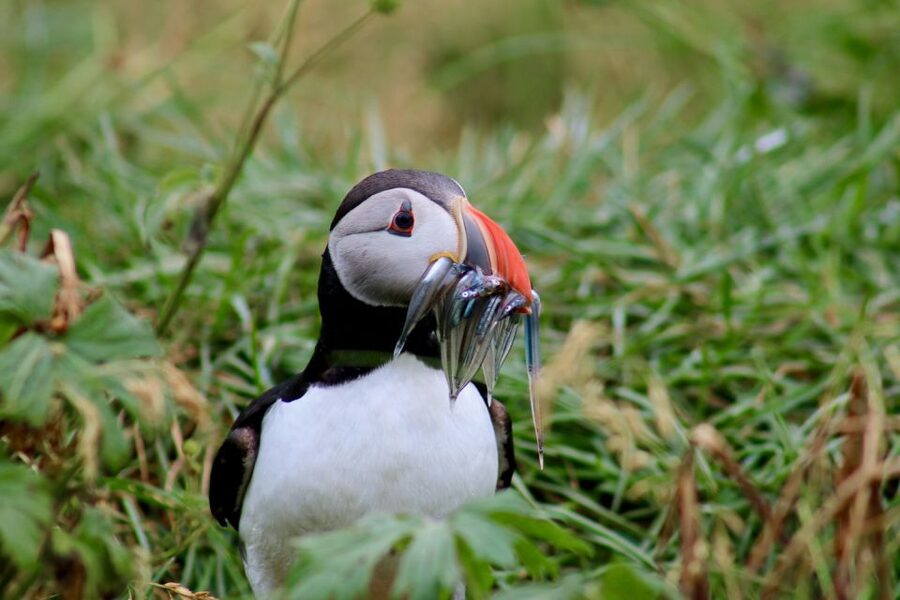
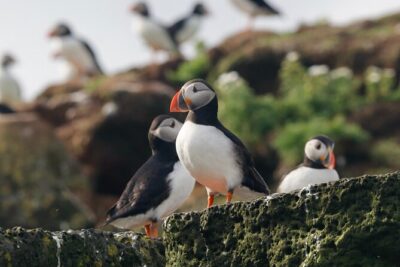
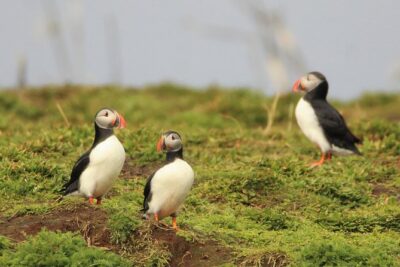
The best part of this Reykjavik puffin cruise is the moment the boat reaches the low, rocky islands and the birds begin to appear everywhere: perched near burrows, bobbing on the water, or cutting across the sky. Puffins are smaller than most first-time watchers expect, but binoculars bring their bright bills and black-and-white plumage into clear view.
I like the free binoculars and the practical cold-weather gear, especially since a sunny harbor can turn chilly fast. I also like the guide-led storytelling. One guide, Frida, explained puffin food, nesting, predators, lifespan, and diving habits in such a personal way that the trip became more than a quick photo stop. The main consideration is distance: you get close to the islands, but not always close enough for sharp naked-eye views or perfect camera shots.
Key points to know before sailing
- Puffin islands change with conditions: The captain may head for Akurey, Engey, or Lundey, depending on tides and weather.
- Viewing time is the heart of the trip: Expect roughly 30 to 40 minutes around the bird island, with the rest spent crossing the bay.
- Binoculars matter: Puffins are small, and the free onboard binoculars can make the difference between a bird and a dark speck.
- The tide affects your distance: A low tide may keep the boat farther from the island, while high tide can allow a closer approach.
- Cold-weather equipment is supplied: Warm overalls, raincoats, blankets, and an indoor area help take the edge off Icelandic weather.
- The price rewards simplicity: At $66 per person, this is not a cheap harbor ride, but it is a useful short wildlife outing without a full-day commitment.
From Ægisgarður harbor to the open bay
You check in at Elding’s ticket office at Ægisgarður 5, beside Reykjavik’s harbor. It is about 300 meters, or a five-minute walk, from the downtown area, so you can fit the trip into a day of museums, cafes, or harbor wandering without arranging a separate transfer.
Arrive with weather-ready clothing, even if the sky looks harmless. The boat has raincoats, warm overalls, blankets, and an indoor space, but Iceland rewards anyone who brings a warm base layer and waterproof outer clothing. High-heeled shoes and large bags are not allowed, which makes sense on a small boat where clear walkways matter.
The harbor itself gives you something to do before departure. At the Whale Watching Centre, you can watch short videos, inspect skeletons, read information boards, or browse the small gift area. This is useful if you arrive early, though you should still allow time to check in without rushing.
The route begins with about 15 minutes by yacht. That crossing is short, but it sets up the experience nicely. You leave the city behind, see Reykjavik from the water, and get a sense of how close the bird islands are to the capital. This is not a long ocean expedition. Its appeal is that you can see wild seabirds without giving up half a day.
More Puffin Watching Tours in Reykjavik:
- Reykjavik: Puffin Watching Boat Tour
★ 4.6 · 1,052 reviews - Puffin Cruise with Expert Tour Guide from Reykjavik
★ 4.5 · 636 reviews - Reykjavik: Puffin Watching Tour
★ 4.8 · 277 reviews
Choosing between Akurey, Engey, and Lundey
The captain chooses the destination according to tides and weather. The possible islands are Akurey, Engey, and Lundey, all known for birdlife. The exact island matters less than the conditions on the day, since the captain is looking for a safe route and a useful viewing position.
The itinerary lists Lundey as the wildlife stop, with about 30 minutes devoted to watching birds, but the wider tour information allows for the other islands as well. You should expect the destination to change rather than treat one island as a guaranteed feature.
The islands are rocky and uninhabited breeding grounds rather than places where you go ashore. That is important. You watch from the boat, keeping the nesting birds free from foot traffic and unnecessary disturbance. The captain knows where to position the vessel along the shore, and in calmer conditions may switch off the engines so you can hear the birds.
This quiet pause is one of the nicest details of the trip. Puffin watching is not only about collecting a close photograph. The calls, wingbeats, and movement around the burrows help you understand the island as a living colony. You might see puffins sitting at the entrance to burrows, returning from the sea, or floating nearby in small groups.
What the puffin sighting is really like
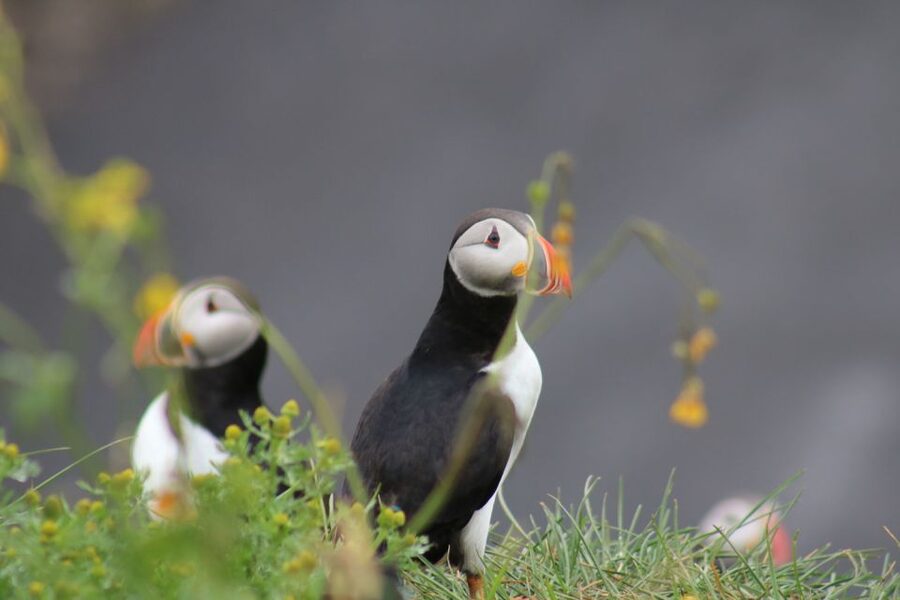
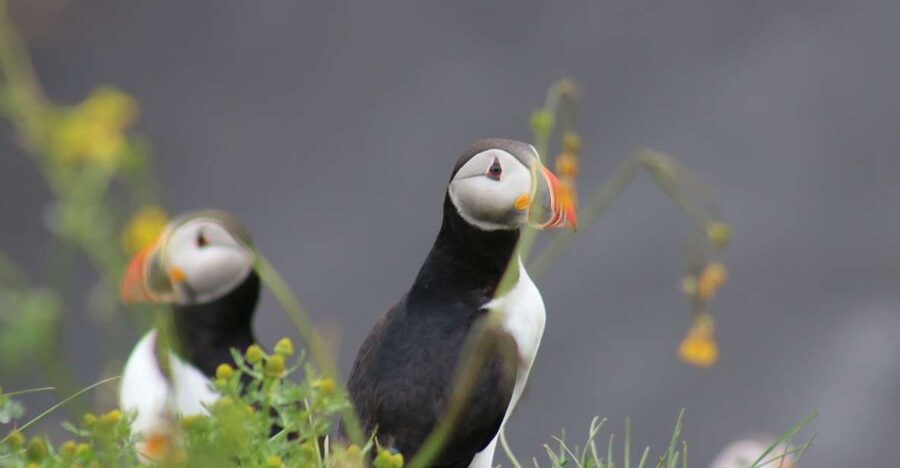
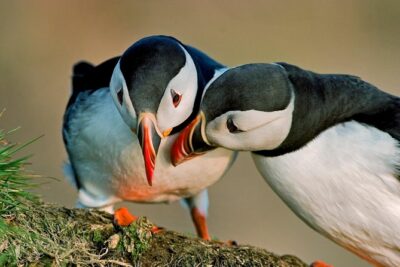
Puffins have an unfair reputation as oversized cartoon birds. In real life, they are compact and surprisingly small. Their bright breeding-season bills make them easy to recognize, but distance, gray weather, and a moving boat can make naked-eye viewing less satisfying than expected.
That is why I would treat the borrowed binoculars as essential equipment, not a minor extra. They let you pick out birds along the rocky shore and follow them in flight. Several people have managed phone photographs by holding a phone to the binocular lens, though that takes patience and a steady hand.
The boat does not necessarily pull right up to the puffins. It must leave room for the birds and account for rocks, tide, and sea conditions. You may see many birds but still feel they are farther away than the phrase up close suggests. If your main goal is a gallery of large, sharp puffin portraits, a dedicated small boat or land-based bird site could suit you better.
For a first look at puffins from Reykjavik, though, the sighting can be very rewarding. The birds tend to remain in the area long enough for you to watch rather than simply glimpse them. In good conditions, you might see puffins on the island, flying low over the water, swimming, and feeding.
Puffin numbers can also vary with the season. Early in the season, some birds are still arriving, so you may see a wider mix of seabirds than puffins. Late in the season, the colony may be less predictable. The supplied experiences include strong sightings in May, June, July, and August, but no wildlife trip can promise a specific count.
The other birds around the colony
Puffins get the attention, but the islands support a full seabird neighborhood. Keep watching after you have found the first puffin. You may see eider ducks, Arctic terns, guillemots, cormorants, fulmars, geese, and oystercatchers.
This variety gives the guide something useful to explain. You can compare flight styles, nesting behavior, and calls instead of spending the entire stop waiting for one colorful bill to appear. On one outing, the captain also steered toward feeding gulls, where dolphins were spotted. That kind of extra sighting is possible, but it is not part of the promised route.
The guides add much of the value here. They explain what you are seeing and share facts about puffin life, including food, eggs, predators, lifespan, and how far the birds travel underwater. Frida was singled out for giving a detailed, warm presentation, while other guides such as Olivia received praise for being helpful and engaging.
You may also find that the guide takes photographs during the trip and later shares them by email or online. This has happened on several outings, but I would not treat personal photos as guaranteed. Bring your own camera, and remember that a good telephoto lens helps more than a standard phone camera when the boat stays a respectful distance away.
A few more Reykjavik trips to weigh up
- 1-Hour Helicopter Tour in Iceland: The Geothermal Tour
★ 4.9 · 263 reviews - 1-Hour Small Group Sightseeing Boat Tour in Vestmannaeyjar
★ 5.0 · 127 reviews - 1 hour Buggy adventure – From Reykjavik
★ 5.0 · 82 reviews - Was James Bond Icelandic? Ticket with One Hour Lecture
★ 5.0 · 39 reviews
Boat comfort, cold weather, and motion
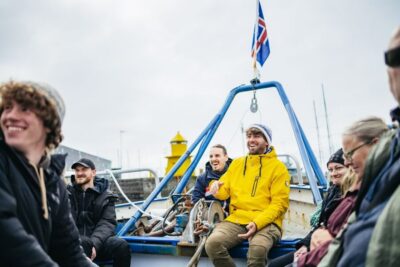
The yacht is spacious enough for people to move around and search for a good viewing position. Small groups have been especially comfortable, with enough room to avoid blocking one another. The experience is not a silent private charter, but it does not feel like a tightly packed sightseeing platform when numbers are modest.
An indoor area gives you a break from spray and wind, and refreshments are available to buy onboard. Seaman’s coffee is available to warm you up, though refreshments are not included in the ticket price. Warm overalls, raincoats, and blankets are included, so you are not left to handle every Icelandic weather problem alone.
Sea conditions deserve respect. One outing had rough water, yet the crew handled it well. Other trips took place in light rain, cold drizzle, or gloomy July weather. A calm sea makes bird watching easier, while a rolling boat can make binocular work and photography frustrating.
If you are prone to motion sickness, the boat has provided motion-sickness pills on some departures. Do not rely on that as your only plan. Bring whatever you normally use, and consider the forecast before choosing a departure time.
The crew’s manner also matters. A friendly captain and an attentive guide can turn a gray morning into a good memory. Still, no crew can control sunlight, wind, or how close the birds choose to sit. Pack for the conditions, and judge the trip by the wildlife experience rather than expecting postcard weather.
How long the trip takes in real life
The headline duration is one hour, with a simple schedule of about 15 minutes out, 30 minutes watching birds, and 15 minutes back. In practice, departures have sometimes lasted around one hour and 20 minutes, and some information describes the cruise as up to 1.5 hours.
You should leave a little room around the booking rather than placing an important museum entry or airport connection immediately afterward. The extra time can come from the boat’s approach, the wildlife stop, or harbor movement. That flexibility is helpful when birds are active, but it makes the experience less suitable for a tightly packed schedule.
The viewing portion is long enough for a first visit. You are not rushed off the boat after one pass of the island, and you have time to change position, use the binoculars, listen to the guide, and watch the water. If you want several hours of patient bird photography, this will feel short. If you want a focused activity between city plans, the length works well.
Timing within the day may also affect the approach. One passenger was told that low tide prevented the boat from getting as close as it could at high tide. If the distance to the island matters greatly to you, ask the ticket office which departure times coincide with high tide before booking.
Is $66 good value in Reykjavik?
At $66 per person, this is a mid-priced short excursion by Iceland standards. You are paying for a boat, captain, guide, safety equipment, onboard binoculars, cold-weather gear, and access to breeding islands just outside the capital. You also avoid renting a car or spending a full day reaching a more distant wildlife site.
The value is strongest if you have only a few hours in Reykjavik, are arriving by cruise ship, or want a low-effort wildlife outing. It also works well as a backup when another island or boat plan is canceled. The short route means you can see puffins without committing to a larger whale-watching cruise.
The price feels less compelling if you already own a boat-based wildlife trip or are seeking professional close-up photography. Puffins are small, and the boat may remain farther from the shore than you imagine. In poor weather, you could spend much of the trip looking through mist or drizzle at distant birds.
For most first-time puffin watchers, I think the price is fair because the tour includes useful extras rather than charging separately for every comfort. The free binoculars are especially important. Iceland is expensive across the board, and a one-hour harbor excursion that delivers a real chance to see puffins can be a sensible use of your activity budget.
Who should book this puffin cruise?
I would recommend it to you if you want a quick, easy introduction to Icelandic seabirds from central Reykjavik. Families, couples, solo visitors, and cruise passengers can all fit it into a city itinerary. It also suits anyone who prefers a guided outing with explanations rather than simply taking a boat ride and hoping to spot birds.
It is a particularly good choice if you have never seen puffins and want a reliable chance to encounter them during the breeding season. The crew knows the islands, the guide explains the birds, and binoculars help you make sense of what is in front of you.
You may want another option if you use a wheelchair, since the activity is not suitable for wheelchair users. You should also think twice if you need guaranteed close-up views, dislike open-water movement, or plan to carry large luggage.
Bring weather-appropriate clothing, a camera with a useful zoom, and patience. Use the binoculars early, find a clear viewing position, and keep watching after the first puffin. Some of the best moments come from birds flying close to the boat rather than sitting on the island.
Should you book the Elding puffin tour?
Book it if your goal is to see puffins without leaving Reykjavik for a full-day trip. The strongest parts are the easy harbor access, helpful guides, complimentary binoculars, warm gear, and frequent sightings of puffins plus other seabirds.
Do not book it expecting tame birds or frame-filling photographs from the naked eye. Tide and weather affect the approach, and a one-hour listing can become closer to 80 or 90 minutes. Ask about high-tide departure times, arrive early because harbor parking can be difficult, and leave space in your schedule.
For a short, responsible wildlife outing with a good chance of seeing puffins, this is a sensible choice. The experience keeps you near the capital while still taking you to a genuine breeding colony, and ticket sales support summer research, responsible tourism, and wildlife protection groups.
FAQ
Where does the puffin tour leave from?
Check in at Elding’s ticket office at Ægisgarður 5, 101 Reykjavik. It is about 300 meters, or a five-minute walk, from downtown Reykjavik.
How long does the tour last?
The advertised duration is one hour. The basic route allows about 15 minutes to the island, 30 minutes for wildlife viewing, and 15 minutes back, though some departures last around one hour and 20 minutes or up to 1.5 hours.
Which island will the boat visit?
The captain may choose Akurey, Engey, or Lundey. The choice depends on tide and weather conditions.
Can I use binoculars during the trip?
Yes. Binoculars are available to borrow onboard at no extra charge. They are useful because puffins are small and the boat may keep a respectful distance from the island.
What other birds might I see?
Possible sightings include eider ducks, Arctic terns, guillemots, cormorants, fulmars, geese, and oystercatchers. Dolphins and seals have also been seen on some outings, but they are not guaranteed.
Is warm clothing provided?
The boat provides warm overalls, raincoats, and blankets. You should still bring weather-appropriate clothing for Iceland’s changeable conditions.
Are refreshments included?
No. Refreshments can be purchased onboard, and seaman’s coffee is available to help you warm up.
Is the tour suitable for wheelchair users?
No. The activity is listed as unsuitable for wheelchair users. High-heeled shoes and large bags are also not allowed.
Just added around Reykjavik
- Reykjavik: Whale and Puffin Watching RIB Boat Tour★ 4.6 · 179 reviews
- Reykjavik: Whale Watching Express★ 4.3 · 227 reviews
- Reykjavik: Whale Watching & Lava Show★ 5.0 · 4 reviews
- Reykjavik: Whale & Marine Adventure Tour★ 4.3 · 71 reviews
- From Reykjavík: Viking Horseback Tour in Hafnarfjörður★ 4.9 · 112 reviews
- Reykjavík: Horse Riding Tours★ 4.9 · 127 reviews
- Luxury Private Transfer from Reykjavik to Keflavik Airport★ 5.0 · 9 reviews
- Winter South Coast Day Tour by Minibus from Reykjavik★ 5.0 · 109 reviews
Puffin Watching Tours, compared.
Puffin Cruise with Expert Tour Guide from Reykjavik
Read our review →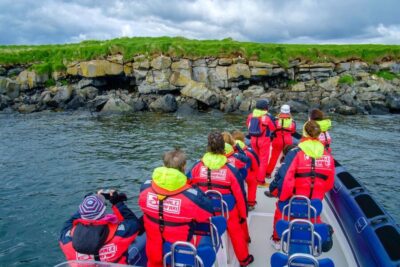
Classic Puffin Watching Cruise from Downtown Reykjavík
Read our review →
Premium Small-Group Puffin & Bird Watching tour from Reykjavík
Read our review →Browse the lists this tour appears in