
Reviewed · WALKING TOURS
Reykjavik City Walking Tour
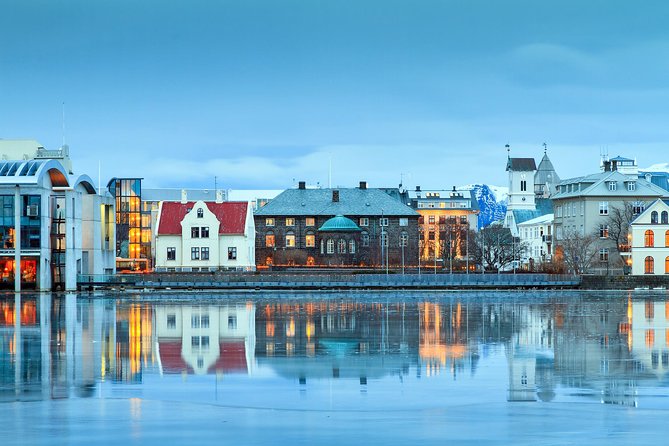
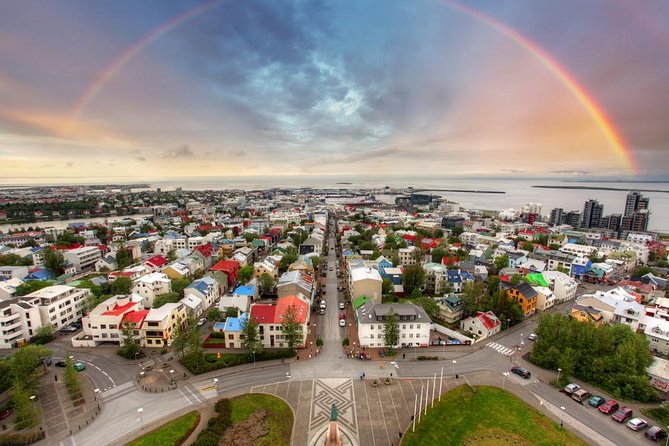
Reykjavik is small enough to understand on foot, and this tour uses that to its advantage. You begin beneath Hallgrímskirkja, pass through the colorful Þingholt neighborhood, visit Tjörnin pond, and finish among the city’s key civic and waterfront sights. Along the way, your guide connects Viking settlement, Norse mythology, volcanic geology, and modern Icelandic life.
I like the way the walk mixes famous sights with useful orientation. The local storytelling helps you see Reykjavik as more than a collection of pretty buildings, while the views toward Harpa, Sólfar, and Mount Esja give the tour a memorable finish. I also like that guides such as Sara, Thomas, Lalli, and Hafpor Oli have been praised for warmth, humor, patience, and good recommendations.
The main consideration is the weather. Reykjavik can turn cold, wet, and windy with little warning, and the tour lasts about 2.5 hours outdoors. Young children may tire, especially those under six, and hotel pickup is not included.
Key points to know before you book
- Start at Hallgrímskirkja: Meet 10 to 15 minutes early by the Leifur Eiríksson statue in front of the church.
- A useful first-day tour: The route helps you get your bearings before exploring Reykjavik on your own.
- Several subjects in one walk: Expect Norse mythology, Viking settlement, architecture, culture, geology, and volcanic history.
- Important central sights: The route includes Tjörnin pond, City Hall, the Parliament, the cathedral, Old Harbour, Harpa, and Sólfar.
- English-speaking guides: Guides including Sara, Thomas, Lalli, Mauricio, and Hafpor Oli have led this experience.
- Weather matters: Bring waterproof layers, warm clothing, gloves, a hat, and sturdy outdoor shoes.
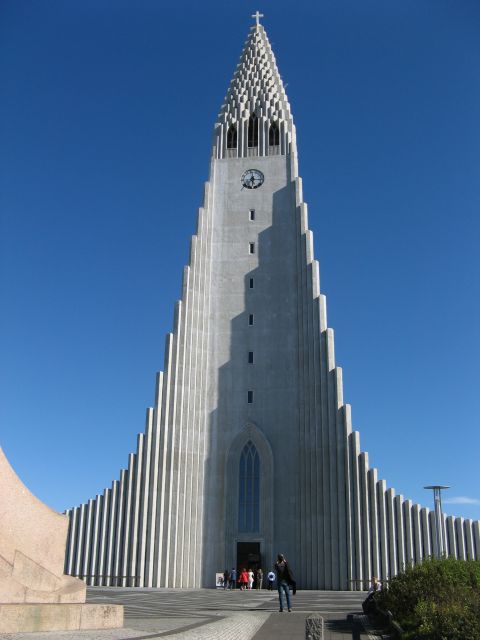
Starting beneath Hallgrímskirkja
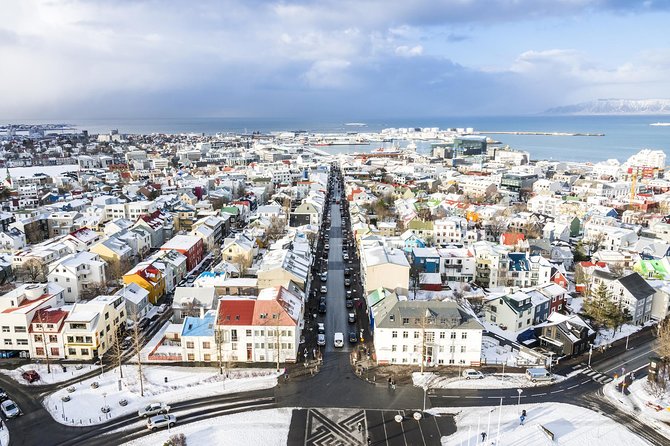
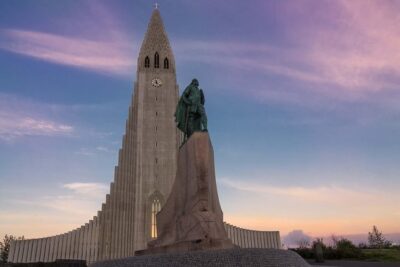
Your walk begins at the statue of Leifur Eiríksson, directly in front of Hallgrímskirkja. Arrive at least 10 minutes before departure. This is a sensible meeting point because the church is one of Reykjavik’s easiest landmarks to spot, and it puts you right in the middle of the city.
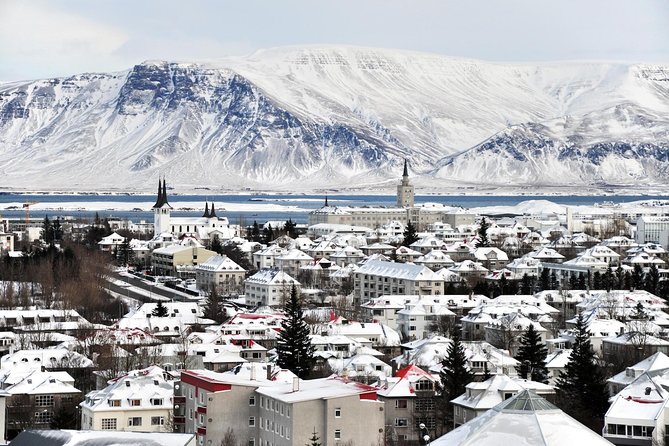
Hallgrímskirkja is an imposing place to begin. Its tall, pale form is easy to recognize from many parts of central Reykjavik, and the stop gives your guide a natural way to introduce Icelandic identity, religion, architecture, and national history. The tour includes a stop at the church, including the bell tower, according to the activity details.
Do not expect a long private visit or a full church service-style explanation. This is a city walk, so Hallgrímskirkja is one part of a wider route. Still, starting here gives you an immediate sense of Reykjavik’s scale. You are not being shuttled between far-flung sights. You are walking from the city’s best-known church into its older central streets.
The meeting point also makes this tour easy to pair with a free morning or afternoon. Since the walk ends back at the same place, you can leave your larger sightseeing plans around it without arranging transportation.
A few more Reykjavik trips to weigh up
- Reykjavik Food Walk – Local Foodie Adventure in Iceland
★ 5.0 · 18,952 reviews - Reykjavík Small group Walking Tour – by CityWalk
★ 5.0 · 5,076 reviews - Reykjavik: Guided Foodie Walking Tour with 6 Tastings
★ 4.9 · 1,645 reviews
Þingholt and the stories behind Reykjavik
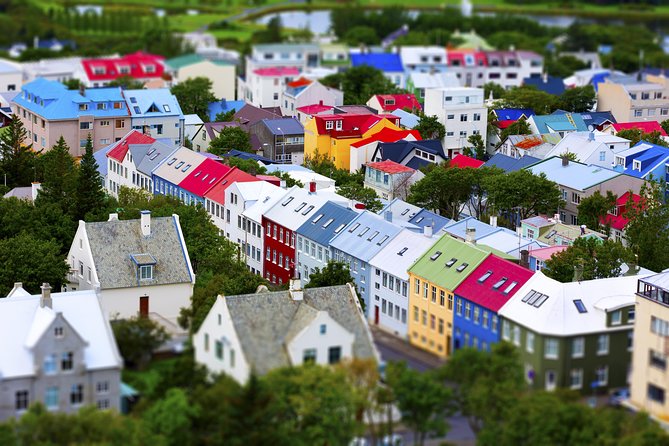
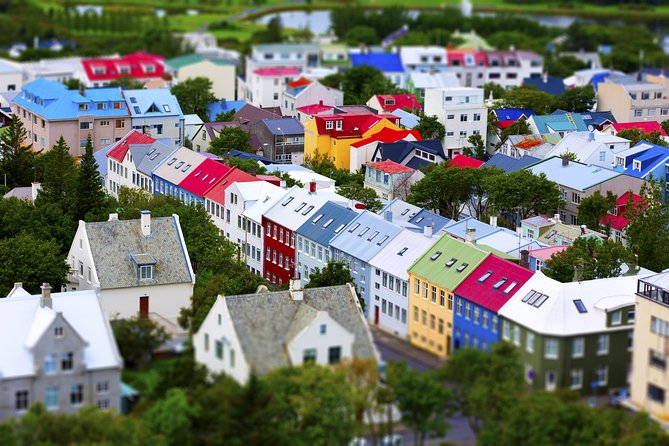
From the church, the route moves through Þingholt, a central neighborhood known for its colorful houses and quieter streets. This is where the tour shifts from looking at monuments to reading the city around you.
Your guide talks about Norse mythology and the early story of Iceland. That subject works well here because the walk is not only about dates and names. It helps explain how old beliefs and Viking settlement shaped the country’s identity. Guides have also woven in family stories, local memories, and personal knowledge of Iceland, giving the route a more human tone.
Names matter on a walk like this. Guides such as Thomas have been praised for telling funny, interesting stories and answering questions. Lalli has used historical pictures to help explain how the city looked in earlier times. Sara has been noted for thoughtful, warm explanations of Reykjavik, Icelandic culture, and its people.
Those details are useful because Icelandic history can feel compressed when you first arrive. A short walk cannot cover everything, but a good guide can give you a framework. You begin to understand why the city looks the way it does and what parts of its past still matter today.
The pace is generally described as easy and manageable. That does not mean you should treat it as a sightseeing bus with brief stops. You will be walking for most of the 2.5 hours, so comfortable shoes matter. If you have mobility concerns, ask about the route before booking, since the supplied information does not give a detailed accessibility description.
Tjörnin pond and Reykjavik’s everyday side
The route continues to Tjörnin, the city pond. Geese and swans gather here, giving you a softer change of pace after the church and neighborhood streets.
Tjörnin is valuable as a stop because it shows another side of Reykjavik. You are not only looking at major architecture or formal institutions. You are also seeing a familiar public place connected to daily city life. The pond makes a good pause for photographs and gives the guide room to explain more about Reykjavik’s development.
The stop is also a reminder that this is a compact capital. Within a short walk, you move from a landmark church to residential streets and then to an open public space. That compactness is one reason I think this tour works best early in your stay. Afterward, you can return to places that caught your eye instead of trying to decode the city map alone.
Weather can change the feel of Tjörnin. On a calm day, the pond may be a pleasant, reflective stop. In rain or wind, it is more exposed, and you will be glad to have waterproof trousers and a warm hat. Iceland’s weather is not a minor footnote here. It affects how much you enjoy every outdoor stop.
Einar Jónsson’s sculptures and Icelandic imagination
The tour includes the Einar Jónsson Museum and its sculpture park. Einar Jónsson is an important Icelandic artist, and his work gives the walk a cultural stop that is different from the city’s churches, government buildings, and harbor views.
The sculpture visit adds depth to the route. You are not simply collecting photographs of Reykjavik’s most recognizable places. You are also seeing how Icelandic ideas, myths, and artistic expression appear in public art. Since the tour discusses Norse mythology, the sculptures fit naturally into the broader story.
Allow yourself to look rather than rush. A sculpture park is easy to skim if you are focused only on the next stop, but this is one of the places where the guide’s interpretation can make a difference. The information says the stop is part of the 2.5-hour tour, so it is not designed as an extended museum visit. Think of it as a focused introduction.
This portion may appeal most to you if you enjoy art, symbols, and local culture. If you want only outdoor sightseeing, it may feel less immediately exciting than the harbor. That balance is worth noting. The tour tries to show Reykjavik from several angles, and not every stop will have the same appeal for every person.
Same island, a completely different kind of day:
- Reykjavik: Golden Circle Full-Day Tour with Kerid Crater
★ 4.8 · 24,485 reviews - Iceland: Northern Lights Bus Tour from Reykjavik
★ 4.1 · 11,161 reviews - Reykjavík: South Coast Waterfalls, Black Sand & Glacier Tour
★ 4.8 · 11,030 reviews - Reykjavík: Whale Watching and Marine Life Cruise
★ 4.6 · 9,838 reviews
City Hall and Iceland’s volcanic story
At City Hall, you see a large topographical map of Iceland. This is one of the more useful teaching points on the walk because it turns the country’s geology into something you can examine at a glance.
Your guide explains Iceland’s volcanic history and the forces that shaped the country. That context helps you understand why Iceland looks so different from many European destinations. You are not just hearing that the country is volcanic. You are being shown a physical representation of its form and asked to connect the map with what you may see elsewhere in Iceland.
If Reykjavik is your only Iceland stop, this part is especially worthwhile. It gives you a broader sense of the country beyond the capital. If you are planning a road trip, it can also help organize what you see later, though the supplied details do not promise route-planning advice.
The map is an indoor or sheltered-style stop within an otherwise outdoor walk, but you should still dress for the full experience. The tour remains weather-dependent and operates all year when conditions allow. There is no minimum group size, so the walk can go ahead without a large crowd.
Parliament, the cathedral, and the first Viking homesteads
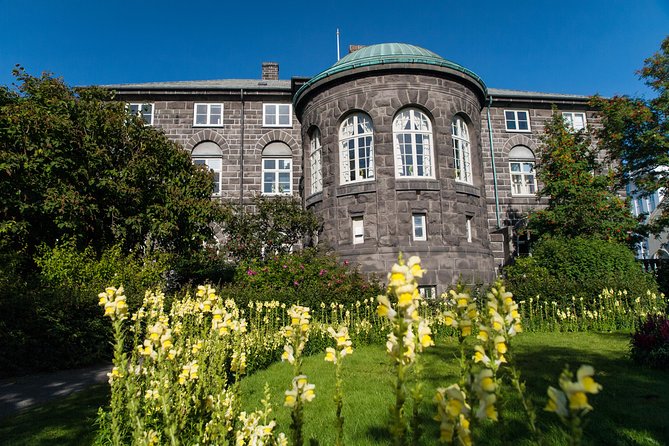
The route then winds into the heart of central Reykjavik. You see the Parliament building, the cathedral, and the site of the first Viking homesteads.
This section connects modern Iceland with its early settlement. The Parliament and cathedral represent the country’s civic and religious life, while the homestead site points back to the people who established the settlement that grew into today’s capital.
I appreciate the contrast here. The Parliament building is modest rather than grand, and the cathedral is described as modest but beautiful. That gives you a more accurate feel for Reykjavik than a tour focused only on dramatic monuments. Iceland’s capital is important, but it is not built around oversized imperial architecture.
Your guide can also place the buildings within the city’s story. The value is not simply seeing where Parliament sits. It is understanding how close the country’s civic center is to the older parts of Reykjavik and how the city’s past and present occupy the same small area.
The route is also a good setting for questions. Several guides have been praised for patience and for handling everything from serious historical questions to basic orientation. Do not be shy about asking where to eat, what to see next, or how to use the rest of your day. The tour’s practical value grows when you treat it as a conversation rather than a lecture.
Old Harbour, Harpa, and the best final views
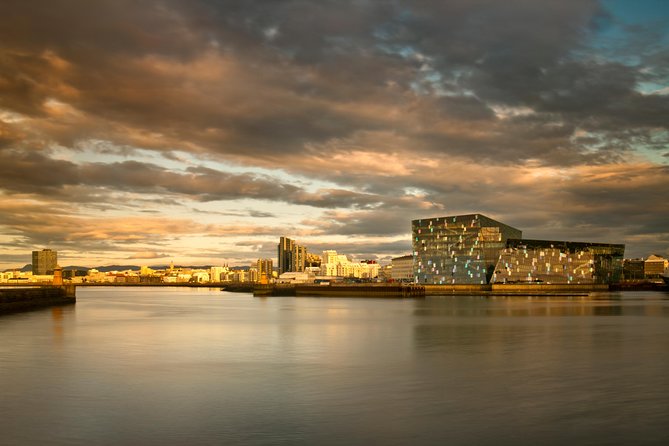
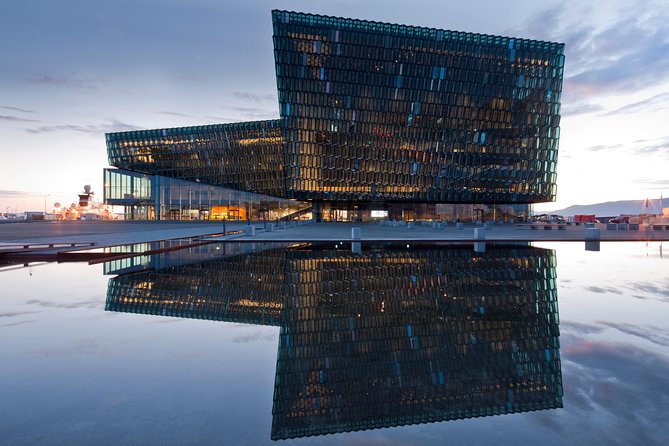
Near the end, the walk reaches the Old Harbour and Harpa Concert Hall. This is the route’s most dramatic visual stretch.
Harpa gives you bold modern architecture beside the water. From here, you also see the Sólfar sculpture, with the bay and Mount Esja beyond it. These views provide a strong finish because they bring together Reykjavik’s urban character and Iceland’s open, rugged setting.
The harbor section can be windy, so keep your outer layer handy even if the weather was comfortable earlier. It is also a good place to take photographs, but remember that the guide is still moving the group through the route. If you want a longer visit inside Harpa or more time around Sólfar, plan to return after the tour.
This final stretch explains why the walk is more useful than a simple list of central landmarks. You see old settlement areas, public buildings, cultural sites, and modern waterfront architecture in one connected outing. By the end, you have a mental map of the center and a better idea of where you want to spend more time.
How the guides shape the experience
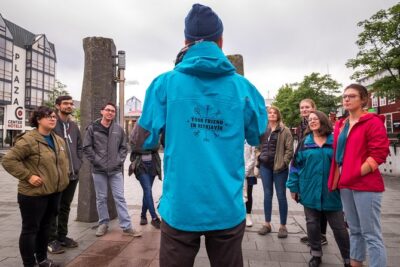
The guide is the main variable in any walking tour, and the names associated with this one include Sara, Thomas, Lalli, Mauricio, Aoalheiour, and Hafpor Oli. Their individual styles differ, but the consistent strengths are clear: warmth, humor, patience, strong English, and an ability to answer questions.
Sara’s approach has been described as thoughtful, energetic, and honest. Thomas is noted for clear explanations, a good pace, and useful recommendations at the end. Lalli has brought historical images and made people feel comfortable. Aoalheiour has shared local and family history, while Mauricio has been described as pleasant and kind.
That range matters. You may get a guide who leans toward mythology, another who focuses on local history, or another who adjusts the walk to the weather and group interests. The tour is in English, and the supplied information does not allow you to request a particular guide.
The strongest reason to book is the chance to hear the city explained by someone who knows its stories, not just its street names. The weakest point is that the experience depends on the person leading it. The available feedback is very positive, but no walking tour can guarantee that every guide will match your preferred style.
Price, timing, and practical value
At $53 per person, this is not the cheapest way to walk around Reykjavik. You can see many central sights without paying for a guide. The question is what you want from the money.
I think the price can be fair if this is your first activity in the city. You get 2.5 hours of orientation, explanations of Icelandic culture and geology, access to a planned route, and the chance to ask a local guide questions. That can save you time during the rest of your visit and help you choose which places deserve a second look.
Teenagers aged 12 to 15 receive a 50 percent discount, and children from birth through age 11 can join free. There is no age limit, but children under six may find the walk long. Bring a stroller if suitable for your plans, or be ready to carry a small child for part of the route.
The tour does not include hotel pickup or drop-off. You must reach the statue in front of Hallgrímskirkja yourself, then return to that meeting point at the end. The activity runs year-round when weather and conditions allow, and it is not subject to a minimum number of participants.
You can cancel up to 24 hours before departure for a full refund, and the reserve-now, pay-later option keeps your plans flexible. Those policies are useful in Iceland, where weather can affect plans, but they do not remove the need to check the forecast and dress properly.
What to wear for 2.5 hours outside
Take Icelandic weather seriously. Wear warm, waterproof clothing, including a waterproof jacket and trousers. Add a hat, gloves, and good outdoor shoes.
Layering is the practical answer because the tour moves between streets, open spaces, the pond, and the harbor. A pleasant start does not guarantee a pleasant finish. You should be ready for rain and wind rather than hoping for a clear day.
The pace is described as slow and easy, but the length still matters. This is not a suitable choice if you want to avoid walking or if you have only a short break between fixed plans. It is a good fit if you want to spend a morning or afternoon seeing central Reykjavik without rushing.
Is the Reykjavik walking tour worth booking?
I would book this tour for a first day in Reykjavik, especially if you want context rather than a quick photo stop. Hallgrímskirkja, Þingholt, Tjörnin, Einar Jónsson’s sculptures, City Hall, Parliament, the cathedral, the Viking homestead site, Old Harbour, Harpa, and Sólfar create a well-rounded introduction to the center.
You should choose it if you enjoy local stories, Norse mythology, architecture, public art, and geology. It also suits families with older children, since children under 12 are free and the pace is not described as strenuous.
I would think twice if rain, wind, or a long outdoor walk will spoil your day. You may also prefer to explore independently if you already know Reykjavik well or want extended time inside each attraction. For most first-time visitors, though, the combination of orientation, local explanation, and manageable walking makes the $53 worthwhile.
FAQ
How long does the Reykjavik City Walking Tour last?
The tour lasts approximately 2.5 hours, including stops at Hallgrímskirkja, the Einar Jónsson Museum, and Tjörnin pond.
Where does the tour start?
Meet your guide at the statue of Leifur Eiríksson in front of Hallgrímskirkja Church. Arrive at least 10 minutes before the scheduled departure time.
Where does the tour end?
The activity ends back at the starting meeting point by Hallgrímskirkja.
What language is the tour conducted in?
The tour has a live guide and is conducted in English.
Is hotel pickup included?
No. Hotel pickup and drop-off are not included, so you must make your own way to Hallgrímskirkja.
Can children join the tour?
Yes. Children aged 0 to 11 can join for free, and teenagers aged 12 to 15 receive a 50 percent discount. There is no age limit, but children under six may find the walk long.
Just added around Reykjavik
- Reykjavik: Whale and Puffin Watching RIB Boat Tour★ 4.6 · 179 reviews
- Reykjavik: Whale Watching Express★ 4.3 · 227 reviews
- Reykjavik: Whale Watching & Lava Show★ 5.0 · 4 reviews
- Reykjavik: Whale & Marine Adventure Tour★ 4.3 · 71 reviews
- From Reykjavík: Viking Horseback Tour in Hafnarfjörður★ 4.9 · 112 reviews
- Reykjavík: Horse Riding Tours★ 4.9 · 127 reviews
- Luxury Private Transfer from Reykjavik to Keflavik Airport★ 5.0 · 9 reviews
- Winter South Coast Day Tour by Minibus from Reykjavik★ 5.0 · 109 reviews
Walking Tours, compared.

Reykjavik Food Walk – Local Foodie Adventure in Iceland
Read our review →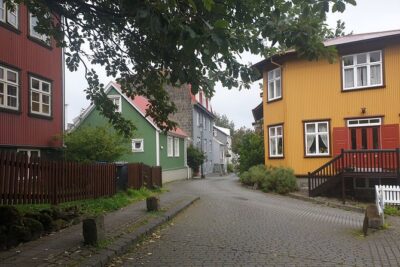
Reykjavík Small group Walking Tour – by CityWalk
Read our review →
Reykjavik Folklore Walking Tour: Meet the Elves, Trolls & Ghosts of Iceland
Read our review →

Funky History Walking Tour in Reykjavik – With local storyteller
Read our review →Browse the lists this tour appears in