
Reviewed · WALKING TOURS
Reykjavik: City Walking tour in Small Group with Local Guide
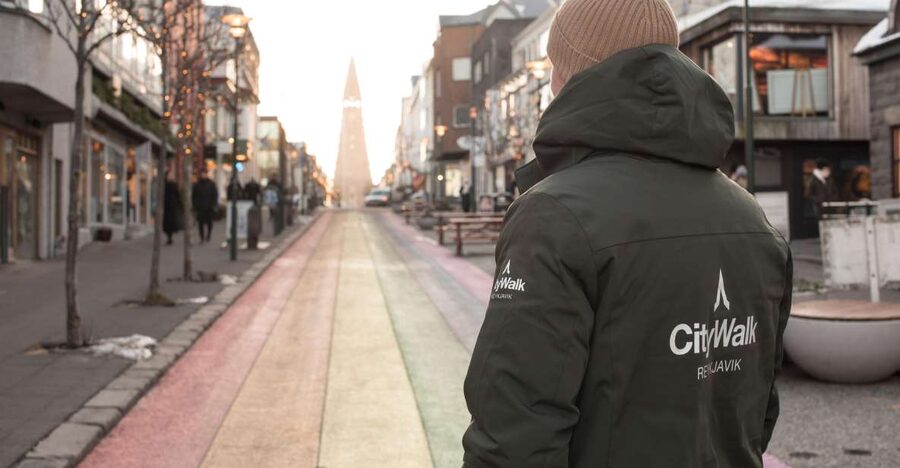
Reykjavík reveals itself best on foot, and this tour gives you a useful introduction from the city’s highest point down to its oldest center. You begin at Hallgrímskirkja, pass colorful streets and the harborfront, step inside Harpa, and finish near Parliament with a clearer sense of how the capital fits together.
I like the easy downhill route, especially when icy sidewalks make every uphill climb feel like a small expedition. I also like the local flavor: guides such as Ási, Ryan, Erik, Tom, and Martin have been praised for history, humor, restaurant tips, and answering questions without rushing the group.
The main consideration is weather. This tour runs in rain, wind, snow, and cold, so you must dress for Iceland rather than for the forecast you hope to get. Harpa is a useful warm stop, but much of the experience remains outdoors.
Key points at a glance
- Start high above Reykjavík: Meet by the Leifur Eiríksson statue at Hallgrímskirkja, then walk downhill through the center.
- See Harpa from inside: The concert hall’s glass and geometric design provide one of the tour’s best indoor pauses.
- Get a city orientation: The route connects Laugavegur, Tjörnin, Austurvöllur, Arnarhóll, the harborfront, and Parliament.
- Expect a genuinely small group: Groups reported on this walk have ranged from about four to 12 people, making questions easy.
- Learn more than dates and buildings: The strongest guides connect Iceland’s settlement, independence, daily life, food, and modern culture.
- Pack for rough weather: Comfortable shoes, warm layers, and weatherproof clothing matter more than stylish city clothes.
Starting at Hallgrímskirkja and Leifur Eiríksson
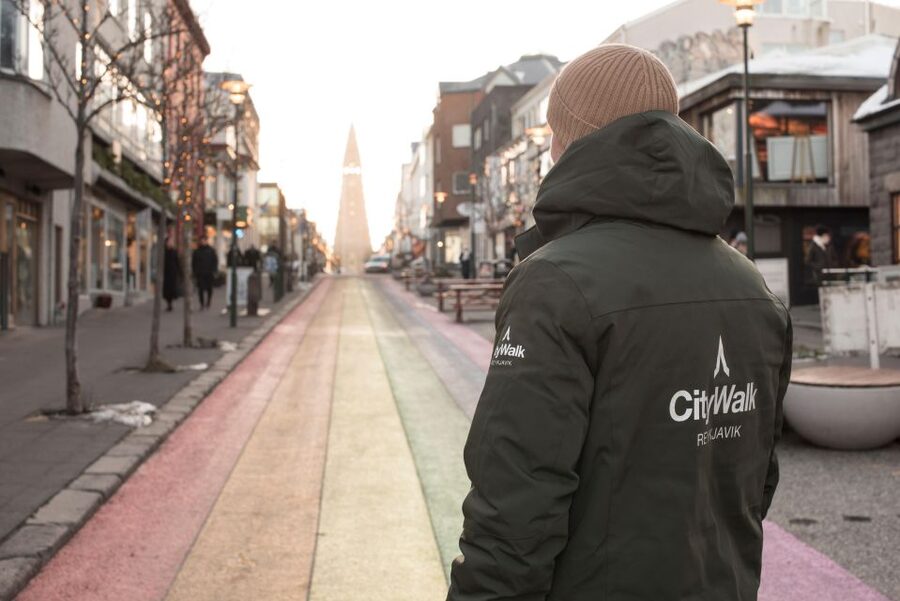
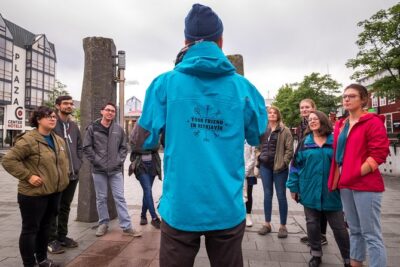
Your meeting point is easy to identify: find the CityWalk Reykjavík guide in marked clothing in front of Hallgrímskirkja, beside the statue of Leifur Eiríksson. The church sits on a hill and the starting point is roughly 100 meters, or 300 feet, higher than the finish.
That elevation gives the walk a practical shape. You begin with a broad view over Reykjavík, then descend through streets and public spaces instead of spending the first part of the tour climbing. I would still arrive with enough time to find the statue, since the church grounds are open and the meeting point is outside.
Hallgrímskirkja is one of Reykjavík’s defining sights, even if the tour is not designed as a long church visit. You get a photo stop, some time around the building, and an introduction to the city from a landmark that is hard to miss from central Reykjavík.
The church also gives your guide a natural place to explain how Reykjavík grew. The walk is not just a parade of buildings. Its value comes from connecting the city’s religious, political, residential, and commercial areas in one clear route.
A few more Reykjavik trips to weigh up
- Reykjavik Food Walk – Local Foodie Adventure in Iceland
★ 5.0 · 18,952 reviews - Reykjavík Small group Walking Tour – by CityWalk
★ 5.0 · 5,076 reviews - Reykjavik: Guided Foodie Walking Tour with 6 Tastings
★ 4.9 · 1,645 reviews
Down Skólavörðustígur and along Laugavegur
From Hallgrímskirkja, the group heads downhill through streets including Skólavörðustígur and Laugavegur. These are among the best areas for getting a first feel for central Reykjavík, with colorful buildings, shops, cafés, and the city’s slightly quirky style.
The route includes photo stops and short walking sections rather than one long lecture while marching. That balance matters. You can listen, look around, and take pictures without feeling that you are falling behind every few minutes.
Laugavegur is also useful later in your trip. A guide can point out the central streets you may want to revisit for food, shopping, or a quieter look. Several guides have also offered practical restaurant and pastry suggestions, and one particularly useful tip was to return to favorite areas after the tour, when you can explore at your own pace.
Do not expect a dedicated shopping tour. The purpose here is orientation and local context. You see the streets in passing, with the guide explaining what makes them part of everyday Reykjavík rather than stopping at every shop.
Tjörnin, colorful houses, and city wildlife
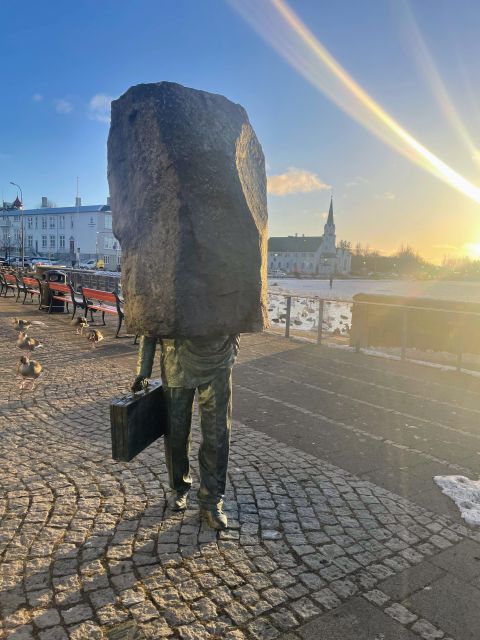
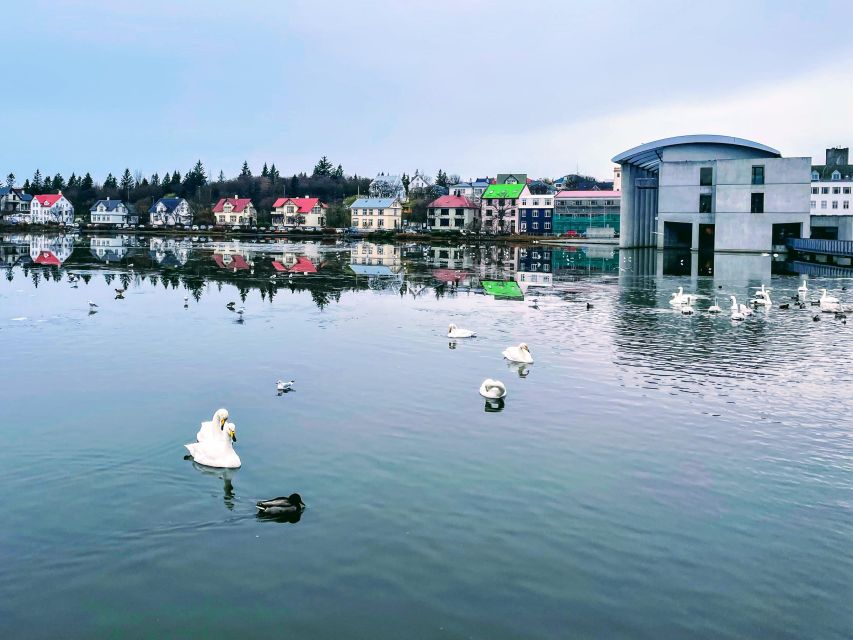
The walk includes the area around Tjörnin, Reykjavík’s central lake. Its colorful houses make it one of the city’s most photogenic spots, while the water attracts birds and other wildlife.
This is a welcome change from the commercial streets. Tjörnin gives the tour room to breathe and shows you how Reykjavík mixes civic buildings, homes, open space, and water within a compact center. If you enjoy taking pictures, this section is worth keeping your camera ready.
The wildlife stop is modest rather than a full nature outing. You are seeing an urban lake and its birds as part of a city walk, not visiting a reserve. Still, it adds something important: Reykjavík is not only churches, museums, and shops. Nature remains close to ordinary city life.
Your guide may also use this area to explain local habits, weather, and the way people use the center. The strongest tours make these details feel connected to the places around you, not like a separate classroom talk.
Parliament, Austurvöllur, and Reykjavík’s oldest center

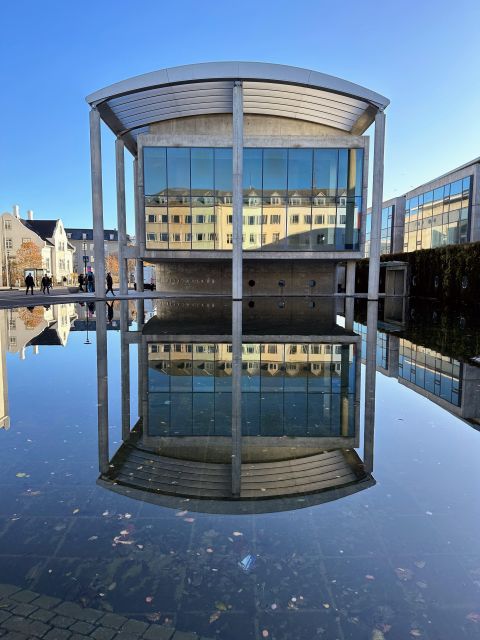
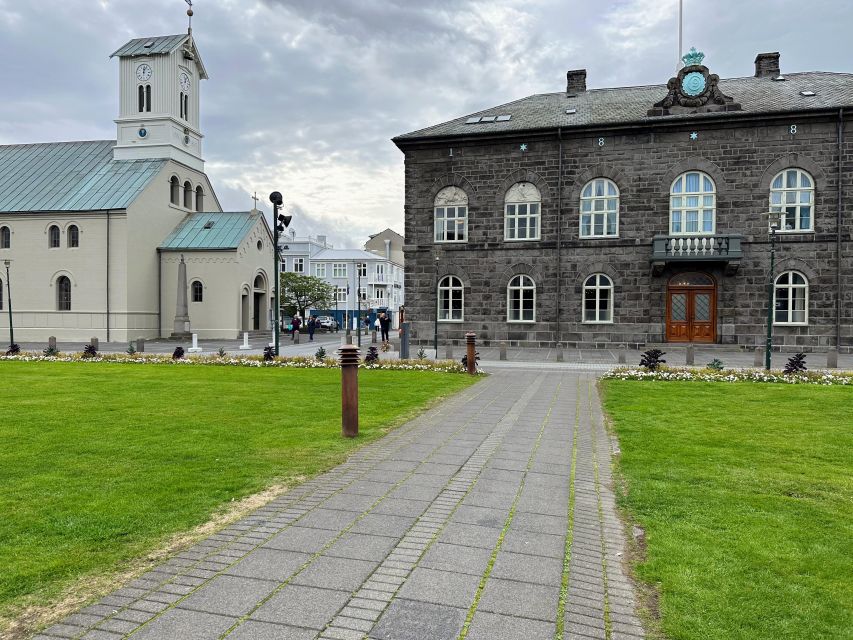
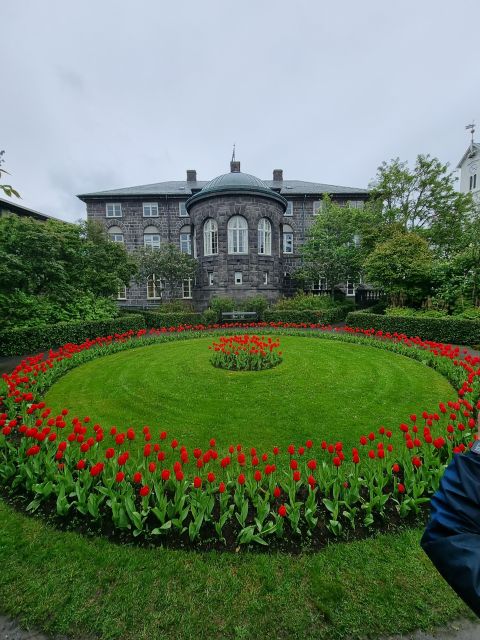
The route eventually reaches the oldest central area, where Alþingi, Iceland’s Parliament, and city hall are located. The Parliament building dates from 1881, giving you a concrete landmark for understanding Iceland’s political story.
You photograph Alþingi and walk through Austurvöllur, the main square beside it. This is where the tour shifts from general city orientation to national identity, independence, and the way Iceland developed its modern government.
The subject can be more interesting than the modest scale of the buildings suggests. Reykjavík does not overwhelm you with grand imperial architecture. Its importance comes from the role these places play in Icelandic public life, and a good guide helps you see that distinction.
The tour finishes by the Parliament building in the main square. That is a convenient end point for continuing on foot, finding food, or returning to a part of the center you liked earlier.
Same island, a completely different kind of day:
- Reykjavik: Golden Circle Full-Day Tour with Kerid Crater
★ 4.8 · 24,485 reviews - Iceland: Northern Lights Bus Tour from Reykjavik
★ 4.1 · 11,161 reviews - Reykjavík: South Coast Waterfalls, Black Sand & Glacier Tour
★ 4.8 · 11,030 reviews - Reykjavík: Whale Watching and Marine Life Cruise
★ 4.6 · 9,838 reviews
Harpa’s glass interior and the oceanfront walk
Harpa Concert Hall is one of the tour’s major visual stops. The building is known for its striking glass and geometric design, and you go inside rather than simply viewing it from the harbor.
The interior makes a fine contrast with the older streets. Reykjavík’s center can feel low-rise and colorful, while Harpa offers a sharper, more modern burst of glass, light, and angles. It is also a sensible shelter when the weather turns cold or wet.
One point to keep in mind: the amount of commentary inside Harpa can vary with the guide and the conditions. The building is included as a sightseeing stop, but this is not a specialist architecture tour. If Harpa is your main reason for booking, you may want extra time to explore it independently afterward.
The walk continues along the oceanfront, with Arnarhóll also included among the central stops. The waterfront section helps you understand Reykjavík’s position beside the sea, while Arnarhóll gives the route another open civic space before the finish.
The sequence works well because it keeps changing scale: a famous church, narrow commercial streets, a lake, political buildings, modern architecture, and open waterfront. You get a broad picture of the city without needing a bus or a full-day commitment.
What the guides add to the walk
The guide is the deciding factor in a city walk, and this experience has attracted strong praise for clear storytelling and an easy pace. Ási has been described as funny, organized, and especially good at handling questions. Ryan has brought academic experience and years of life in Iceland, while Erik has been praised for mixing local knowledge with humor.
Other guides associated with the walk include Martin, Marteinn, Tom, Thomas, Nori, Mathias, and Andrew. The names and personalities vary, so you should not book expecting one particular person unless the booking system specifically confirms your guide.
The common strength is the human explanation of Iceland. You can expect discussion of Reykjavík’s past, Icelandic independence, settlement, modern life, and local customs. The best guides also share personal observations about living in the country without letting their own stories take over.
The small group helps here. Groups of seven or eight can feel almost private, while a group of 12 is still much easier to manage than a large city walk of 24 or 30 people. You can hear the guide, ask follow-up questions, and stop for photographs without creating a traffic jam.
The pace is another strong point. The route takes 2.5 hours, but it is not presented as a forced march. Guides have been praised for waiting when needed, checking that everyone is comfortable, and allowing time for questions. That makes the walk suitable for first-time visitors who want context rather than a rapid list of facts.
Weather, shoes, and the downhill advantage
Icelandic weather is part of the experience, not a detail to ignore. The tour runs rain or shine and is not canceled simply because the day is wet, windy, snowy, or cold.
Bring warm clothing, comfortable clothes, and shoes with a firm sole. Waterproof layers are a wise choice, and gloves or a hat can make a difference outside, especially during the oceanfront portion. You do not need specialist hiking equipment, but flimsy footwear is a poor match for cold, wet sidewalks.
The route is described as very easy and downhill, with about 100 meters of total elevation change. Most sidewalks are geothermal heated or salted, so ice and snow are reduced, though Icelandic weather still deserves respect.
The walk is wheelchair accessible, and the route can be adjusted in poor weather. Since the group is small, the guide can add indoor stops or take shelter in buildings and exhibitions when conditions become unpleasant. That flexibility helps, but it does not turn the tour into a fully indoor activity.
I would book it early in your Reykjavík stay. A rainy day may sound like a drawback, yet the walk can still help you locate cafés, public buildings, shopping streets, the lake, and the waterfront. You may also decide which places deserve a second visit once the weather improves.
Is the $51 price fair?
At $51 per person, this is not the cheapest way to walk around Reykjavík. You can see the outside of many landmarks for free, and the city center is compact enough for independent exploration.
The price makes more sense if you value explanation and structure. Over 2.5 hours, you get a local guide, a planned route linking major areas, access inside Harpa, and the chance to ask questions in a small group. For a first day in the city, that can save time and prevent you from missing places you would otherwise pass without understanding.
The value also depends on group size. A group of four to 12 gives you more personal attention than a large city tour. If your guide is as engaging as Ási, Ryan, Erik, Tom, or Martin have been, the storytelling becomes the main reason to pay rather than simply walking the same streets alone.
I would not choose this tour if you want a museum-heavy experience, a food-focused outing, or an in-depth architectural study of Harpa. One person specifically wanted more explanation of Harpa, and that is a fair limitation. This is a broad city introduction, not a specialist tour.
Who will get the most from this walk?
I would recommend it most strongly to first-time visitors, short-stay guests, and anyone arriving with only one day in Reykjavík. It gives you a useful mental map and a basic understanding of Iceland before you spend time on excursions outside the capital.
It also suits curious walkers who like history mixed with ordinary city life. You see political buildings, residential streets, birds on Tjörnin, modern design, and places to eat, rather than only the standard postcard sights.
Families and older visitors may appreciate the easy downhill route, though everyone should be ready for outdoor weather. The wheelchair-accessible route is a clear advantage, but you should still check the specific starting conditions when booking if mobility needs are important.
Independent-minded visitors can use the tour as a launch pad. Take notes on restaurant suggestions, mark streets you want to revisit, and keep the final hour of your day free for a slower look at the places that caught your eye.
My verdict on the CityWalk Reykjavík experience
Book this walk if you want a friendly, small-group introduction to Reykjavík with real local explanation. Its best features are the downhill route, broad mix of sights, strong guide involvement, and sensible use of Harpa as an indoor pause.
Skip it if you already know Reykjavík well or mainly want food tastings, museum time, or detailed architecture. For most first visits, though, $51 buys more than a walk between landmarks. It gives you a useful map of the city, a better grasp of Icelandic culture, and practical ideas for the rest of your stay.
FAQ
Where does the Reykjavík walking tour start?
The meeting point is in front of Hallgrímskirkja Church by the statue of Leifur Eiríksson. Find the CityWalk Reykjavík guide wearing the marked outfit.
Where does the tour finish?
The walk finishes by the Alþingi Parliament building in Reykjavík’s main square.
How long does the walking tour last?
The tour lasts 2.5 hours.
Is the tour conducted in English?
Yes. The live tour guide provides the experience in English.
Is the walking route difficult?
The tour is described as very easy and goes downhill. The total elevation change is about 100 meters, or 300 feet.
Is the tour wheelchair accessible?
Yes, the tour is wheelchair accessible, and the route can be adjusted in poor weather.
What happens if the weather is bad?
The tour operates rain or shine and is not canceled because of poor weather. Indoor stops or shelter in buildings and exhibitions may be added when it is cold or wet.
What should I bring?
Bring comfortable shoes, warm clothing, comfortable clothes, and clothing suited to the weather. The tour is mainly outdoors, so waterproof layers are a sensible choice.
Just added around Reykjavik
- Reykjavik: Whale and Puffin Watching RIB Boat Tour★ 4.6 · 179 reviews
- Reykjavik: Whale Watching Express★ 4.3 · 227 reviews
- Reykjavik: Whale Watching & Lava Show★ 5.0 · 4 reviews
- Reykjavik: Whale & Marine Adventure Tour★ 4.3 · 71 reviews
- From Reykjavík: Viking Horseback Tour in Hafnarfjörður★ 4.9 · 112 reviews
- Reykjavík: Horse Riding Tours★ 4.9 · 127 reviews
- Luxury Private Transfer from Reykjavik to Keflavik Airport★ 5.0 · 9 reviews
- Day Trip to Snæfellsness Peninsula from Reykjavik★ 5.0 · 7 reviews
Walking Tours, compared.

Reykjavik Food Walk – Local Foodie Adventure in Iceland
Read our review →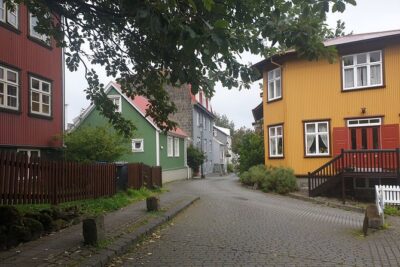
Reykjavík Small group Walking Tour – by CityWalk
Read our review →
Reykjavik Folklore Walking Tour: Meet the Elves, Trolls & Ghosts of Iceland
Read our review →


Funky History Walking Tour in Reykjavik – With local storyteller
Read our review →Browse the lists this tour appears in