
Reviewed · MUSEUMS
Reykjavik: Saga Museum Entry Ticket
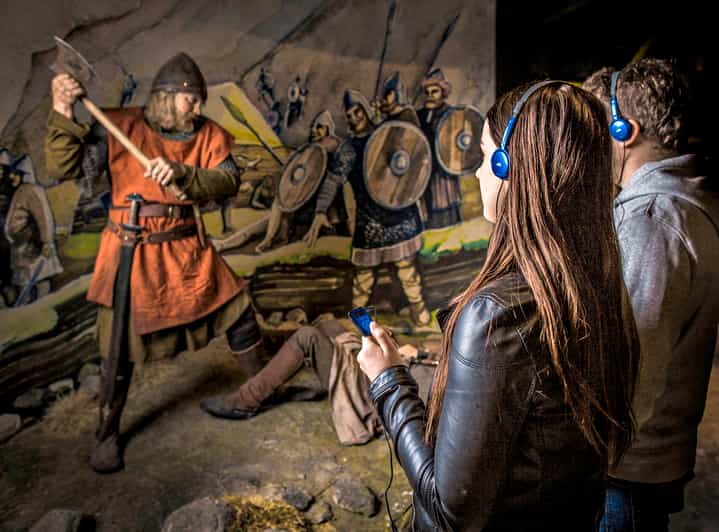
The Saga Museum turns Iceland’s early story into a walk through lifelike wax scenes. You follow a 35-minute audio guide past 20 displays, beginning with the first settlers and ending with the Reformation and Iceland’s last Catholic bishop. It is a compact history lesson, but it gives names and faces to stories that can feel distant on the page.
I like the clear chronological route and the chance to hear the tales in seven languages. I also like the Viking dress-up area, which gives children and adults something hands-on to do after the serious history. The main drawback is size: at $33 per person, the museum can feel expensive if you expect a large attraction or a long visit.
Key points to know before you go
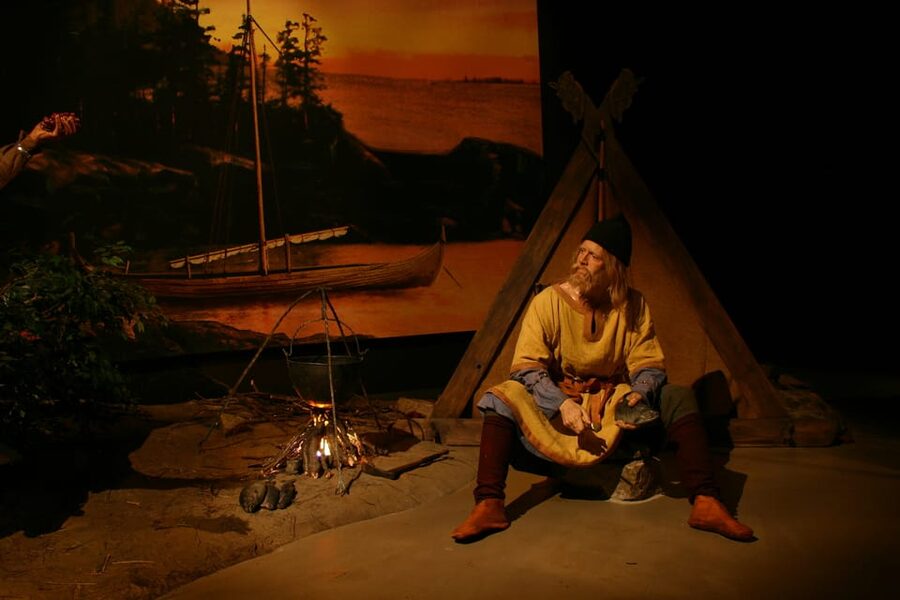
- Twenty wax scenes cover major turning points, including the Papar, Leif the Lucky, the Icelandic Parliament, the civil war, and the Reformation.
- The audio tour lasts about 35 minutes, so this is an easy addition to a day around Reykjavik rather than a full-day attraction.
- Seven audio languages are available: English, French, German, Icelandic, Russian, Spanish, and Swedish.
- The costume area is the playful finale, with Viking clothing and weapons for dressing up and photographs.
- The museum is at Grandagarður 2, in the white building with a Viking statue on horseback outside, sharing an entrance with Matur og Drykkur.
- The price is the key decision point: the museum is praised for realistic figures and friendly staff, but some people find it small for the cost.
Finding the Saga Museum at Grandagarður 2
The Saga Museum sits at Grandagarður 2 in Reykjavik’s Capital Region. Look for the white building and the statue of a Viking on horseback in front. The entrance is shared with the restaurant Matur og Drykkur, a useful landmark if your map leaves you second-guessing the address.
Parking is included, and lockers are available. Pickup and drop-off are not included, so you need to make your own way there. The museum is wheelchair accessible, which makes this a practical indoor stop for many people who want a break from Iceland’s weather.
The location also works well as part of a wider day out. The ticket is valid for one day from first activation, but the actual museum program is short. I would plan it as one stop among several, not as the main event of an entire day.
A few more Reykjavik trips to weigh up
- Reykjavik: Perlan Museum Wonders of Iceland Entrance Ticket
★ 4.7 · 2,575 reviews - Reykjavík: Hop-On Hop-Off Bus and Perlan Museum Entry Ticket
★ 4.3 · 719 reviews - Reykjavik: Whales of Iceland Museum Entrance Ticket
★ 4.4 · 493 reviews
A 35-minute route through Iceland’s early story
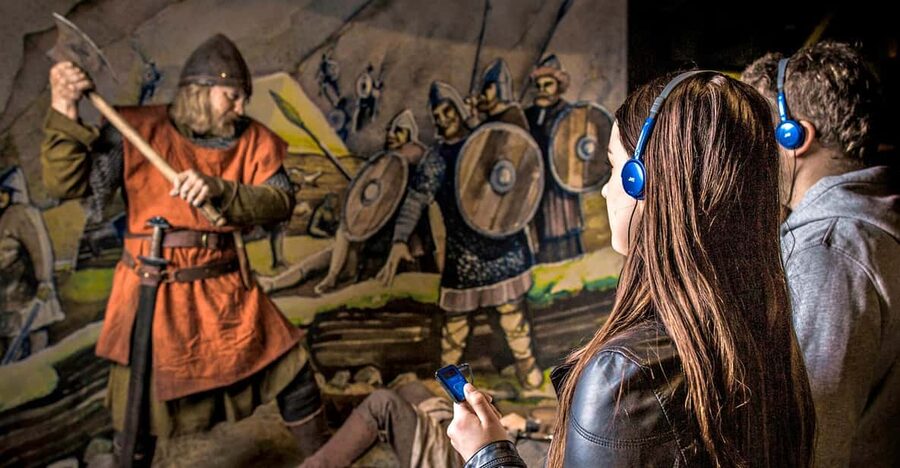
The visit follows a fixed sequence. You receive a headset and listen as you move from one scene to the next. There is no named guide leading a live group, so the experience depends on the recorded narration and your own pace through the displays.
That format has a benefit: you can focus on the figures and listen in one of seven languages. English, French, German, Icelandic, Russian, Spanish, and Swedish are available through the audio guide. A text guide is also provided in Polish and Italian.
There is one practical point to keep in mind. The audio does not appear to let every person move freely from scene to scene. One recent experience found there was a lot of waiting for the next step. If the museum is busy, you may need to pause until the sequence opens up. That can make a 35-minute presentation feel less fluid than a fully self-guided display.
Still, the set route helps keep the story in order. Icelandic history includes unfamiliar names, changing political systems, and family connections that can be hard to track. The audio gives you a thread to follow.
The Papar and the first Viking settlers
The story begins with the Papar, described as the earliest settlers in Iceland. You then move to the first Vikings who settled the island and hear how Reykjavik got its name.
This opening is useful because it frames Iceland as a remote place shaped by movement across the North Atlantic. The museum is not simply showing people in old clothing. It is setting up the people, arrivals, and decisions that formed the first Icelandic community.
The wax figures are the main attraction here. Their lifelike appearance helps you picture individuals rather than treating the settlement period as a list of dates. Facial expressions, clothing, and posed scenes give the narration something concrete to explain.
The display is still theatrical. It is designed to tell a story, not to provide a large collection of archaeological objects. If you want original artifacts, detailed maps, or a long scholarly presentation, this may feel limited. If you learn better through scenes and spoken stories, the approach is easier to follow.
Leif the Lucky and the discovery of America
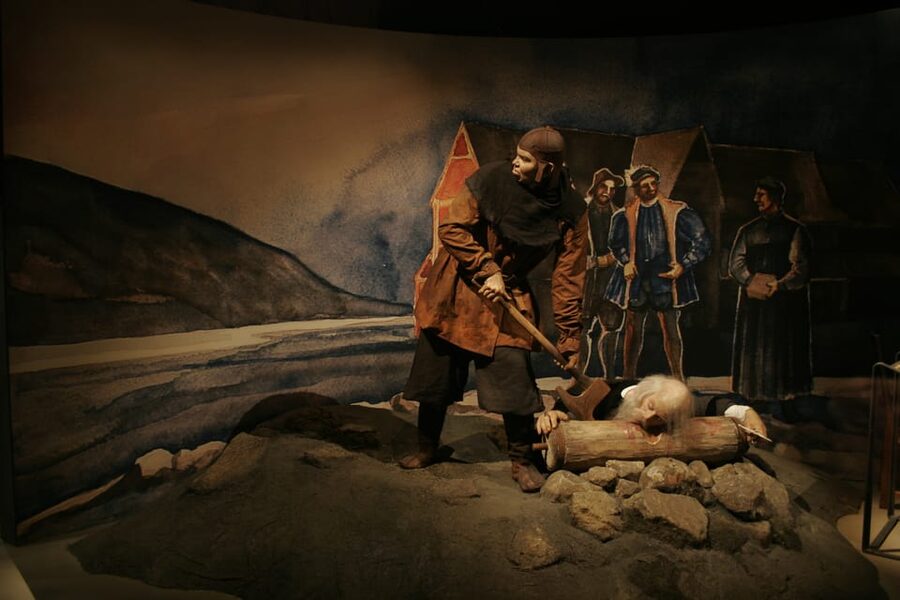
The next section turns to Leif the Lucky and the Norse discovery of America. This is one of the best-known episodes connected to Iceland’s Viking past, and the museum places it within the larger sequence rather than treating it as an isolated heroic moment.
The audio helps connect exploration with the society that produced it. You hear about people making decisions in an age when travel by sea was dangerous and slow, while the wax scene gives the episode a human scale.
I like this section for its storytelling value, but you should keep your expectations in check. The museum covers many major subjects in a short route, so no single scene receives the treatment of a full museum exhibition. You get a concise account and a memorable visual setting, not an extended study of Norse voyages.
Same island, a completely different kind of day:
- Reykjavik: Golden Circle Full-Day Tour with Kerid Crater
★ 4.8 · 24,485 reviews - Reykjavik Food Walk – Local Foodie Adventure in Iceland
★ 5.0 · 18,952 reviews - Iceland: Northern Lights Bus Tour from Reykjavik
★ 4.1 · 11,161 reviews - Reykjavík: South Coast Waterfalls, Black Sand & Glacier Tour
★ 4.8 · 11,030 reviews
The founding of the Icelandic Parliament
The route then brings you to the founding of the Parliament. This is an important shift in the story, from settlement and exploration toward law and public organization.
The Parliament section gives the visit more substance than a simple Viking display. You are not only seeing warriors and seafarers. You are also following the creation of institutions that shaped life on the island.
The audio format works well for this part because it can explain the significance while you examine the figures. Still, the scene-by-scene setup may require patience. If the next section is not ready, you may spend time standing in place with your headset on. That is the one consistent operational weakness to consider, especially if you prefer to move at your own speed.
The Saga age and Iceland’s civil war
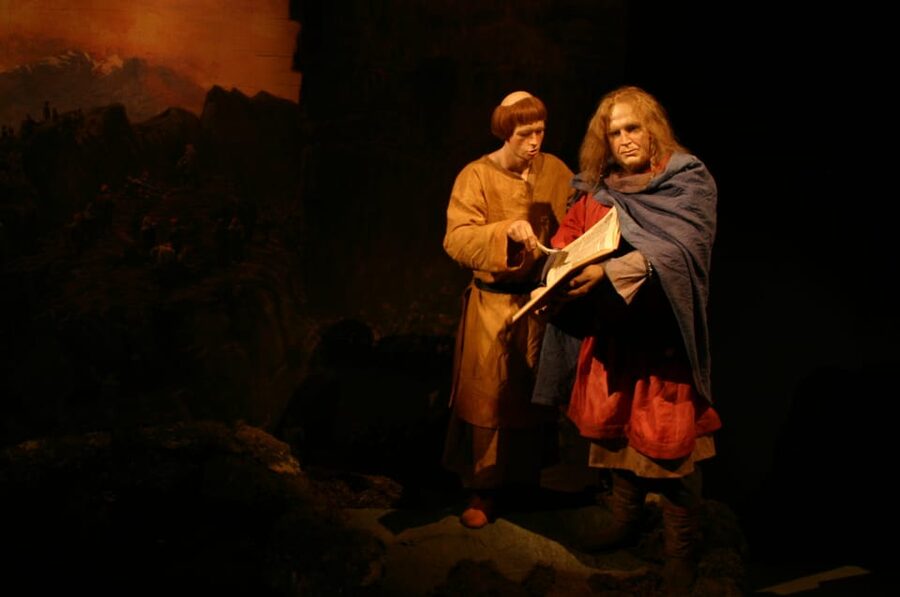
After the Parliament, the story enters the Saga age, when these stories were written down. This section is valuable because it explains how Icelandic history reached later generations through written accounts.
The museum also covers the civil war in Iceland. The move from settlement to law, then to conflict, gives the visit a wider shape. You see that the Viking period was not only about adventure. It also involved disputes, power, family ties, and the difficult work of governing a small community.
The figures make these subjects easier to picture, though the subject matter can become serious. The museum itself warns that some scenes may not suit sensitive children. Parents should consider this before bringing young children, and children under four are not suitable for the experience.
For older children, the visual scenes and audio narration may make the material more approachable than a conventional history display. Adults who want a quick introduction can also benefit, especially if they are visiting Iceland without much background in the sagas.
Reformation and the last Catholic bishop
The final historical section moves toward the Reformation and the last Catholic bishop in Iceland. This gives the route a clear endpoint and shows how the island’s religious life changed over time.
It is a fitting close because the museum does not stop at the stereotypical Viking age. You get a wider timeline, from the earliest settlers through political conflict and religious change. The route remains brief, but it helps you understand that Icelandic history continued to develop long after the best-known sagas were written.
The final scenes may appeal most to adults who want historical context. Younger children are likely to be more interested in the costume area that follows.
Viking clothing, weapons, and the lighter finish
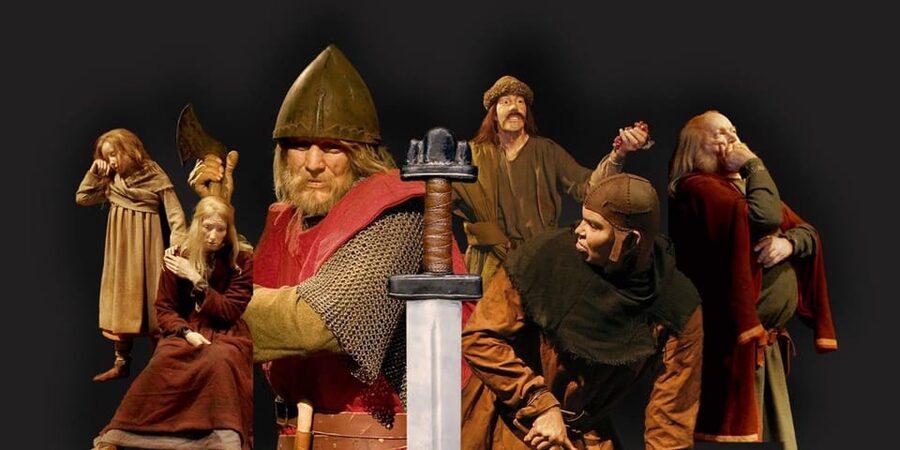
After the audio tour, you can use the costume area. The museum provides Viking clothing and authentic-style weapons for dressing up. This is the most interactive part of the visit and gives you a chance to shift from listening to doing.
I like that the experience ends this way. A history museum can become a little solemn after a sequence about conflict, law, and religion. Trying on Viking clothing gives families and groups a relaxed finish, and it can make the visit more memorable than a simple walk past wax figures.
The costume area also helps justify the museum for mixed-age groups. One person may be interested in the historical narration, while another mainly wants a photograph in Viking dress. You should not expect a full activity center, but this extra feature adds fun to a fairly short visit.
The weapons are part of the costume setup, so parents should use their judgment with children. The museum’s warning about sensitive children is worth taking seriously because some of the historical scenes may be intense.
How realistic are the wax figures?
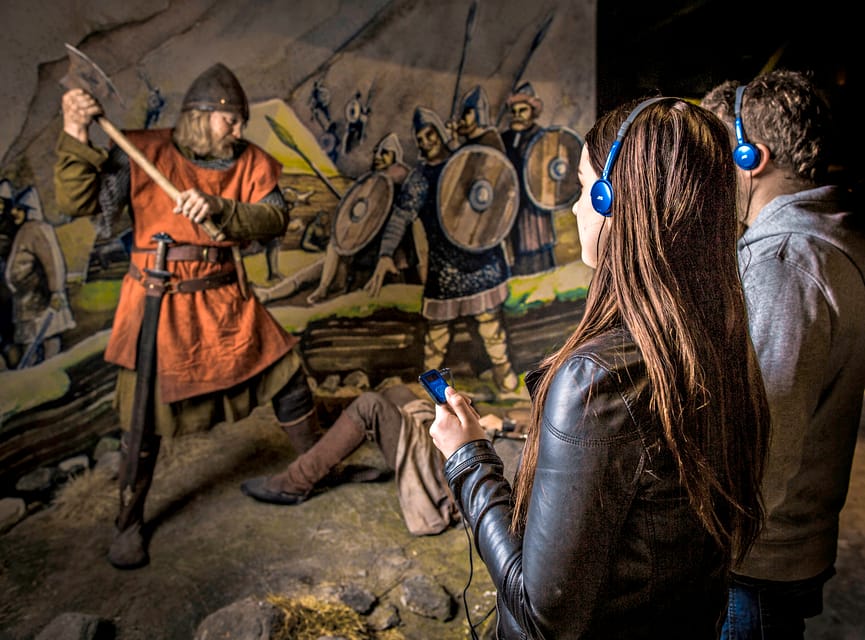
Realistic figures are one of the museum’s strongest features. The scenes are built to look like moments from Iceland’s past, rather than rows of anonymous mannequins. That visual detail gives the audio guide a firm focus.
The effect will depend on your taste. Some people love the lifelike faces and staged scenes. Others may find the museum too small or not especially interesting, particularly if they prefer objects, documents, or large-scale exhibits.
I would describe the museum as a visual storytelling experience first and a traditional museum second. You come for the atmosphere and the sequence of scenes. The narration supplies the historical framework, while the figures make it easier to picture the people involved.
Friendly, helpful staff also add to the experience. A warm welcome matters in a small attraction because the visit has fewer separate elements than a large museum. Staff assistance can make the headset, lockers, and costume area easier to manage.
Is $33 a fair price?
The ticket costs $33 per person. In Iceland, where many attractions are expensive, that price is not unusual, but it is still the central value question.
For the money, you receive the entrance, audio headset, access to 20 wax scenes, the costume area, parking, and lockers. The multilingual audio is a real advantage if you want to understand the story in your strongest language. The museum also works in poor weather and does not require a full day.
The weak point is duration. The guided route lasts about 35 minutes, and the museum is described as small. If you judge the ticket by hours of entertainment, it may feel costly. A recent score of three out of five made exactly that point, calling the museum nice but too small and not especially interesting for the price.
I would pay $33 if you enjoy Viking history, wax displays, and concise audio tours, or if you want an indoor activity that works for several ages. I would skip it if you want a major museum with extensive collections, long galleries, or lots of original artifacts.
The costume area improves the value, especially for families and groups. Without it, the visit could feel too brief for the price. With it, you get a short history presentation followed by a simple hands-on activity.
Best for families, history beginners, and rainy days
The Saga Museum suits you best if you want an accessible introduction to Iceland’s past. You do not need to arrive with detailed knowledge of the sagas. The fixed order and audio narration guide you through the main events.
Families with older children may find the mix of wax figures and dress-up appealing. Younger children may be unsettled by some scenes, and children under four are not suitable. The museum’s own warning about sensitive children should guide your decision.
It also works for couples, solo visitors, and anyone who wants a compact cultural stop. The seven audio languages make it easier for international groups to share the same experience. The Polish and Italian text guides provide another option, though audio is not listed for those languages.
I would not make this your only history visit in Iceland. It is a primer, not a complete account of the country. Pair it with other sightseeing if you want a fuller understanding of Icelandic culture and the sagas.
Practical timing and booking advice
Set aside at least the 35-minute audio route, plus extra time for entering, lockers, and the costume area. The exact total can vary because the route may involve waiting for the next step.
The ticket is valid for one day from first activation. You can cancel up to 24 hours before the activity for a full refund, and reserve now while paying later if you need flexibility. Those terms are useful when Icelandic weather or changing plans affect your schedule.
No pickup or drop-off is provided. Use the address, the white building, and the Viking statue to find the entrance. Parking and lockers are included, which removes two small costs and hassles once you arrive.
Because the attraction is compact, I would avoid treating it as a major time commitment. Plan it around another Reykjavik activity, and do not build an entire day around the museum alone.
Should you book the Saga Museum?
Book it if you want a short, visual introduction to Icelandic history, especially one with multilingual audio and a playful Viking costume finish. The lifelike figures, friendly staff, and clear story order are the museum’s best qualities.
Think twice if $33 feels high for a 35-minute route or if you prefer original artifacts and large collections. The museum is small, and some people find the staged sequence less interesting than expected. For families with older children, Viking enthusiasts, and visitors seeking an indoor cultural stop, it is a reasonable choice. For everyone else, the price may be better spent on a longer attraction.
FAQ
Where is the Saga Museum located?
The museum is at Grandagarður 2 in Reykjavik. Look for the white building with a Viking statue on horseback in front. It shares the same entrance as the restaurant Matur og Drykkur.
How long does the museum visit last?
The audio-guided route lasts about 35 minutes. You should allow additional time for the costume area and for possible waiting between sections.
Which languages are available for the audio guide?
Audio guides are available in English, French, German, Icelandic, Russian, Spanish, and Swedish. Text guides are available in Polish and Italian.
Is the Saga Museum suitable for young children?
Children under four are not suitable for the experience. The museum also warns that some scenes may not be suitable for sensitive children.
Is the museum wheelchair accessible?
Yes, the Saga Museum is wheelchair accessible.
What is included with the ticket?
The ticket includes entrance, the audio guide and headset, parking, and lockers. Food, drinks, and pickup or drop-off are not included.
Just added around Reykjavik
- Reykjavik: Whale and Puffin Watching RIB Boat Tour★ 4.6 · 179 reviews
- Reykjavik: Whale Watching Express★ 4.3 · 227 reviews
- Reykjavik: Whale Watching & Lava Show★ 5.0 · 4 reviews
- Reykjavik: Whale & Marine Adventure Tour★ 4.3 · 71 reviews
- Reykjavík: Horse Riding Tours★ 4.9 · 127 reviews
- From Reykjavík: Viking Horseback Tour in Hafnarfjörður★ 4.9 · 112 reviews
- Luxury Private Transfer from Reykjavik to Keflavik Airport★ 5.0 · 9 reviews
- Winter South Coast Day Tour by Minibus from Reykjavik★ 5.0 · 109 reviews
Museums, compared.
Perlan Museum Wonders of Iceland Entrance Ticket
Read our review →
Hop-On Hop-Off Bus and Perlan Museum Entry Ticket
Read our review →


Aurora Reykjavík, The Northern Lights Center Museum Visit
Read our review →
Ancient Historical Site Tour at the Caves of Hella
Read our review →
Browse the lists this tour appears in