
Reviewed · PRIVATE DRIVERS
From Reykjavik: Reykjanes Geopark Tour & Airport Transfer
Reykjanes is Iceland in miniature: steaming mud, bright crater lakes, raw lava, sea cliffs, and two tectonic plates packed into one windswept peninsula. I like this tour because it shows the less polished side of Iceland, especially around Krýsuvík’s bubbling ground and the new lava fields near Grindavík.
I also like the practical airport-transfer option and the small group of five to 17 people. Guides such as Trond, Gummi, Jakob, Ian, and Starri have brought plenty of local stories and humor to the drive. The main drawback is that volcanic activity and road closures can force major changes, sometimes cutting out the lighthouse, cliffs, bridge, or Grindavík stop.
Key points to know before you book
- The route packs in several types of Icelandic scenery: lakes, geothermal fields, ocean cliffs, lava, and a tectonic boundary.
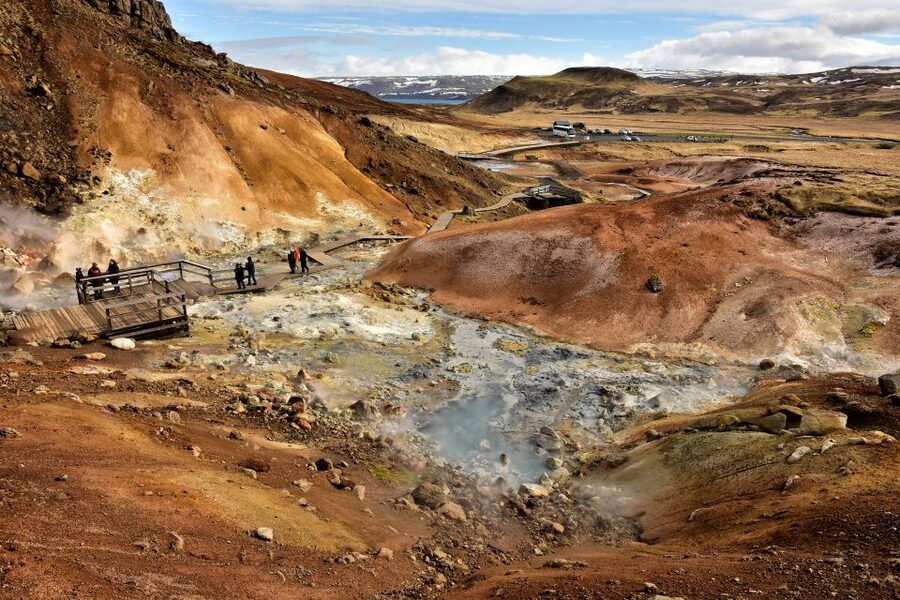
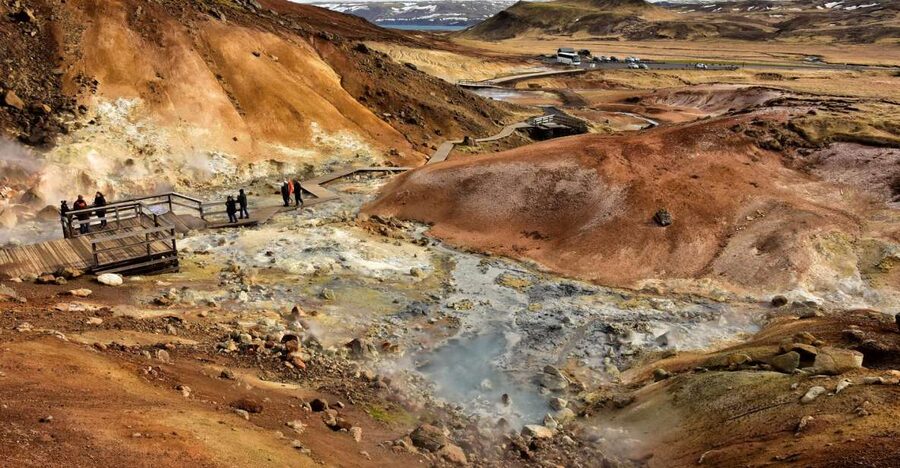
- Krýsuvík and Gunnuhver are the strongest stops: expect sulfur smells, steam, mud pools, and colorful earth.
- The group is small: five to 17 people, with a climate-controlled minibus rather than a large coach.
- The tour works well before a flight: airport drop-off is optional, with an expected return to Reykjavík around 4 PM.
- Volcanic conditions can change the day: safety comes first, and substitute stops may replace closed areas.
- Bring serious outdoor clothing: rain gear and sturdy footwear matter on exposed ground.
Why Reykjanes feels different from the Golden Circle
Many visitors first meet Iceland through waterfalls, glaciers, and famous black-sand beaches. Reykjanes offers a rougher introduction. The peninsula has fewer big postcard sights, but it gives you a close look at the forces that keep Iceland changing.
Here, geothermal heat pushes steam through the soil. Earthquakes mark the movement of the Mid-Atlantic Ridge. Lava has recently covered roads and fields near Grindavík. The result is a place that can look almost otherworldly, but it is also a working part of Iceland, with roads, towns, fishing history, and an international airport nearby.
I think this tour suits you if you want variety in a short time. You will not spend the day at one grand waterfall. Instead, you will make a sequence of stops, each showing a different piece of the peninsula.
The $159 price is not the cheapest way to see Reykjanes. You are paying for a local driver-guide, hotel or designated bus-stop pickup, a small vehicle, and the convenience of reaching the airport or Blue Lagoon afterward. That is useful value if you have a late afternoon flight or do not want to rent a car for a single day.
A few more Reykjavik trips to weigh up
- Iceland: Airport Transfers between Keflavík and Reykjavik Center
★ 4.5 · 2,485 reviews - Airport Transfer in Iceland from Keflavik Airport to Reykjavik City With Hotel Drop Off
★ 4.0 · 464 reviews - Iceland: Airport Transfers between Keflavik and Reykjavik Hotels
★ 4.0 · 349 reviews
A relaxed start from Reykjavík and Hafnarfjörður
Pickup begins between 9 and 9:30 AM. You need to be outside at your assigned hotel or bus stop by 9 AM, with your phone on in case the driver calls. Reykjavík has restricted pickup areas, so some hotels use nearby designated stops rather than a door-to-door meeting point.
The vehicle is a climate-controlled minibus operated by Gateway to Iceland. Look for a minibus marked Gateway to Iceland, since several tour companies use the same pickup areas. The small vehicle makes it easier to hear the guide and spend less time loading people than you would on a large coach.
The first scheduled break is in Hafnarfjörður for about 30 minutes. This is a useful pause for coffee, snacks, or a little shopping before the more open parts of the peninsula. Food and drinks are not included, so this is a good chance to buy what you need for the rest of the morning.
The drive itself is part of the tour. Several guides, including Jakob, Gummi, Ian, and Starri, have been praised for filling the road time with geology, Icelandic history, local life, and humor. One guide even adjusted the lunch plan when the group turned out to be entirely vegetarian. That kind of flexibility is valuable on a small-group outing.
Kleifarvatn, a lake shaped by underground forces
Kleifarvatn is the first major nature stop. The lake sits on a fissure zone and is fed entirely by underground springs. That detail gives the view more meaning: you are not simply looking at water surrounded by hills, but at a lake tied directly to the cracks and movement beneath Iceland.
The stop is mainly about scenery and explanation rather than a long hike. Expect time to look across the water, take photographs, and hear how the area’s geology affects the lake. Wind can be strong, so keep your outer layer close even if Reykjavík felt calm.
Kleifarvatn is a good early stop because it slows the morning down. After the city and the Hafnarfjörður break, the road opens into a quieter setting where the scale of Reykjanes becomes clear.
Grænavatn and the color of a volcanic crater lake
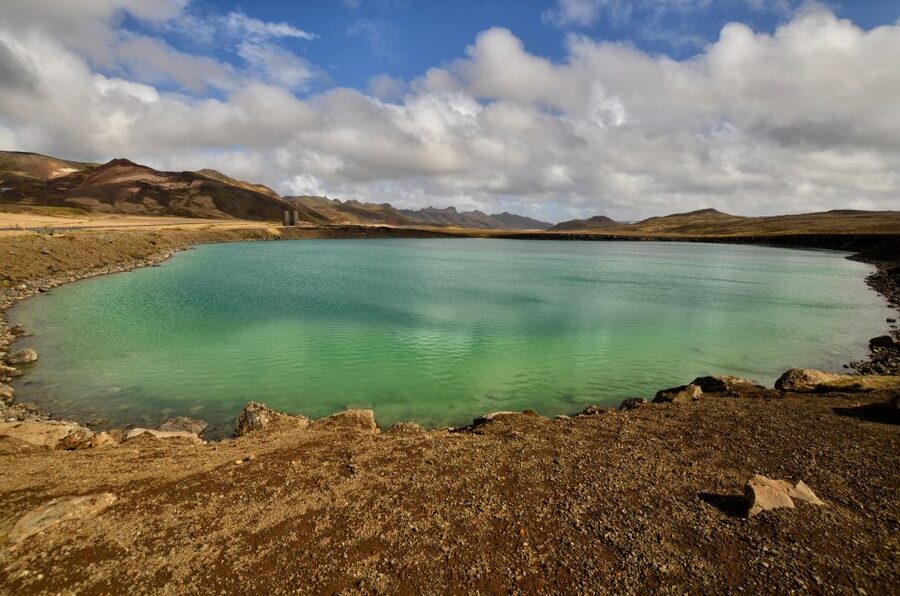
Grænavatn is much smaller than Kleifarvatn, but it can be more striking in photographs. The lake fills a volcanic crater and is known for teal-colored water. You get about 10 minutes here, enough for a quick look and pictures rather than a long walk.
Do not expect a large viewpoint complex or a long trail. This is a short roadside-style stop within a tightly timed route. Its value comes from contrast: Kleifarvatn gives you a broad body of water, while Grænavatn shows the compact shape of a volcanic hollow.
The color may vary with light and weather. Iceland’s skies can change quickly, and the wind can make a short stop feel brisk. Still, this is one of those small features that helps explain how varied Reykjanes can be within a few miles.
Same island, a completely different kind of day:
- Reykjavik: Golden Circle Full-Day Tour with Kerid Crater
★ 4.8 · 24,485 reviews - Reykjavik Food Walk – Local Foodie Adventure in Iceland
★ 5.0 · 18,952 reviews - Iceland: Northern Lights Bus Tour from Reykjavik
★ 4.1 · 11,161 reviews - Reykjavík: South Coast Waterfalls, Black Sand & Glacier Tour
★ 4.8 · 11,030 reviews
Krýsuvík and Seltún, the tour’s most memorable walk
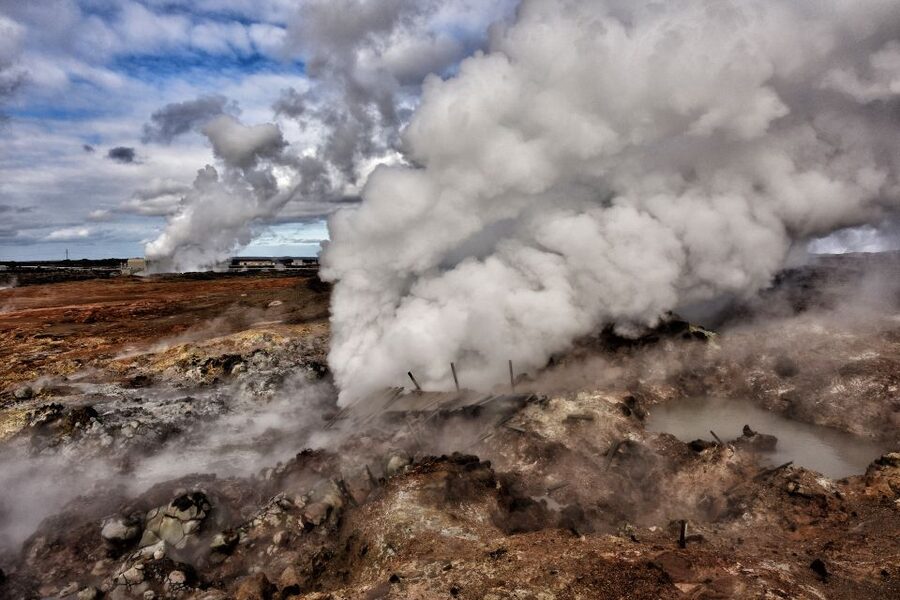
Krýsuvík, often called Seltún in connection with its geothermal area, is the main walking stop. You follow paths among steaming vents, bubbling pools, sulfur-stained ground, and hills marked by shades of yellow, orange, brown, and green.
This is where sturdy shoes become important. The ground is wet, uneven, and active. Stay on marked paths and follow the guide’s instructions. Steam and sulfur odors are part of the experience, not a sign that something has gone wrong.
You get about 30 minutes here, which is enough to walk, take photographs, and study the details without feeling rushed. I would give this stop your full attention. The colors and textures change from one patch of earth to the next, and the scene can feel more like Mars than a familiar European hiking area.
Several guides have allowed a little extra time here when conditions and the group allowed it. That flexibility is one reason a small group can be worth the higher price. A large coach tour usually has to follow a fixed clock, while a smaller outing may respond to what the group finds most interesting.
Grindavík and lava from a changing town
The route then reaches the area around Grindavík, a fishing town affected by recent volcanic activity. You may see freshly solidified lava fields and the eerie signs of a community that was once active but has been disrupted by eruptions and safety restrictions.
The exact access point can change. Roads around Grindavík have closed during periods of volcanic concern, and the town or nearby lava areas may not be fully accessible. When that happens, the guide may replace the stop or approach the area from a different direction.
This uncertainty is important when you book. The new lava is one of the tour’s most timely sights, but it is also the part most likely to change. You should view the itinerary as a plan shaped by safety conditions, not a promise that every road will be open.
Even when access is limited, the area gives you a clearer sense of how close Iceland’s volcanic activity is to homes, roads, and daily life. It is not just a dramatic natural display. It is a living event with real effects on the nearby community.
Gunnuhver, steam, mud, and an Icelandic ghost story
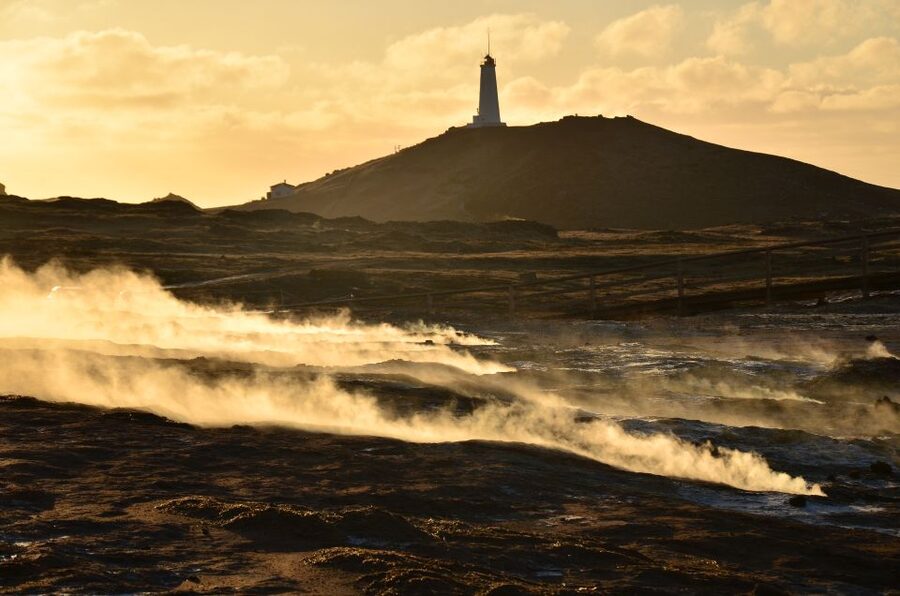
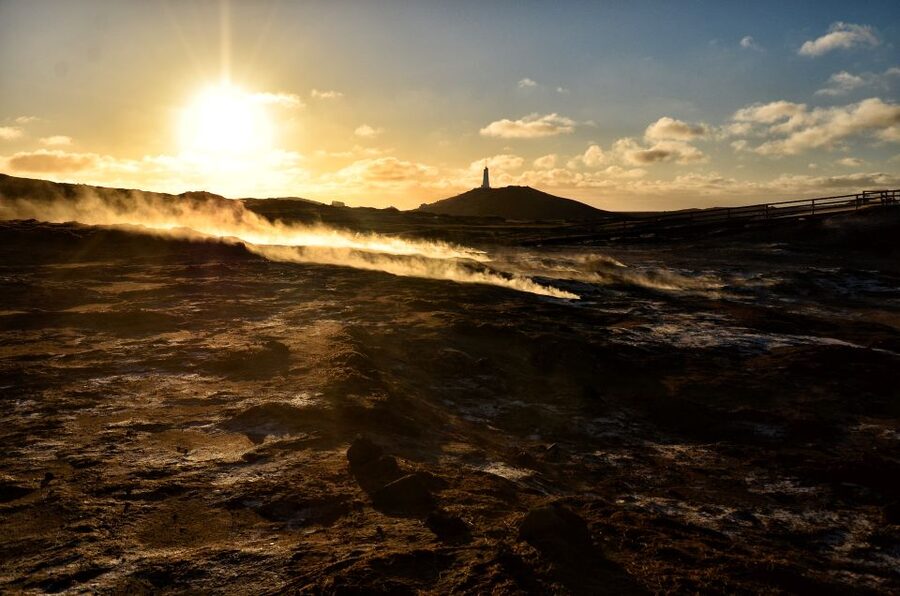
Gunnuhver brings you back to geothermal activity, but with a wilder coastal feel. Steam rises from vents, mud bubbles in pools, and the air often carries a strong sulfur smell. The ground looks unstable because it is actively releasing heat and gases.
The guide also tells the local story of Gunna, a ghost said to haunt the area. The tale adds a little Icelandic folklore to what could otherwise be a purely geological stop. I like this mix of science and story. It helps the place feel connected to local culture rather than just another photo stop.
You have roughly 10 minutes here. That is enough for the main viewpoints, but not for a long walk. Keep your camera protected from rain and your clothing secured against wind. Steam can obscure views for short periods, so patience helps.
Reykjanesviti and the sea cliffs
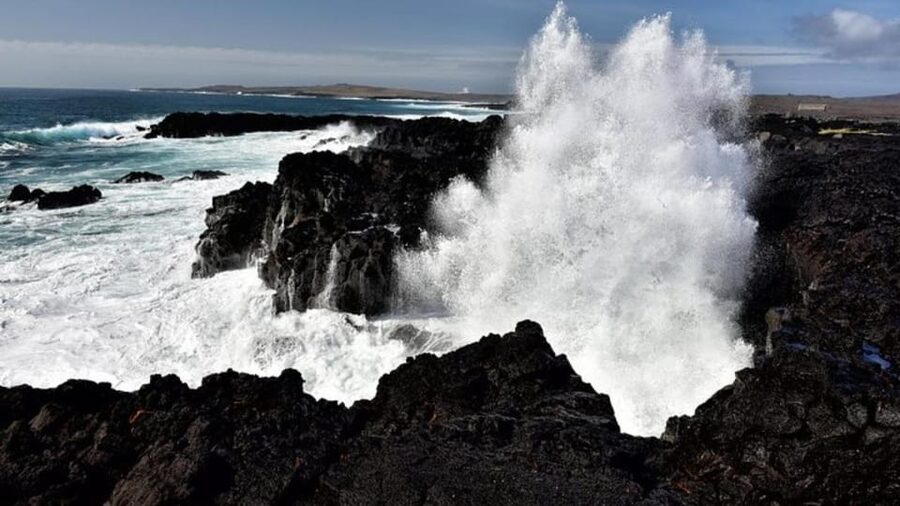
Reykjanesviti is Iceland’s oldest lighthouse, and the nearby coast provides some of the day’s best open views. The lighthouse itself is modest, but the setting matters more than the building. You look out toward a rugged shoreline with bird cliffs and the North Atlantic beyond.
The planned stop lasts about 30 minutes. That gives you time to walk, photograph the lighthouse, and look toward the cliffs. One guide extended the time at Valahnúkur Point, which was considered worth the extra minutes. If the weather is clear, this can be one of the most rewarding stops for broad coastal views.
Birdlife is another reason to pay attention here. Species vary by season and conditions, and you should bring binoculars only if they are convenient. The coast is exposed, so rain gear and a warm outer layer are more useful than a perfectly packed camera bag.
Road closures may remove this stop. That happened during a period of concern around Grindavík, when the lighthouse and cliffs were unavailable. The guide may offer alternatives, but there is no exact substitute for standing beside the open coast. This is the clearest example of why a Reykjanes tour needs some flexibility.
The Bridge Between the Continents
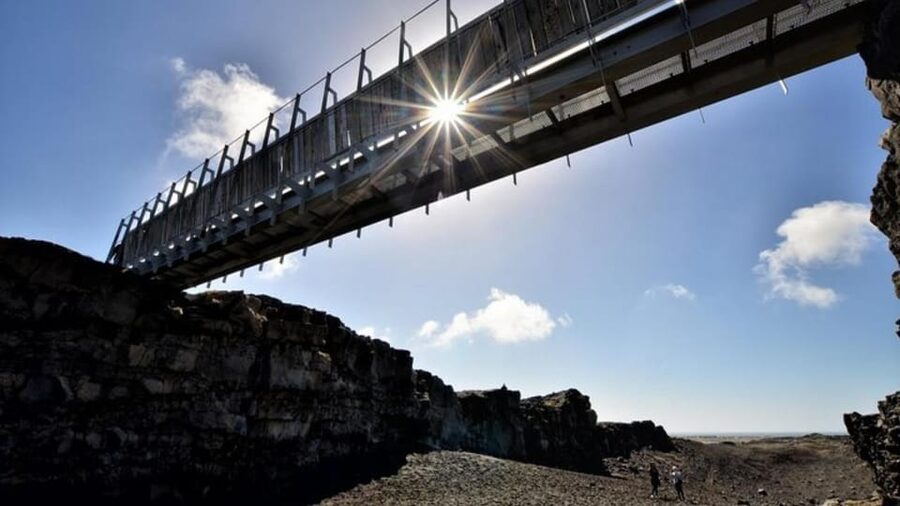
The final major sight is the Bridge Between the Continents, a small footbridge spanning a symbolic gap between the North American and Eurasian tectonic plates. The bridge is a simple structure, but the idea behind it is memorable: you can walk across a visible marker of the plates that shape Iceland.
You get about 20 minutes here. It is enough for photographs and a short walk, though you should treat the bridge as an educational landmark rather than a huge engineering attraction.
The broader importance is underground. Iceland sits on the Mid-Atlantic Ridge, where the plates move apart. The bridge gives you a clear, accessible way to connect that large geological idea with something you can physically cross.
Like the lighthouse, this stop can be affected by closures. If the southern route is restricted, the bridge may be removed from the day’s plan.
The airport and Blue Lagoon option
After the final stop, the minibus can pass by Keflavík International Airport and the Blue Lagoon before returning toward Reykjavík. Airport drop-off is optional and makes this tour especially useful for a late afternoon or evening departure.
Do not treat the airport transfer as a guarantee that suits every flight. The tour normally returns to Reykjavík around 4 PM, but weather, traffic, road conditions, and volcanic restrictions can add time. Check your flight schedule carefully and allow a sensible buffer.
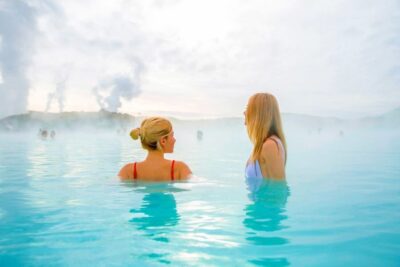
The Blue Lagoon is also a possible drop-off, but admission is not included. You need your own entry booking, and the operator does not include the cost in the $159 tour price. This combination can work well if you want to turn a sightseeing day into a lagoon visit, but it requires planning ahead.
What the small group and guide add
The group size ranges from five to 17 people. That is small enough for a more personal feel, but 17 people is still large enough that you should not expect a private tour.
The best part of this format is the guide. Trond has been praised for humor and clear explanations. Gummi has made the trip engaging and helped with practical matters such as finding suitable food. Jakob has mixed geology with Icelandic history and everyday life. Ian has been praised for patient help with a guest who struggled with the language and timing. Starri has added family stories and extra time at the coast when possible.
Guide quality can vary from departure to departure, but the operator’s strongest feature is clearly its local guiding. You are not left to stare at mud pools without context. The drive between stops becomes part of the day.
Who should book this Reykjanes tour
I would choose it if you want a broad taste of southwest Iceland without driving. It is especially useful for:
- A first visit with only a half-day available
- A late flight from Keflavík
- A cruise stop needing hotel or port pickup
- Anyone interested in volcanoes, geothermal activity, and tectonic plates
- Visitors who prefer a small minibus to a large coach
- People who want local stories along with scenery
I would think twice if your top priority is guaranteed access to Grindavík, the lighthouse, or the bridge. Volcanic safety measures can remove those stops. You should also skip this outing if you want a relaxed day with long hikes, since most stops are short and the route covers a lot of ground.
The tour is not designed around a proper included lunch. Buy food in Hafnarfjörður or ask the guide about the day’s lunch plan. The 30-minute break gives you a useful chance to prepare.
Practical verdict on the $159 price
At $159, this is a mid-to-high priced day excursion for seven hours. The price makes more sense when you count the hotel pickup, small group, local English-speaking driver-guide, and optional airport or Blue Lagoon transfer.
I consider it good value for a visitor who would otherwise rent a car, pay for fuel, navigate changing road restrictions, and manage an airport transfer alone. It is less compelling if you already have a rental car and plan to visit only one or two Reykjanes sights.
Free cancellation up to 24 hours before departure and reserve-now, pay-later terms give you some planning flexibility. The tour needs at least four participants, so a confirmed booking can still be canceled if that minimum is not reached. In that case, you should be offered another option or a full refund.
Should you book it?
Book this tour if you want Reykjanes as a compact lesson in Icelandic geology, with enough time to walk at Krýsuvík and see the coast, rather than a string of rushed coach stops. The airport drop-off adds real value, and the guides appear to bring the history and science to life.
Book with realistic expectations. Weather and volcanic activity can change the route, and some stops may disappear. If you can accept that uncertainty, this is one of the more useful ways to see the peninsula in a single day.
FAQ
How long does the Reykjanes tour last?
The experience lasts about seven hours. It normally returns to Reykjavík around 4 PM, though weather, traffic, and volcanic conditions can affect the timing.
Where does pickup take place?
Pickup is available from listed Reykjavík hotels, designated bus stops, Reykjavík cruise ports, and other specified locations. If your accommodation is more than a 10-minute walk from a fixed pickup point, contact the provider by email.
What time should I be ready?
Be outside your pickup location by 9 AM. Pickup generally takes place between 9 and 9:30 AM, depending on the order of stops and traffic.
Can I finish at Keflavík International Airport?
Yes. An optional drop-off at Keflavík International Airport is available. The tour can also pass by the Blue Lagoon, but admission to the lagoon is not included.
What should I bring?
Bring rain gear, outdoor clothing, and sturdy outdoor footwear. The geothermal areas can be wet and uneven, and the coast is exposed to changing weather.
Can the itinerary change because of volcanic activity?
Yes. Roads or sites may close because of volcanic activity or other safety concerns. The route may take longer, and some stops can be replaced with alternatives. The tour may also be delayed, changed, or canceled because of unsafe weather or road conditions.
Just added around Reykjavik
- Reykjavik: Whale and Puffin Watching RIB Boat Tour★ 4.6 · 179 reviews
- Reykjavik: Whale Watching Express★ 4.3 · 227 reviews
- Reykjavik: Whale Watching & Lava Show★ 5.0 · 4 reviews
- Reykjavik: Whale & Marine Adventure Tour★ 4.3 · 71 reviews
- Reykjavík: Horse Riding Tours★ 4.9 · 127 reviews
- From Reykjavík: Viking Horseback Tour in Hafnarfjörður★ 4.9 · 112 reviews
- Luxury Private Transfer from Reykjavik to Keflavik Airport★ 5.0 · 9 reviews
- Winter South Coast Day Tour by Minibus from Reykjavik★ 5.0 · 109 reviews
Private Drivers, compared.
Golden Circle Minibus Tour & Blue Lagoon Transfer
Read our review →
Airport Transfer in Iceland from Keflavik Airport to Reykjavik City With Hotel Drop Off
Read our review →
The Lava Tunnel Tour with Transfer from Reykjavik
Read our review →
Airport Express Shared Arrival Transfer from Keflavik Airport to Reykjavik Hotels
Read our review →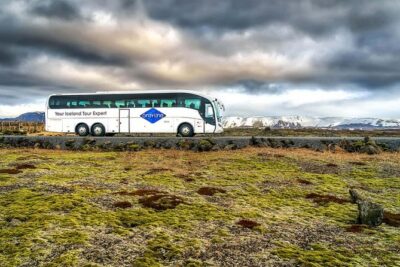
Airport Express Shared Departure Transfer from Reykjavik Hotels to Keflavik Airport
Read our review →
Golden Circle Day Trip with Blue Lagoon Transfer
Read our review →
Blue Lagoon Entry Ticket with Optional Private or Shared Transfer
Read our review →Browse the lists this tour appears in