
Reviewed · WALKING TOURS
Reykjavik: World War II Walking tour around the city centre
The most striking part of this tour is that the British landing point is not an abstract date in a book. You walk from Parliament Square to the Old Harbour and see where British forces arrived in May 1940, then follow their route toward the centre of Reykjavik. Period photographs and film help you compare the wartime city with the one under your feet today.
I like the tour’s mix of military events and everyday change, especially the discussion of American influence on Icelandic food and music. I also like the personal touch offered by guides such as Lucky, who brings humor and, when suitable, a few ghost stories. The main drawback is the weather: you walk for two hours in almost all conditions, and benches are not available at every stop.
Key points about Reykjavik’s wartime walk
- The Old Harbour landing point: See the exact area where British forces arrived in Iceland in May 1940.
- A route through the old city: Walk from Austurvollur through Reykjavik Old Town and toward buildings taken over during the advance.
- More than battle plans: Learn how British and American forces affected food, music, and social life.
- Period images on the street: Photographs and videos show how Reykjavik looked during the war.
- A small-group feel from a local guide: Guides such as Lucky add humor, local knowledge, and occasional ghost stories.
- Two hours on mostly flat ground: There is one small hill, no stairs, and wheelchair access, but you still need weatherproof clothing.
Why Reykjavik’s 1940 landing matters
Iceland’s World War II story can be easy to miss. The city today feels calm and compact, with colourful houses, cafes, and the broad sweep of the harbour. This walk shows you how quickly that familiar setting became tied to a major international conflict.
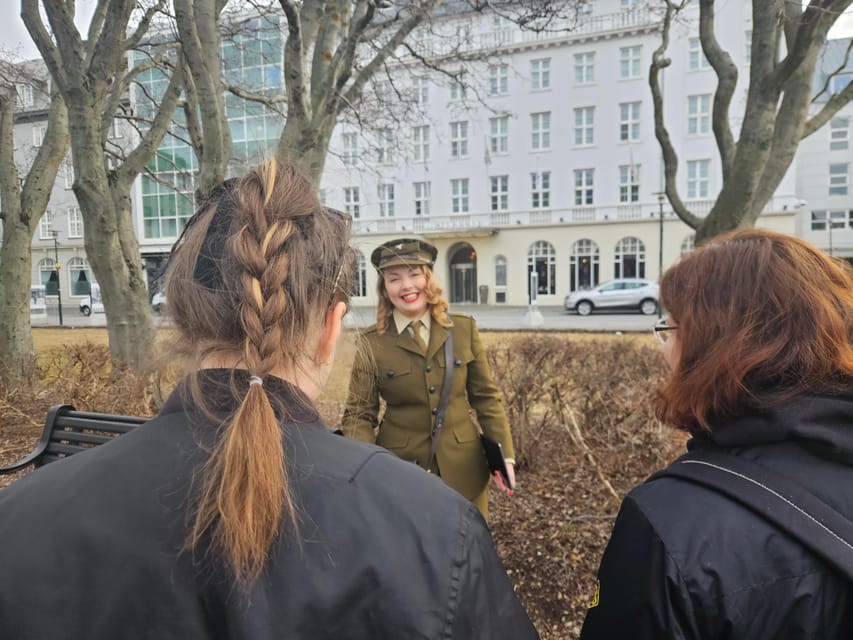
The tour begins outside Hotel Borg on Austurvollur, Parliament Square. That is a useful starting point because you are placed in the centre of civic Reykjavik before walking toward the waterfront. From there, your guide sets up the story of the British Invasion and explains how soldiers moved into the city.
This is not only a tour of military movements. You also hear about the cultural and social changes that followed. The British presence, and later the American presence, affected what people ate, listened to, and experienced in daily life.
I find that approach more useful than a string of dates. You are not simply asked to remember who arrived and when. You are encouraged to consider how an outside military presence changed a small Icelandic capital.
A few more Reykjavik trips to weigh up
- Reykjavik Food Walk – Local Foodie Adventure in Iceland
★ 5.0 · 18,952 reviews - Reykjavík Small group Walking Tour – by CityWalk
★ 5.0 · 5,076 reviews - Reykjavik: Guided Foodie Walking Tour with 6 Tastings
★ 4.9 · 1,645 reviews
From Austurvollur to the Old Harbour
Meet outside Hotel Borg, not inside the hotel. The walk then heads toward the Old Harbour, the key place in the story and one of the tour’s strongest stops.
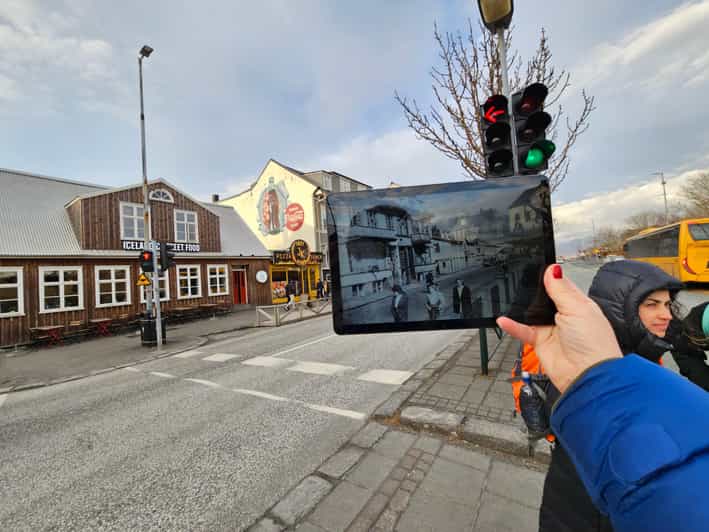
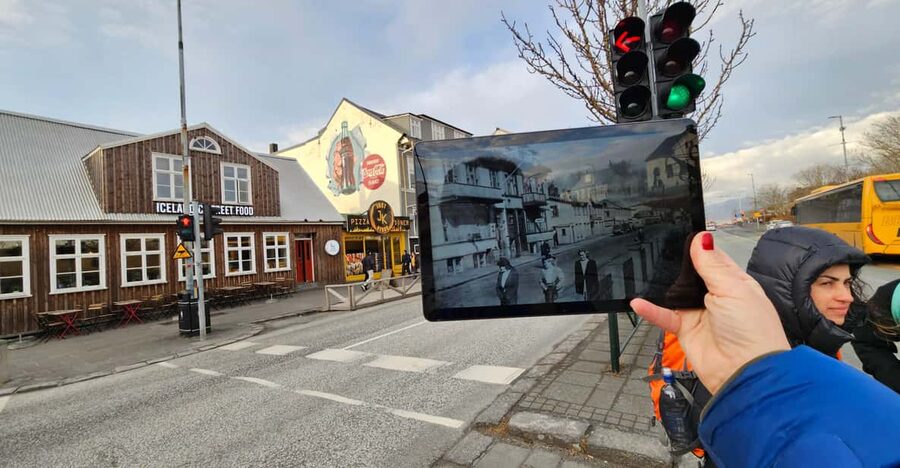
Here, your guide points out the exact landing area associated with the British arrival in May 1940. Period images and film clips help you picture the waterfront at that time. The visual comparison is important because modern Reykjavik can make wartime events feel distant. Seeing old images while standing in the same area gives the story a physical anchor.
You should expect to spend part of the tour outdoors while listening. Bring a camera if you enjoy recording places that connect the present city with its past. The tour description does not promise a museum visit or indoor displays, so think of this as a street-based history lesson rather than a conventional exhibition.
The harbour stop also gives the guide room to explain the military side of the occupation. You follow the route taken by soldiers as they moved from the waterfront toward the centre. That simple act of walking the route makes the sequence easier to understand than hearing it described on a map.
Following the soldiers through Reykjavik Old Town
After the harbour, the group heads into Reykjavik Old Town. The route passes through side streets and toward important buildings that were taken over as the soldiers moved in.
This part should appeal to you if you like history that is tied to ordinary streets. Instead of treating the old city as a backdrop for photographs, the guide uses it as evidence. Buildings and corners become part of the wartime story, and the route shows how a military operation reached into the city’s daily life.
The walk is mostly flat, although there is a small hill to go up and down. There are no stairs, and benches appear at several stops, but not at all of them. If you have limited stamina, you may want to ask about the pace before setting out. The tour is wheelchair accessible, though the hill and length of time on foot are still worth considering.
The side streets are another plus. You may find corners of central Reykjavik that you would otherwise pass without knowing their significance. This is not a separate sightseeing tour of every major landmark, so the value lies in seeing familiar areas through a wartime lens.
The German Residence and a wider wartime picture
The German Residence is one of the named highlights. Its inclusion helps widen the story beyond the British landing itself. You are not following only one national force or one military episode. The tour also considers the German connection and the wider pressures surrounding Iceland during the war.
The supplied details do not specify every fact covered at this stop, so I would not expect a full architectural or diplomatic history of the building. Its value is as part of a broader route through wartime Reykjavik, where the city’s buildings carry political meaning as well as local history.
This is also where a good guide matters. The strongest part of a walking tour like this is the explanation between stops. A guide who can connect the German Residence, the harbour, and central buildings into one clear story will make the route feel purposeful rather than scattered.
Same island, a completely different kind of day:
- Reykjavik: Golden Circle Full-Day Tour with Kerid Crater
★ 4.8 · 24,485 reviews - Iceland: Northern Lights Bus Tour from Reykjavik
★ 4.1 · 11,161 reviews - Reykjavík: South Coast Waterfalls, Black Sand & Glacier Tour
★ 4.8 · 11,030 reviews - Reykjavík: Whale Watching and Marine Life Cruise
★ 4.6 · 9,838 reviews
From military occupation to food and music
The tour’s most appealing feature may be its attention to social change. You hear not just about soldiers and buildings, but about how the British and Americans affected Icelandic society.
Food and music are particularly practical ways to understand that change. Military presence is often told through commanders, dates, and strategy. Here, you also consider what people ate and what music they danced to. Those details bring the period closer to home and help you see occupation as something that touched daily habits.
The American presence receives its own discussion. The tour presents it as a force that changed society, not simply as another chapter in military history. That broader view is useful if you want to understand Iceland as a small country adjusting to powerful outside influences.
I would choose this walk over a narrower war tour if you are interested in the connection between politics and ordinary life. If you want detailed battlefield analysis, weapons, or a long military chronology, you should confirm that the emphasis suits you before booking. The advertised focus is clearly wider than tactics alone.
How period photos change the walk
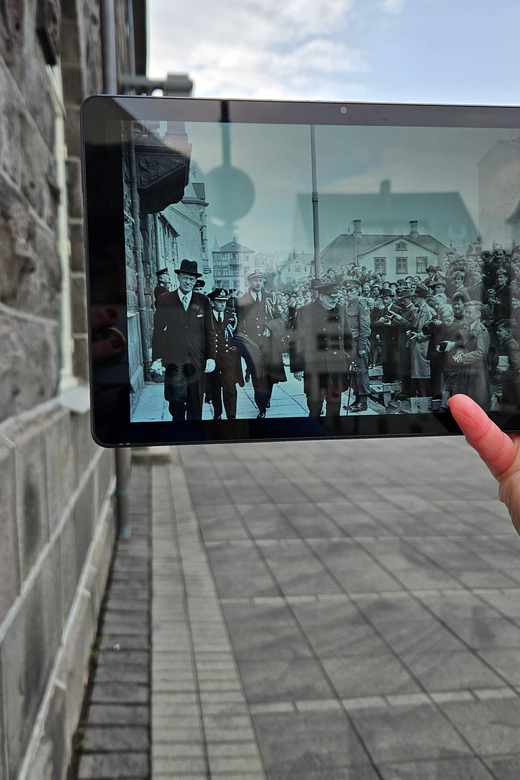
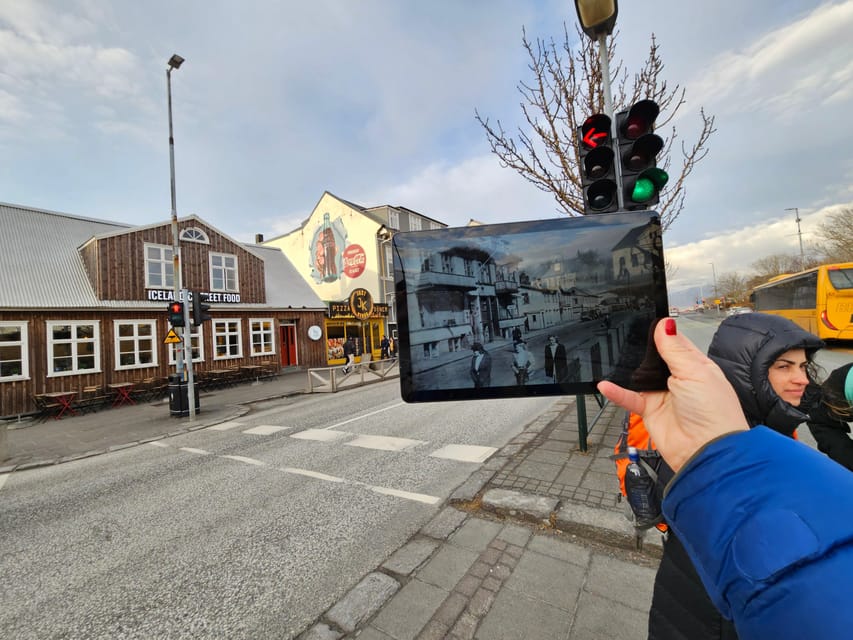
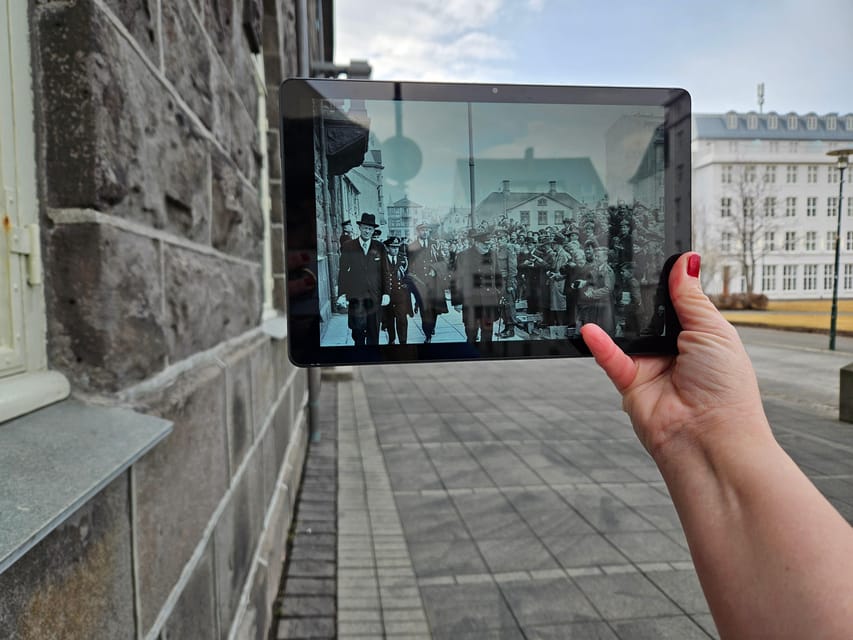
The guide uses photographs and videos from the period to show how Reykjavik has changed. This is a smart tool for an urban walking tour because it turns comparison into part of the sightseeing.
You might look at a present-day street and see only cafes, traffic, or old buildings. A period image can show the same area under very different conditions. The result is a more active way to read the city. You are asked to notice what has changed, what remains, and how the wartime city related to the modern capital.
The images also help keep the tour grounded. You are not relying only on a spoken account. The guide gives you something to look at while explaining the events, which should help if you do not usually enjoy formal history talks.
Bring a camera, though do not expect the tour to provide a long list of photo stops. The camera is most useful for recording buildings, street views, and visual comparisons that may be difficult to remember later.
The guide makes the difference
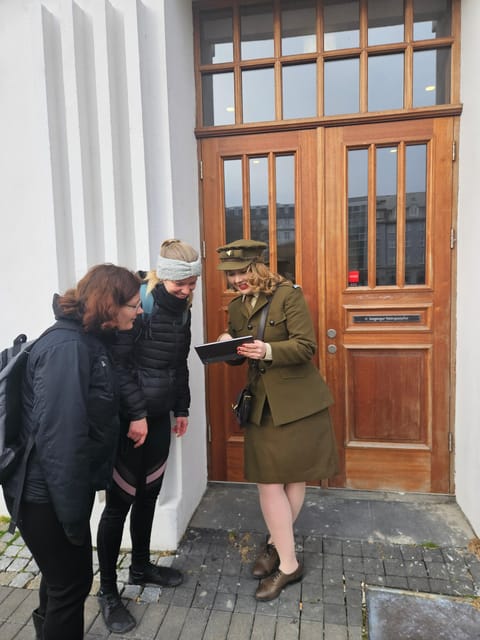
The tour is led in English by a live local guide. A guide called Lucky has been particularly praised for combining strong subject knowledge with humor, and for adding ghost stories when the group showed interest.
That detail tells you something about the tone. This is a serious subject, and the tour is not suitable for children under 10 because of the material. At the same time, it is not presented as a dry lecture. A warm guide can make difficult history easier to follow without making light of the subject.
You should expect the guide to shape the mood. Some groups may focus closely on wartime events, while others may welcome local stories and unusual details. If ghost stories appeal to you, mention it at the start, as Lucky has included them when guests expressed interest.
The guide is also important for questions. A two-hour walk has enough time for explanation, but not enough time to cover every part of Iceland’s wartime story. Ask about the subjects you care most about, especially the contrast between British and American influence.
Is $40 a fair price?
At $40 per person, this is a reasonable price for a two-hour guided walk in central Reykjavik, especially if you value local interpretation rather than simply seeing landmarks. The price includes the live English-speaking guide and the history-focused route, but not drinks or snacks.
The value comes from the structure. You begin at Parliament Square, walk to the landing point, follow the military route into the old city, and stop at places tied to the wider story. Without a guide, you could walk through the same streets and miss the connections between them.
It is less compelling if you only want a quick city orientation. The tour is focused on World War II and its social effects, so much of the commentary concerns military occupation, national change, and the period’s difficult subject matter.
For a first day in Reykjavik, the route can still work well because it covers the Old Harbour, Old Town, and central streets. Just remember that the tour’s purpose is historical interpretation, not a general introduction to every major sight.
Weather, clothing, and comfort
Icelandic weather is the main practical issue. The tour runs in almost all conditions, and summer can still feel cold. Pack rain gear and outdoor clothing, and wear comfortable shoes with a good grip.
Do not plan this as a quick stroll in light city shoes. You will be outside for two hours, and the route includes a small hill. Benches are available at several stops, but not continuously, so comfortable footwear and sensible layers matter more than looking dressed for a cafe.
A camera is recommended, but rain protection for yourself should come first. If the forecast looks rough, give yourself extra time to dress properly rather than assuming the city centre will shelter you.
The route has no stairs and is described as wheelchair accessible. The small hill remains the only feature specifically called out, so anyone concerned about mobility should consider that section when deciding if the walk is right.
Who will enjoy this tour most?
This tour suits you best if you like local history told outdoors, especially when the route and buildings are part of the evidence. It is a good match for adults, older teenagers, history fans, and visitors who want to understand how foreign military forces affected Icelandic society.
It also works for people who already plan to see the Old Harbour and Old Town. The tour adds purpose to those areas without requiring transport between them. You return to the meeting point at the end, making it easy to continue sightseeing or head back to your accommodation.
You may want a different activity if you dislike walking in poor weather, need frequent seating, or prefer a short, general city tour. Families with children under 10 should not book this standard version because of the subject matter. A private tour can be arranged with adjusted material for younger children.
The tour’s 4.8 rating from six reviews reflects a small sample, so I would not treat the number as a guarantee. Still, the repeated strengths are clear: friendly guides, strong command of the subject, humor, and a fresh look at American military influence.
Booking details worth knowing
The meeting point is outside Hotel Borg on Austurvollur. Wait outdoors rather than going inside the hotel. The activity lasts two hours and ends back at the same meeting point.
Starting times vary, so check availability for the date you want. You can cancel up to 24 hours ahead for a full refund, and the reserve-now, pay-later option lets you hold a place without paying immediately.
The tour is offered in English. Drinks and snacks are not included, so buy anything you need before starting or plan to stop afterward. Since the walk takes place in almost all weather, a warm layer and rain gear should be treated as essential, not optional extras.
Should you book the World War II walking tour?
Book it if you want to connect Reykjavik’s harbour, old streets, and civic centre with the British arrival in 1940 and the later American influence on Icelandic life. The period photos, clear route, and focus on food and music give the tour more range than a basic military account.
Skip it if you want a general city orientation, a museum visit, or a relaxed indoor activity. The subject is serious, the walk lasts two hours, and Icelandic weather can make the route demanding.
For $40, I think it is good value for adults who want context behind the city they are seeing. Come prepared for rain, wear comfortable shoes, and tell the guide if you enjoy local legends. If Lucky is leading, you may get a particularly lively blend of wartime facts, humor, and ghost stories.
FAQ
Where does the World War II walking tour begin?
It begins outside Hotel Borg on Austurvollur, also known as Parliament Square. You should wait outside rather than inside the hotel.
Where does the tour end?
The walk ends back at the same meeting point outside Hotel Borg.
How long does the tour last?
The tour lasts two hours. Starting times vary, so check availability for the date you want.
What language is the tour in?
The tour is led in English by a live guide.
Is the walking route wheelchair accessible?
Yes. The route has no stairs and is described as wheelchair accessible. It includes a small hill up and down, while most of the walk is flat.
What should I bring?
Bring comfortable shoes, a camera, rain gear, and suitable outdoor clothing. The tour runs in almost all weather, and even summer in Iceland can feel cold.
Can children join the tour?
The standard tour is not suitable for children under 10 because of the subject matter. A private tour can be arranged with adjusted material for younger children.
Just added around Reykjavik
- Reykjavik: Whale and Puffin Watching RIB Boat Tour★ 4.6 · 179 reviews
- Reykjavik: Whale Watching Express★ 4.3 · 227 reviews
- Reykjavik: Whale Watching & Lava Show★ 5.0 · 4 reviews
- Reykjavik: Whale & Marine Adventure Tour★ 4.3 · 71 reviews
- From Reykjavík: Viking Horseback Tour in Hafnarfjörður★ 4.9 · 112 reviews
- Reykjavík: Horse Riding Tours★ 4.9 · 127 reviews
- Luxury Private Transfer from Reykjavik to Keflavik Airport★ 5.0 · 9 reviews
- Winter South Coast Day Tour by Minibus from Reykjavik★ 5.0 · 109 reviews
Walking Tours, compared.

Reykjavik Food Walk – Local Foodie Adventure in Iceland
Read our review →
Reykjavík Small group Walking Tour – by CityWalk
Read our review →
Reykjavik Folklore Walking Tour: Meet the Elves, Trolls & Ghosts of Iceland
Read our review →

Funky History Walking Tour in Reykjavik – With local storyteller
Read our review →Browse the lists this tour appears in