
Reviewed · MUSEUMS
Saga Museum – Entrance ticket
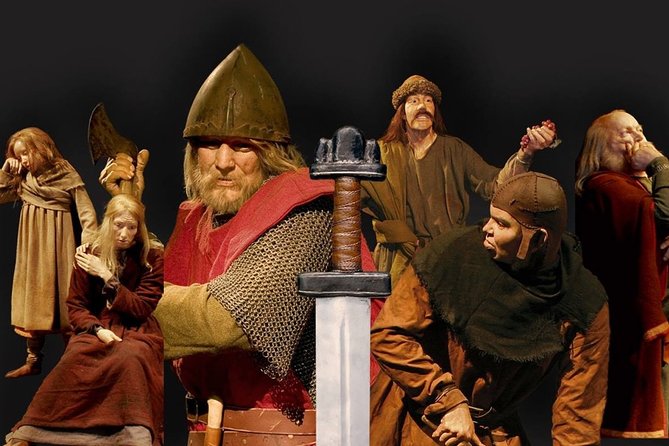
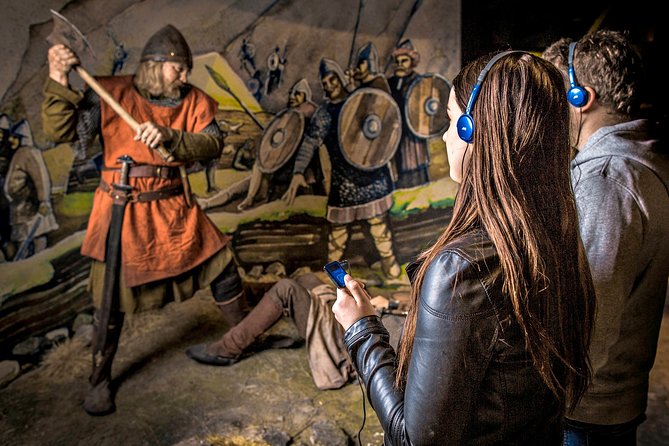
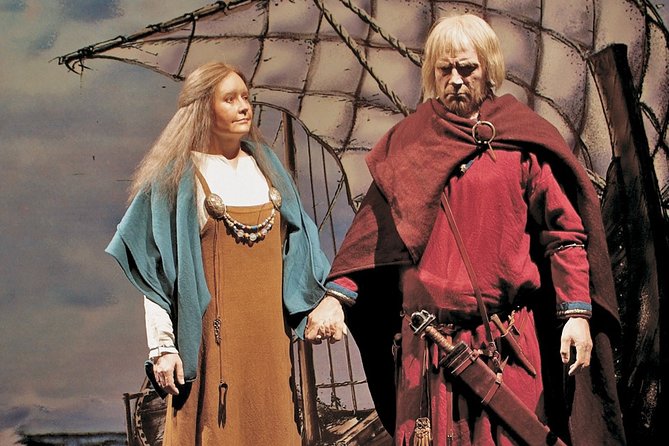
The most striking part of Reykjavik’s Saga Museum is its life-size scenes. Wax figures with remarkably realistic faces act out the early Icelandic sagas, turning names such as Leif Eiriksson and Snorri Sturlusson into people you can picture. An audio guide fills in the story as you move through the displays.
I like the museum’s short, focused format and its family-friendly hands-on touches. You can dress as a Viking and handle replica weapons and armor, while the audio commentary adds useful context without requiring a scheduled group tour. The main drawback is that the museum relies on static figures and dioramas, so visitors looking for original artifacts, interactive screens, or a large museum collection may find it limited.
Key points to know before you go
- Twenty dramatic scenes: Follow Iceland’s early settlers, saga heroes, poets, and rulers through lifelike dioramas.
- Audio in seven languages: Choose Icelandic, English, French, German, Russian, Spanish, or Swedish.
- A good 45-minute stop: The audio portion can take about 30 minutes, while a slower visit may last one to two hours.
- Viking dress-up included: Try period-style clothing, armor, and weapons, a useful bonus for families.
- Old harbour location: The museum is near public transportation and offers free parking.
- Best for history beginners: It gives you a clear introduction before you tackle Iceland’s more serious saga sites and books.
Inside Reykjavik’s old harbour museum
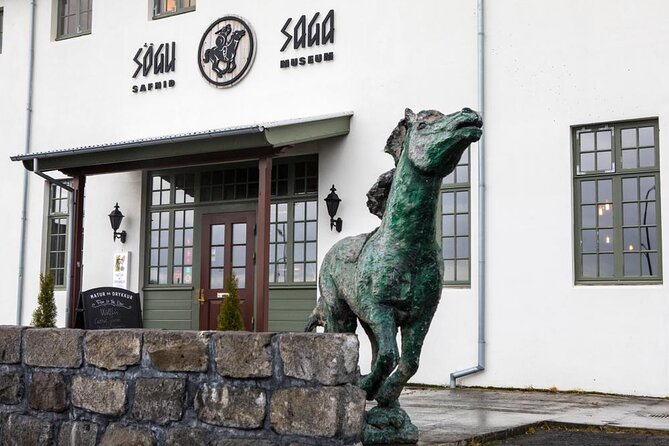
The Saga Museum is in Reykjavik’s old harbour area, making it easy to add to a day of sightseeing. It is open daily from 10:00 a.m. to 5:00 p.m., and the ticket is mobile, so you do not need to print anything.
This is not a grand national museum with rooms of archaeological objects. Think of it as a walk-through history show. The central idea is simple: bring Iceland’s saga age and early settlement stories to life with full-size figures arranged in carefully built scenes.
That approach works well if Icelandic history is new to you. Names from the sagas can blur together when you first encounter them. Seeing a figure seated in a hall, leading a settlement, writing poetry, or facing danger gives each person a place in the story.
The museum currently presents about 20 exhibits. Some scenes are quiet and domestic, while others show conflict, hardship, or important moments in the formation of Icelandic society. The displays are static, but the careful lighting, clothing, facial expressions, and setting give them more impact than a row of labels would.
The figures are the museum’s strongest feature. Their eyes and expressions are unusually lifelike, and a few younger children may find them slightly unsettling at first. That is worth knowing if your child is sensitive to mannequins or wax figures.
A few more Reykjavik trips to weigh up
- Reykjavik: Perlan Museum Wonders of Iceland Entrance Ticket
★ 4.7 · 2,575 reviews - Reykjavík: Hop-On Hop-Off Bus and Perlan Museum Entry Ticket
★ 4.3 · 719 reviews - Reykjavik: Whales of Iceland Museum Entrance Ticket
★ 4.4 · 493 reviews
Following Leif Eiriksson, Snorri Sturlusson, and early Iceland
The museum introduces several key figures from Icelandic history and literature. Leif the Lucky, also known as Leif Eiriksson, appears among the figures connected with Iceland’s Viking past. You will also meet Ingolfur Arnarson, traditionally associated with the settlement of Reykjavik, and Snorri Sturlusson, the famous poet and historian.
For many people, Snorri is the most important name here. He helped preserve stories and traditions that are central to our understanding of Norse mythology and Icelandic culture. The museum does not ask you to arrive with a background in medieval literature. The audio guide explains who these figures were and why they matter.
You also learn how Iceland earned its fearsome reputation. The subject is not treated as a simple parade of heroic Vikings. The displays touch on settlement, social life, violence, belief, survival, and the hard conditions of life on the island.
One useful feature is the museum’s attention to the Black Death. The commentary explains the scale of the medieval pandemic, which killed an estimated 75 to 200 million people. That section adds a broader human dimension to the story. Icelandic history was not isolated from Europe, even though the island itself was remote.
The museum works best as an introduction rather than a final word. It gives you a narrative frame for the sagas, but it cannot cover every political dispute, family feud, or literary detail in depth. If you leave curious, you will have a better sense of which names and events deserve further reading.
How the audio guide shapes the visit
The audio guide is included with admission and is available in Icelandic, English, French, German, Russian, Spanish, and Swedish. You can listen as you move from one scene to the next, letting the narration explain the people and events in front of you.
English-speaking visitors should find the format straightforward. You are not tied to a live guide’s pace, and you can spend extra time at a scene that catches your attention. The audio portion takes about 30 minutes if you move through it at a steady rate.
A booklet is also available at the front desk as an alternative to the audio device. That is useful if you prefer reading, are sharing equipment with a child, or simply want to explore without listening at every stop.
The full visit can take from 45 minutes to two hours. Most people will probably finish in under an hour, but your timing depends on how closely you listen, how much time you spend with the figures, and whether you stop for the dress-up section.
I like this flexibility. You can fit the museum into a busy Reykjavik day without giving up half a day. At the same time, you are not rushed through a fixed presentation.
The tradeoff is that the audio guide carries much of the educational weight. Without it, the figures may be visually impressive but less informative. Be sure to pick up the guide or booklet if you want to understand the story behind each scene.
The Viking dress-up area is a real bonus
The chance to dress like a Viking makes the museum more appealing to families. You can try Viking clothing and handle replica weapons and armor. This gives children something active to do after listening to several historical explanations.
It also helps adults connect the displays with the practical side of Viking life. Clothing, protective gear, and weapons are easier to understand when you see how they might have looked on a person rather than behind glass.
This is not a battle demonstration or a full role-playing activity. It is a brief hands-on feature within a compact museum. Still, it breaks up the walk through the dioramas and gives you a memorable photo opportunity.
The museum’s tone is not entirely solemn. A bonus exhibit adds some humor, which helps keep the experience from feeling like a row of schoolbook illustrations. The mix of serious history and playful touches suits a short family outing.
Same island, a completely different kind of day:
- Reykjavik: Golden Circle Full-Day Tour with Kerid Crater
★ 4.8 · 24,485 reviews - Reykjavik Food Walk – Local Foodie Adventure in Iceland
★ 5.0 · 18,952 reviews - Iceland: Northern Lights Bus Tour from Reykjavik
★ 4.1 · 11,161 reviews - Reykjavík: South Coast Waterfalls, Black Sand & Glacier Tour
★ 4.8 · 11,030 reviews
What the displays do well, and where they fall short
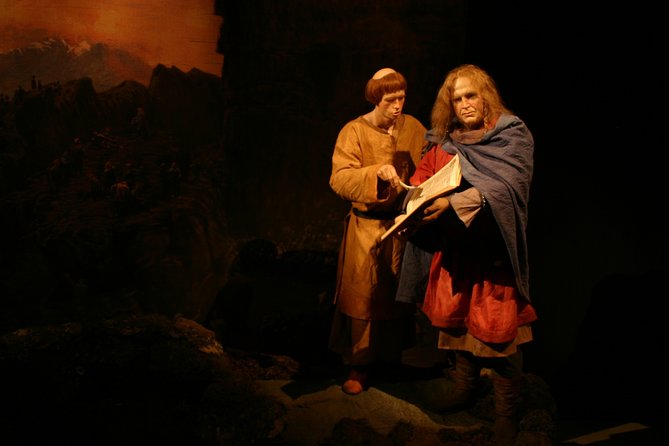
The strongest scenes use the figures, setting, and audio together. The lifelike mannequins make the people easy to remember, while the narration explains the events. This is why the museum can feel more exciting than a standard display of text panels.
The artistry is especially impressive. The figures are detailed enough that you may expect one to move. That effect can make the past feel immediate, though it may also be intense for small children.
The museum’s weakness is its limited use of objects and modern technology. You should not expect a large collection of original weapons, manuscripts, archaeological finds, virtual reality, or 3D presentations. The exhibits are mainly static dioramas.
That limitation matters when you consider the price. At $32 per person, this is not a bargain attraction for a very quick ten-minute stop. It becomes better value if you spend close to an hour, use the audio guide, and take advantage of the dress-up area.
Children under six enter free, which improves the price for families. Free parking also helps, though the old harbour location is near public transportation, so you may not need a car at all.
For adults already well versed in the Icelandic sagas, the museum may feel basic. For first-time visitors, families, and anyone who wants a clear starting point, the presentation earns its keep.
Planning the right amount of time
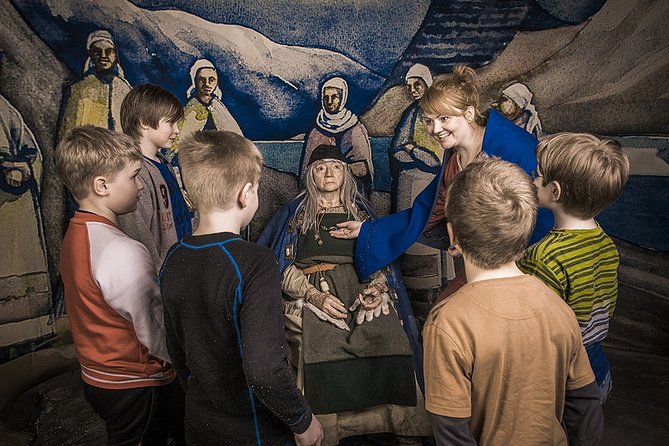
The published visit length is about one to two hours, but you can see the core exhibits in roughly 45 minutes. I would plan for at least an hour if you want to listen carefully and pause for photographs.
The museum is open every day from 10:00 a.m. to 5:00 p.m. That schedule gives you room to visit before an afternoon activity or use it as a weather-proof stop. Reykjavik’s conditions can change quickly, so an indoor museum with a flexible visit length is useful.
The experience is self-guided. There is no stated departure time, group meeting point, or transportation included. You make your own way to the old harbour, using public transportation or parking nearby.
The maximum group size is listed as 50 people, but you are not joining a 50-person guided walk. The ticket provides entry, and the audio guide lets you set your own pace within the museum.
Book in advance if the date matters to you. The ticket is commonly booked well ahead, with an average lead time of 37 days. You can cancel for a full refund up to 24 hours before the scheduled start time. Changes or cancellations made inside that window are not refunded.
Who will enjoy the Saga Museum most
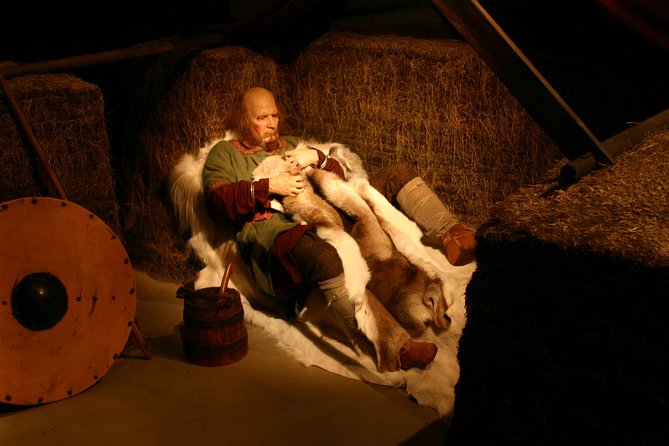
I would recommend this museum to families with children who like stories, costumes, or dramatic figures. The dress-up section gives younger visitors a reason to stay engaged, while the audio guide provides enough substance for adults.
It also suits first-time visitors who want an introduction to Iceland’s past without committing to a long lecture or a full-day excursion. You will leave with a clearer sense of the people behind the sagas and the historical pressures that shaped the island.
The museum can be useful before visiting other Icelandic sites connected with settlement and saga history. Once you know the names of Leif Eiriksson, Ingolfur Arnarson, and Snorri Sturlusson, later references are easier to follow.
You may want to skip it if your main interest is archaeology, original artifacts, or interactive museum technology. The experience is built around realistic figures and narrated scenes. Its strength is storytelling, not the display of rare objects.
It is also not a replacement for reading the Icelandic sagas. The museum simplifies a large subject into a short route. That is helpful for orientation, but it cannot provide the detail or complexity of the original texts.
Is $32 a fair price?
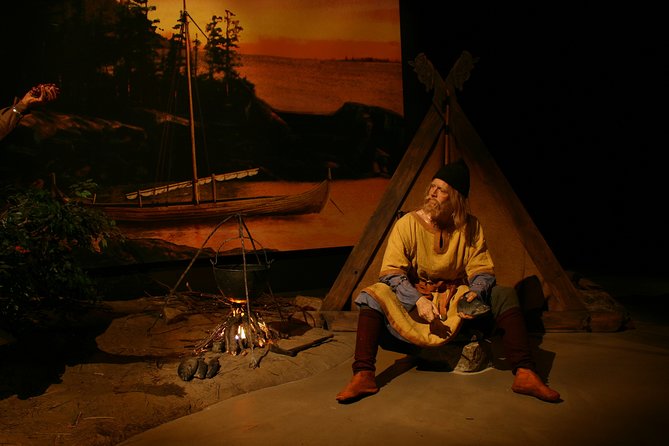
The ticket costs $32 per person, with taxes and handling charges included. Children under six are admitted free, and free parking is included.
At that price, the value depends on how you use the museum. A quick walk through without the audio guide would feel expensive. A careful hour with the narration, followed by the Viking dress-up activity, makes the cost easier to justify.
Compared with a major full-day attraction, it is a modest commitment in time. You are paying for a specialized presentation in central Reykjavik, not an enormous collection. I would think of it as a compact cultural stop that helps you understand Iceland before moving on to outdoor sights.
The excellent craftsmanship of the figures is the main reason to pay admission. The audio guide adds the historical value. If both matter to you, the ticket is reasonable. If you only want original objects, the price will probably disappoint.
Final verdict: book it for a clear, visual introduction
I would book the Saga Museum if you want a short, accessible look at Iceland’s early history, especially if you are visiting with children or have not read the sagas. The lifelike figures, seven-language audio guide, and Viking dress-up area give the museum more personality than its small size suggests.
I would not make it a top priority for a visitor seeking a large museum collection or advanced interactive exhibits. The displays are static, and the visit is relatively brief.
For most first-time visitors, the museum works best as a one-hour stop in the old harbour area. Use the audio guide, allow time for the costumes and armor, and treat the experience as a lively introduction rather than a complete history of Iceland. At $32, that is a fair deal when you want context, atmosphere, and a manageable indoor activity.
FAQ
Where is the Saga Museum located?
The museum is in Reykjavik’s old harbour area. It is near public transportation and offers free parking.
What are the opening hours?
The Saga Museum is open every day from 10:00 a.m. to 5:00 p.m.
How long does a visit take?
The approximate duration is one to two hours. The audio portion can take about 30 minutes, and some visitors complete the main route in roughly 45 minutes.
What languages are available for the audio guide?
The audio guide is available in Icelandic, English, French, German, Russian, Spanish, and Swedish.
Can children participate?
Yes. The museum is family-friendly, and children can dress like Vikings and try Viking weapons and armor. Admission is free for children under six.
Is transportation included?
No. Transportation to and from the museum is not included, but the museum is near public transportation and has free parking.
Can I cancel the ticket for a refund?
Yes. You can cancel at least 24 hours before the experience start time for a full refund. Cancellations or changes made less than 24 hours in advance are not refunded.
Just added around Reykjavik
- Reykjavik: Whale and Puffin Watching RIB Boat Tour★ 4.6 · 179 reviews
- Reykjavik: Whale Watching & Lava Show★ 5.0 · 4 reviews
- Reykjavik: Whale Watching Express★ 4.3 · 227 reviews
- Reykjavik: Whale & Marine Adventure Tour★ 4.3 · 71 reviews
- From Reykjavík: Viking Horseback Tour in Hafnarfjörður★ 4.9 · 112 reviews
- Reykjavík: Horse Riding Tours★ 4.9 · 127 reviews
- Luxury Private Transfer from Reykjavik to Keflavik Airport★ 5.0 · 9 reviews
- Winter South Coast Day Tour by Minibus from Reykjavik★ 5.0 · 109 reviews
Museums, compared.
Perlan Museum Wonders of Iceland Entrance Ticket
Read our review →
Hop-On Hop-Off Bus and Perlan Museum Entry Ticket
Read our review →


Aurora Reykjavík, The Northern Lights Center Museum Visit
Read our review →
Ancient Historical Site Tour at the Caves of Hella
Read our review →
Browse the lists this tour appears in