Reviewed · GUIDED
8-Days Guided Iceland Circle Tour from Reykjavík
Iceland’s biggest reward is its variety, and this 8-day Ring Road tour gathers an impressive amount of it into one trip. You’ll see volcanoes, turf houses, fishing villages, glaciers, black beaches, geysers, and waterfalls without the strain of driving yourself through fast-changing weather.
I like the mix of famous sights and smaller stops, especially Glaumbær Museum and the Skógar folk museum, which give the scenery some human context. I also like that the trip includes the Mývatn Nature Baths, airport transfers, breakfast, and a driver-guide who can explain Iceland’s geology, folklore, and daily life as you go.
The main trade-off is the pace. You cover most of the island by road, so some days involve long hours on the bus and short visits at major sights. Dettifoss is included only from June through August, and the fixed, non-refundable booking terms call for careful planning.
Key things to know before circling Iceland
- Seven hotel nights and breakfast included: You avoid repacking every night without having to arrange lodging across Iceland yourself.
- A small group of up to 25 people: This is more personal than a large coach trip, though it is still a group tour with set timings.
- Mývatn Nature Baths included: Towels and admission are covered, giving you a proper soak among one of northern Iceland’s best volcanic areas.
- Dettifoss depends on the season: The detour to Europe’s most powerful waterfall by volume is offered from June through August.
- English-speaking driver-guide: The guide handles the roads and adds context on Icelandic history, geology, folklore, and culture.
- Winter equipment supplied: Winter departures include snow and ice grippers plus a flashlight, a practical touch for slippery paths and dark conditions.
Eight days around Iceland, without the rental car
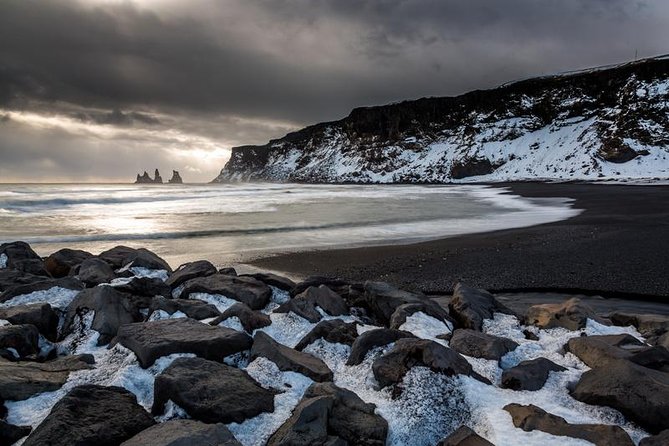
At $3,386.15 per person, this is not a budget bus ride. It becomes easier to judge once you count what is bundled: seven nights of accommodation, seven breakfasts, airport transfers by Flybus Plus, a six-day escorted road tour, museum admissions, the Mývatn Nature Baths, WiFi, parking, and transport in an air-conditioned vehicle.
I see the value mainly in the time and effort saved. Driving the Ring Road requires route planning, hotel bookings, constant weather checks, and a willingness to handle unfamiliar roads. Here, you can look out the window while your guide explains why the ground steams, why the beaches are black, and how Iceland’s farms and fishing villages fit into the country’s story.
You still need to budget for lunch, dinner, drinks, and other personal services. One useful point is that breakfast is the only regular meal included. That keeps the price from rising further, but it means you should expect to pay for food each day. Vegetarian choices may be limited in some places, so I would tell the operator about dietary needs before departure and carry a few backup snacks.
The group size is capped at 25. That is small enough for a more relaxed feel than a standard big coach, though the experience depends partly on the group and the individual guide. Past departures have featured guides such as Thor, Simone, Martina, Freyja, Tryggvi, and Hallthor. Names vary by date, but the guide is central to the trip, since the driver-guide shapes both the rhythm and the storytelling.
A few more Reykjavik trips to weigh up
- Reykjavik: Whale Watching Tour with Expert Guide
★ 4.2 · 2,307 reviews - The Golden Circle Guided Bus Tour from Reykjavik
★ 4.5 · 1,726 reviews - From Reykjavik: Best of Golden Circle Guided Tour
★ 4.8 · 1,646 reviews
Day 1: A gentle start in Reykjavík
The first and last days are intentionally light. You stay at the Reykjavík Natura, Berjaya Iceland Hotels, on Nauthólsvegur 52, and the location gives you time to walk into the capital if your arrival schedule allows.
That breathing room matters. Iceland’s airport is outside Reykjavík, and an arrival transfer by Flybus Plus is included, without a guide. You can settle in, explore the city at your own pace, or simply rest before the road portion begins.
Do not expect a full guided city tour on Day 1. This is a free afternoon, not a packed sightseeing program. On Day 8, you have another four-hour window to enjoy Reykjavík or stay near the hotel before departure.
Day 2: Lava, crater views, and turf houses
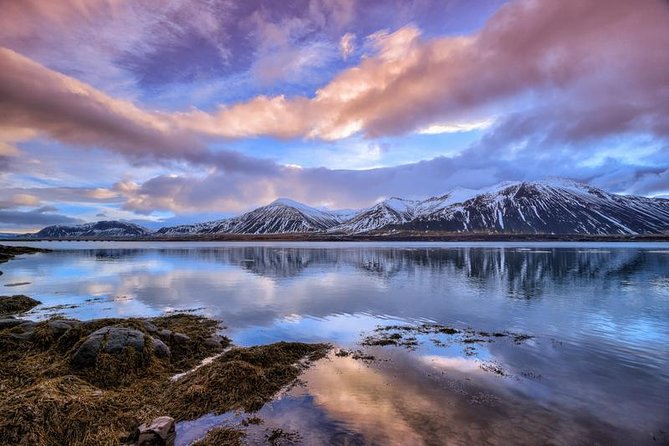
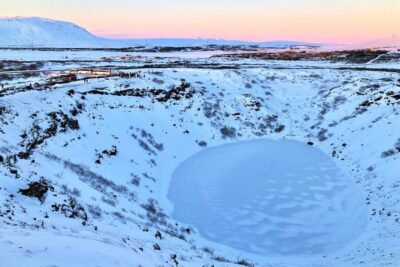
The guided portion begins at 9:00 in the hotel lobby. The first major stop is Grábrók, a roughly 3,000-year-old volcanic crater surrounded by moss-covered lava.
The walk to the rim takes about 20 minutes, with 45 minutes scheduled at the site. This is a modest hike rather than a serious expedition, but the surface can be uneven and slippery, particularly in winter. From the top, you get a clear view over the lava field and surrounding country.
I like this opening because it puts Iceland’s volcanic character right under your feet. You are not just looking at a volcano from a bus window. You get a short walk, a broad view, and a sense of how fire shaped the ground.
Later, Glaumbær offers a different kind of Iceland. Its turf houses and folk museum show how people lived and worked in a country where timber was scarce and weather was a daily challenge. The visit lasts about 30 minutes, so it is brief, but it adds needed balance to a day of natural scenery.
The drawback is that this is mainly a transfer day toward northern Iceland. You will see a lot from the road, but the stops are short and the trip does not linger in each town.
Day 3: Akureyri, Goðafoss, and the Mývatn region
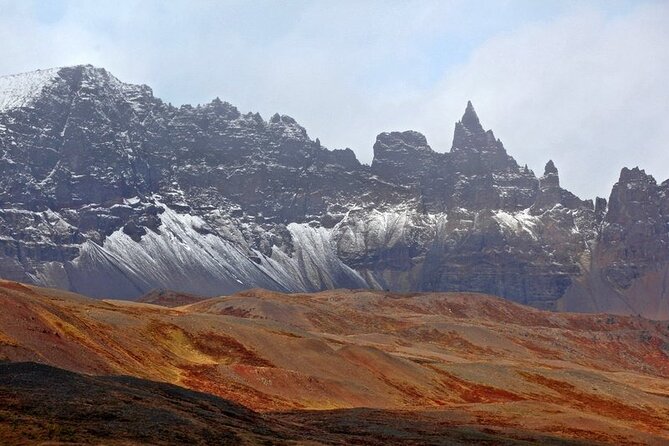
Akureyri is often called the capital of northern Iceland. With about 18,000 people, it feels more like a compact town than a city, and you have two hours to explore it.
The included visit to Akureyri Botanical Garden adds 40 minutes. The garden opened in 1912 and contains about 7,000 plant species. It is an interesting reminder that Iceland is not only ice and barren volcanic rock. The garden’s plant collection makes the stop especially worthwhile for anyone interested in how vegetation survives in a cool northern climate.
Next comes Goðafoss, the Waterfall of the Gods. The name connects to the period when Christianity became Iceland’s official religion. The waterfall itself is broad, graceful, and easy to appreciate during a 40-minute stop.
Then the scenery changes again at Lake Mývatn. You visit the lava formations at Kálfaströnd and walk among the area’s pseudo-craters, features formed by steam explosions rather than true volcanic vents. The two-hour visit gives you more time to walk and look closely than many of the roadside stops.
The day ends at the Mývatn Nature Baths, where admission and a rental towel are included. You have about two hours to soak in geothermal water with views over the volcanic region. This is one of the smartest inclusions in the program. After a full day outside, a warm bath is not just a luxury. It changes the feel of the entire evening.
Same island, a completely different kind of day:
- Reykjavik: Golden Circle Full-Day Tour with Kerid Crater
★ 4.8 · 24,485 reviews - Reykjavik Food Walk – Local Foodie Adventure in Iceland
★ 5.0 · 18,952 reviews - Iceland: Northern Lights Bus Tour from Reykjavik
★ 4.1 · 11,161 reviews - Reykjavík: South Coast Waterfalls, Black Sand & Glacier Tour
★ 4.8 · 11,030 reviews
Day 4: Dark castles, steaming ground, and seasonal Dettifoss
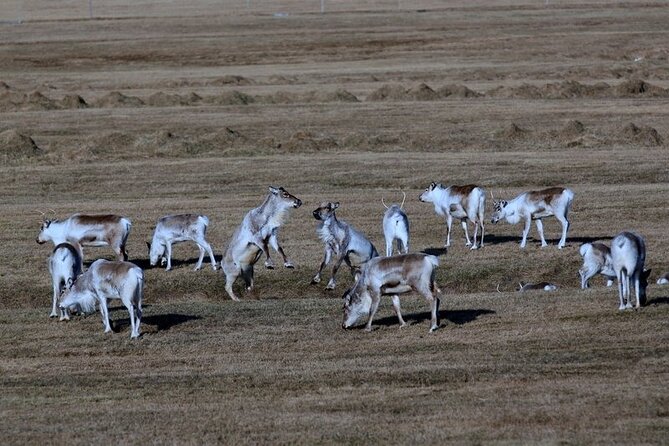
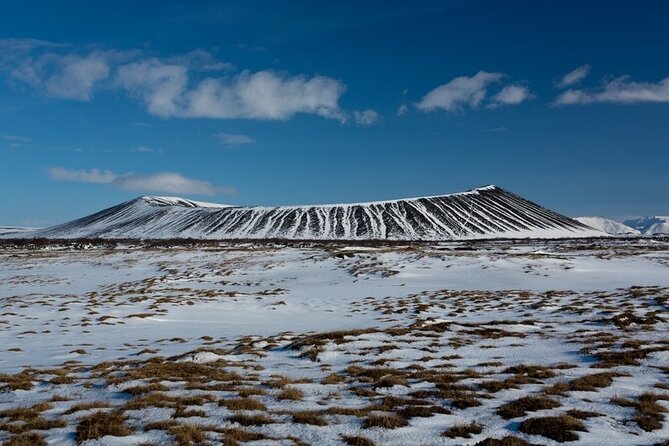
Dimmuborgir means dark castles, and the name fits its maze of lava formations. You take a short hike through the lava labyrinth, where Icelandic folklore places a group of trolls.
The walk lasts about 40 minutes. It is not long, but you should wear sturdy footwear because the paths can be rough. This is a good place to let your imagination work. The rocks have arches, walls, and odd shapes that make the folklore feel close at hand without needing a staged attraction.
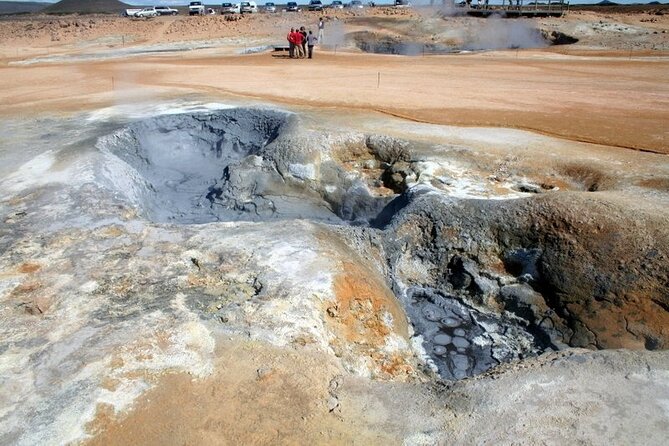
At Námaskarð, bubbling mud pools and steaming solfataras show geothermal activity in a more raw form. The stop is around 40 minutes. Stay on marked paths and follow the guide’s instructions, since the ground around hot springs can be dangerous.
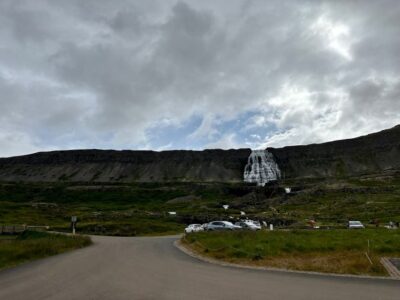
From June through August, the route includes a detour to Dettifoss in northern Vatnajökull National Park. The falls are described as Europe’s most powerful, and the sight is one of the tour’s strongest seasonal additions. If you travel outside summer, this stop is not part of the route, so do not book a winter departure expecting it.
This day is shorter in listed sightseeing stops than Day 3, but the sights are intense. The smell of sulfur, the steaming ground, and the dark lava formations give you a close look at Iceland’s active geology.
Day 5: The long sweep through the East Fjords
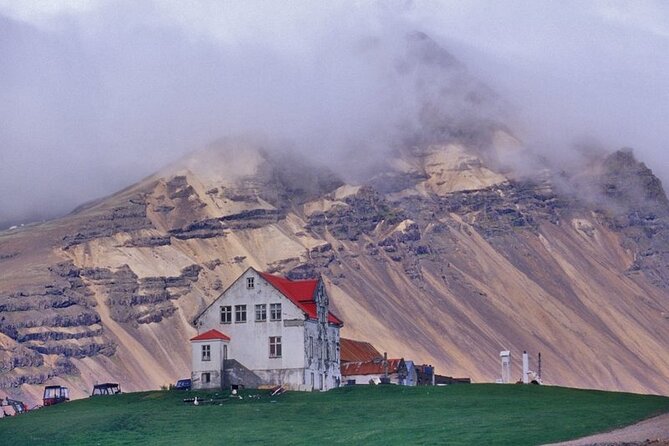
Day 5 is the road-heavy day, with about seven hours devoted to the East Fjords and the route toward southeast Iceland. Twisty roads lead past dramatic fjords and small fishing villages tucked at the ends of side roads.
This is where the tour format earns its keep. You can watch the scenery change without worrying about fuel, navigation, or the next hotel. The East Fjords are less concentrated than the Golden Circle, so the reward comes from the long sequence of mountains, water, and quiet settlements rather than one single landmark.
The itinerary also includes a visit to an interesting stone and mineral collection. That small cultural stop helps break up the drive and gives you another way to understand Iceland’s volcanic origins.
By afternoon, Vatnajökull comes into view. It is Europe’s largest glacier and can be seen across much of southeast Iceland. The day may feel tiring, especially in poor weather, but it is an important part of seeing Iceland beyond the headline attractions.
Day 6: Icebergs, black sand, and the south coast
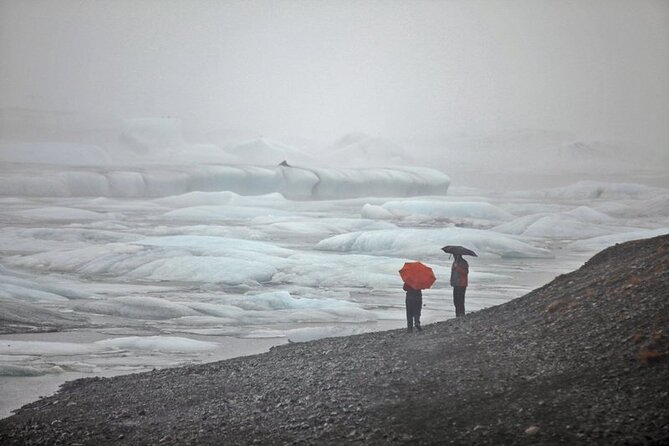
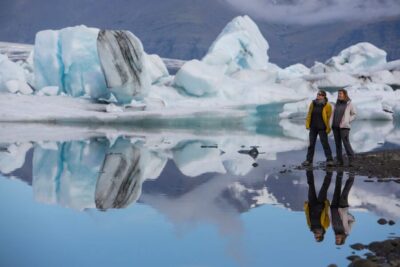
Jökulsárlón is one of Iceland’s most memorable sights. Icebergs float in the glacial lagoon, and you might see seals in the cold water. The scheduled stop lasts about 40 minutes, enough for photographs and a walk along the shore, though many people will wish for more time.
Across the road, Fellsfjara is the black beach often called Diamond Beach. Pieces of ice wash up on the dark sand, creating a sharp contrast between white and blue ice and the volcanic shore. The visit is only about 20 minutes, so keep moving when the guide calls the group back.
The route continues through Vatnajökull National Park, home to Iceland’s highest mountains and Europe’s largest glacier. Then comes Vík, a small village with a 30-minute photo stop near the black coast, high bird cliffs, and heavy Atlantic surf.
At Reynisfjara, you get about 40 minutes to see columnar basalt, caves, and striking rock formations along the black lava beach. This is a dramatic place, but the sea can be dangerous. Stay well back from the water and do not turn your back on the waves.
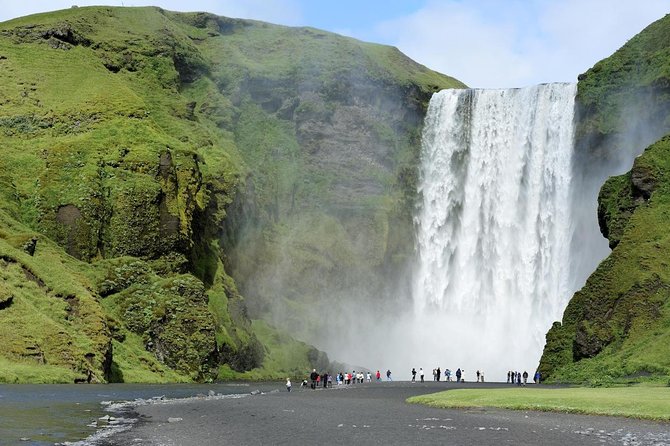
The waterfalls come in quick succession. Skógafoss drops 60 meters near the village of Skógar, while Seljalandsfoss falls in a narrow ribbon from an overhanging lava cliff. You can walk behind Seljalandsfoss, but waterproof clothing is essential if the path is open and you want to stay comfortable.
The day finishes with an hour at the Skógar folk museum. Its turf houses and displays of household and regional objects help explain the life behind the scenery. I especially like this pairing of waterfalls and museum: one shows Iceland’s natural force, the other shows how people adapted to it.
Day 7: Horses, greenhouses, and the Golden Circle
The final sightseeing day begins at Friðheimar, where you learn about the Icelandic horse and visit a geothermal greenhouse. The stop lasts about an hour and brings agriculture into the trip.
The greenhouse is a useful example of how geothermal energy can support food production in a cool climate. The horse visit adds a cultural note without turning the day into a formal museum circuit.
At Geysir, you walk among hot springs and bubbling pools. The original geyser is dormant, but Strokkur erupts every five to ten minutes. With 90 minutes here, you should have several chances to see an eruption, take photographs, and walk around the geothermal area.
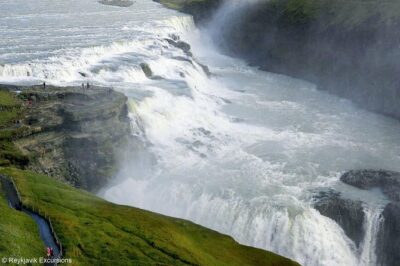
Gullfoss is next. The Hvítá River drops 32 meters in two cascades, and spray can produce a rainbow on a sunny day. The viewing area gives you a strong sense of the waterfall’s scale, though wind and spray can make the path wet.
Thingvellir National Park brings together geology and national history. The Alþingi, Iceland’s old parliament, met here, and the site has been a UNESCO World Heritage location since 2004. Fissures cut across the plain beside Lake Thingvallavatn, creating one of the country’s most memorable views.
You have 45 minutes at Thingvellir, which is enough for a short walk but not an extended hike. The tour then returns to Reykjavík for about an hour of capital-city highlights. Since the city time is limited, use the earlier free periods if you want a slower look at Reykjavík.
What the guide adds to the road
A good driver-guide can turn a long bus day into part of the experience. The guides associated with this tour have been praised for explaining Icelandic history, geology, folklore, biology, current life, and resource use, while also helping with practical matters.
That last part matters in winter. Snow and ice grippers are supplied for winter departures, along with a flashlight. One guide, Simone, was specifically noted for helping with clamp-on spikes, a small kindness that can make icy paths less stressful.
The style is not meant to be a private tour. You follow a set route, meet at agreed times, and share the vehicle with up to 24 other people. Still, the small-group limit gives the guide more room to answer questions and adjust the rhythm when conditions allow.
WiFi is provided on board, but I would treat it as a convenience rather than the main reason to book. The real benefit is having someone else handle the roads while you focus on the changing scenery.
Who should book this Iceland Circle tour?
I would choose this trip if you want to see most of Iceland in one visit but do not want to rent a car. It suits first-time visitors who value structure, hotel arrangements, included breakfasts, and a guide who can explain what you are seeing.
It is also a good fit if you want more than the standard Golden Circle. You get Akureyri, Mývatn, the East Fjords, Jökulsárlón, black beaches, museums, and the Golden Circle in one route.
I would think twice if you prefer slow travel, long hikes, or several free days in each town. The route covers a lot of ground, and some stops last only 20 to 40 minutes. People with limited mobility should also consider the crater path, lava walks, uneven ground, and potentially icy surfaces, even though most travelers can take part.
At this price, you are paying for coordination as much as sightseeing. The tour has a 5 rating from 22 listed reviews and is recommended by 100 percent of those ratings, with repeated praise for guides such as Thor, Simone, Martina, and Tryggvi. The strongest theme is not a single waterfall. It is the guide’s ability to make the long route feel informed, friendly, and orderly.
My verdict on the eight-day route
I would book this tour for a first visit when you want Iceland’s full range in a manageable package. The volcanic north, fjord-lined east, glacial southeast, black-sand south, and historic southwest all appear, along with museums and a geothermal greenhouse.
The best value comes from the included hotel nights, transfers, breakfast, guide, parking, WiFi, museum visits, and Mývatn Nature Baths. The main cost is time spent on the bus and the loss of flexibility. You also need to accept that the experience is non-refundable and cannot be changed after booking, so confirm your dates carefully.
Choose it for variety, context, and ease. Skip it for a self-directed trip or a slower Iceland holiday. If you can accept the road hours, this is a well-rounded way to see the island without having to manage every turn yourself.
FAQ
How long is the Iceland Circle tour?
The experience lasts eight days and includes seven nights of accommodation in Iceland.
Where does the tour start?
The guided tour starts at Reykjavik Natura, Berjaya Iceland Hotels, at Nauthólsvegur 52 in Reykjavík. You meet the guide in the hotel lobby at 9:00 on Day 2.
Is airport transportation included?
Yes. Arrival and departure airport transfers by Flybus Plus shuttle are included. These transfers do not include a guide.
Is accommodation included?
Yes. Seven nights of accommodation are included.
Is breakfast included?
Yes. Breakfast is included, while additional meals, drinks, and services are not included.
Is the Mývatn Nature Baths visit included?
Yes. Admission and a rental towel at the Mývatn Nature Baths are included.
Is Dettifoss visited on every departure?
No. The Dettifoss detour is included from June through August.
How large is the tour group?
The tour has a maximum of 25 travelers. It uses an air-conditioned vehicle with WiFi on board.
Is the tour suitable for most people?
The supplied information states that most travelers can participate. You should still be prepared for walking on uneven paths, crater and lava walks, waterfalls, and possible snow or ice during winter departures.
Just added around Reykjavik
- Reykjavik: Whale and Puffin Watching RIB Boat Tour★ 4.6 · 179 reviews
- Reykjavik: Whale Watching Express★ 4.3 · 227 reviews
- Reykjavik: Whale Watching & Lava Show★ 5.0 · 4 reviews
- Reykjavik: Whale & Marine Adventure Tour★ 4.3 · 71 reviews
- From Reykjavík: Viking Horseback Tour in Hafnarfjörður★ 4.9 · 112 reviews
- Reykjavík: Horse Riding Tours★ 4.9 · 127 reviews
- Luxury Private Transfer from Reykjavik to Keflavik Airport★ 5.0 · 9 reviews
- Winter South Coast Day Tour by Minibus from Reykjavik★ 5.0 · 109 reviews
Guided, compared.
Jokulsarlon Glacier Lagoon Full-Day Guided Trip
Read our review →
The Golden Circle Guided Bus Tour from Reykjavik
Read our review →