
Reviewed · HORSES
Experience Countryside of Iceland by Horseback Riding
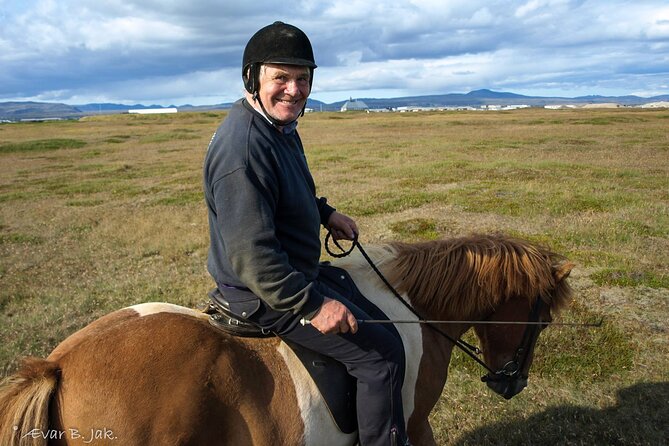
Iceland’s famous horse is the star here, not a bus window. You ride near Þorlákshöfn, a small fishing village south of Reykjavik, with beaches, lava fields, grassy banks, and mountains changing with the season. I like the chance to try the tölt, the smooth four-beat gait unique to Icelandic horses, and I like the small maximum of 12 riders, which makes instruction more personal.
I also like that the guides keep the group together and match the pace to the least experienced rider. Magnus, often called Maggi, is praised for calm safety instruction and a warm coffee welcome afterward. The main caution is consistency: weather controls the route, and some rides have stayed near the pasture instead of reaching the beach. Communication in English may also be limited on some departures.
Key points to know before booking
- The tölt is the special feature: You may experience the Icelandic horse’s smooth, unusual gait, depending on your ability and the guide’s judgment.
- Þorlákshöfn is close to Reykjavik: The stable is about 30 kilometers away, roughly a 45-minute drive.
- Beginners are welcome: Guides teach you how to control the horse and keep the group at the slowest rider’s pace.
- The scenery changes with conditions: You might ride past beaches, lava fields, grass banks, and mountains, but no single route is guaranteed.
- The welcome feels personal: Several accounts describe Magnus or Maggi offering coffee and spending time with riders after the ride.
- Pack for Iceland, not the riding brochure: Warm, comfortable clothes and good shoes are your responsibility.
Why the Icelandic horse makes this ride different
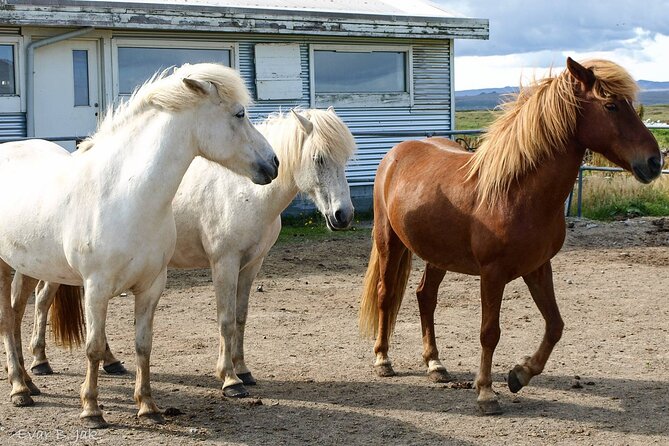
Icelandic horses are small, sturdy, and bred for the country’s rough ground and changing weather. Calling them ponies is common, but it can undersell what they do. They are riding horses with a compact build and a sure way of moving across open ground.
The feature most riders want to try is the tölt. This is a four-beat gait that can feel smoother than an ordinary trot because the horse keeps at least one foot on the ground at nearly all times. You should not expect a lesson in advanced competition riding, but the guide may let an experienced rider feel the gait when the group and conditions allow.
That makes this a good introduction to Icelandic riding culture. You are not simply sitting on a horse for a photograph. You learn basic control, settle into the saddle, and get a sense of how these horses respond to the rider.
I would keep expectations sensible. This is a three-hour experience, not a full-day expedition. Some of that time includes transport, preparation, mounting, and instruction, so your time actually riding may vary. The supplied details describe a roughly three-hour tour, while individual accounts refer to rides of about two hours. Treat the ride length as approximate rather than counting on three full hours in the saddle.
A few more Reykjavik trips to weigh up
- Reykjavik: Red Lava Horse Riding Tour
★ 4.8 · 2,383 reviews - From Reykjavík: Icelandic Horse Riding Tour in Lava Fields
★ 4.7 · 1,356 reviews - Icelandic Horseback Riding Tour with Pickup Option from Reykjavik
★ 5.0 · 1,145 reviews
Leaving Reykjavik for Þorlákshöfn
Þorlákshöfn is about 30 kilometers, or 19 miles, from Reykjavik. The drive takes around 45 minutes, making this one of the easier countryside outings if you are based in the capital.
Round-trip transfers from central Reykjavik hotels are offered, which matters in Iceland. Public transport is not the simple answer for a rural stable, and a taxi can make a short activity surprisingly expensive. Pickup details should be checked carefully when you book, since the stated meeting point is Alhestar at Faxabraut 6 in Þorlákshöfn. The activity ends back at that same point.
Some riders have arranged pickup from an Airbnb for an extra fee. That is not the same as standard central-hotel transfer, so do not assume every private address is included. If your accommodation is outside the usual pickup area, ask before paying.
The drive also gives the outing a useful change of pace. You leave the city and head toward a fishing village, where the ride takes place among open fields and coastal scenery rather than inside a fenced riding arena. That rural setting is a big part of the value.
Getting matched with a horse and learning the basics
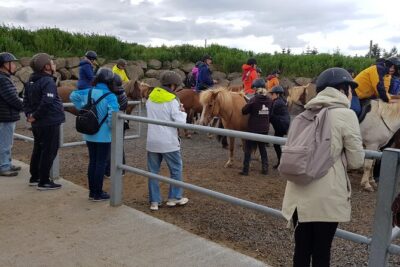
At the stable, expect helmets and riding equipment to be supplied. You still need to bring good shoes and warm, comfortable clothing. Icelandic weather can shift quickly, and sitting on a horse in wind or damp conditions feels colder than walking around Reykjavik.
The guides adjust the ride to the group. Beginners receive help with mounting, steering, and basic control, while experienced riders may be given more freedom when it is safe and suitable. The stated rule is simple: the group does not go faster than its slowest rider. That is reassuring if you are nervous, and it prevents a confident rider from turning a gentle outing into a race.
This also means the experience may feel restrained if you already ride regularly. You should not book it expecting a fast gallop or an advanced training session. The pace is designed to keep everyone together, and the route can change to suit the least confident person and the weather.
Safety comes through strongly in the available accounts. Maggi is described as calm with nervous riders, careful about explaining how to control the horse, and attentive to keeping everyone together. That kind of steady instruction is more useful than a flashy ride, especially if this is your first time on an Icelandic horse.
Riding through pasture, lava, and coastal scenery
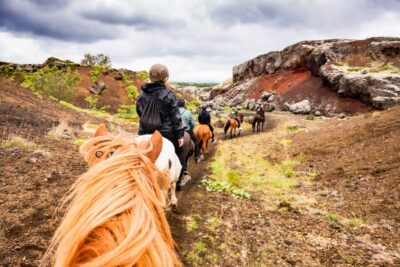
The exact route depends on the season and weather. The surrounding area can include tall green grass banks, open pasture, lava fields, mountain views, and beach scenery. The contrast is what makes the ride appealing: Iceland’s ground can shift from soft grass to dark volcanic rock within a short distance.
A ride through pasture may be the gentlest option for beginners. You get time to find your balance and watch the horses’ movement without worrying about rough ground. Open moorland and grassy areas can also give experienced riders more room to appreciate the horses’ rhythm.
Lava fields provide a stronger sense of place. Iceland’s volcanic ground is not just a backdrop, and seeing it at horse level makes the countryside feel less distant. Expect uneven terrain rather than a polished trail. Your guide chooses the safest available route, so the presence of lava fields in the surrounding area does not guarantee that every ride crosses them.
The beach is another possible highlight. Some accounts describe black sand beach riding, while another says the outing stayed in the pasture and never reached the shore. This is the clearest reason to avoid booking with one fixed postcard in mind. You may see the beach, but weather, season, trail conditions, and group ability can alter the route.
Mountain views add scale, even when the ride itself remains close to the village. Iceland’s open scenery can make a short outing feel farther from the city than the driving distance suggests.
Same island, a completely different kind of day:
- Reykjavik: Golden Circle Full-Day Tour with Kerid Crater
★ 4.8 · 24,485 reviews - Reykjavik Food Walk – Local Foodie Adventure in Iceland
★ 5.0 · 18,952 reviews - Iceland: Northern Lights Bus Tour from Reykjavik
★ 4.1 · 11,161 reviews - Reykjavík: South Coast Waterfalls, Black Sand & Glacier Tour
★ 4.8 · 11,030 reviews
The pace, the tölt, and the group of 12
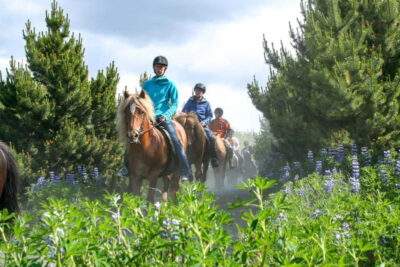
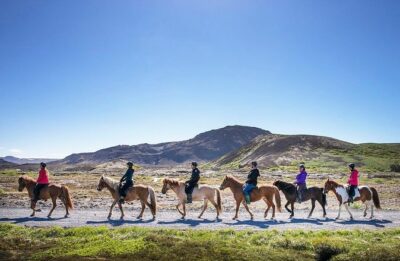
The maximum group size is 12. That is small enough for a guide to watch individual riders, but it is not a private ride. If the group includes several beginners, the pace will be gentle. If everyone is comfortable, the guide may offer more varied movement.
The tölt is best approached as a bonus, not a promise of a formal demonstration. A more experienced rider may have the chance to feel it, and one account describes seeing another rider demonstrate the horses’ movement. Your own opportunity depends on safety, ability, and the conditions on the day.
I see the group rule as one of this tour’s strongest practical features. A nervous rider is less likely to feel abandoned, and a family or mixed-ability group can ride together. The tradeoff is that experienced riders may find the outing too slow, especially if they hoped for a demanding lesson.
The guides’ personalities also matter. Magnus, Maggi, and Sigrún are associated with the operation in the available information. Maggi is repeatedly described as friendly, humorous, and patient. Several accounts describe coffee after the ride, sometimes with the guide spending time chatting with the group. That informal welcome can make the outing feel more like a visit to a local horse farm than a quick commercial stop.
There is a practical limitation here. English ability may vary. Some accounts describe easy, warm interaction despite limited English, with gestures and translation tools filling the gaps. One negative account specifically objects to a guide not speaking English and wanted more local conversation. If detailed narration is important to you, confirm the language arrangements before booking.
What the three hours are really worth
At $207, this is not a cheap short activity. The price includes fees and taxes, riding equipment, snacks, and round-trip transfers from central Reykjavik hotels. The transport is useful, but the cost still needs to be judged against the riding time and the route you receive.
I think the price can make sense if you value the Icelandic horse itself and want a small-group introduction without arranging a rental car. It is also more appealing for a first-time rider who wants patient instruction rather than a large stable with a conveyor-belt feel.
The value is weaker if your main goal is a guaranteed black-sand beach ride or a long day in the saddle. The route is not fixed, and some rides may remain close to the pasture. You are paying for access to the horses, local countryside, equipment, instruction, and transport, not for a guaranteed list of scenic stops.
The included snacks are a pleasant extra, but they do not change the main calculation. If you have a tight Iceland budget, compare this with other countryside activities. If riding an Icelandic horse is high on your list, the personal attention and possible coffee afterward help justify the cost.
Who will enjoy this ride most
This tour fits beginners, cautious riders, and mixed-ability groups. The guides adjust the pace, and the maximum of 12 keeps the experience from becoming too crowded. Someone who is anxious about horses may find the calm instruction especially useful.
It also suits riders who want a quiet way to see the countryside. You get beaches, volcanic ground, grass, and mountains without committing to a full-day horseback journey. The activity works well as a half-day addition to a Reykjavik stay.
Families and groups should check the physical requirements before booking. A moderate level of fitness is required, and riding can be tiring even when the pace is easy. Service animals are allowed according to the provided information, but you should still confirm practical arrangements directly.
Experienced riders need to set their expectations lower. You may enjoy the horses, scenery, and chance to feel the tölt, but this is not presented as a fast or technical ride. The slowest rider sets the pace, and that is central to the design.
What to pack and what to expect from the stable
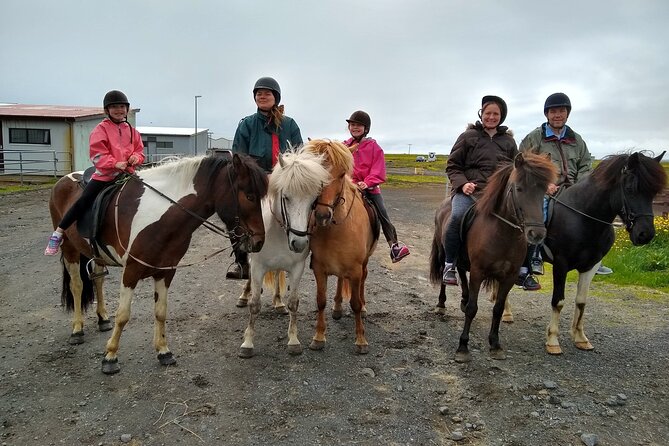
Wear layers that can handle wind and damp weather. Bring warm, comfortable clothes and sturdy shoes. The tour supplies helmets and riding equipment, but clothing is your job, and the wording specifically reminds you to bring good shoes.
You should also allow for mud, dust, and ordinary farm conditions. This is a working horse operation, not a luxury spa with horses nearby. One negative account describes equipment as old and the stable as untidy, while many positive accounts focus on the horses, safety, and personal welcome. That mixed picture suggests you should value the hands-on character more than polished facilities.
Snacks are included. Coffee afterward has been part of the welcome for some riders, but it should be viewed as a friendly possibility rather than a guaranteed formal service.
The operation is available year-round, but year-round does not mean identical. Winter light, wind, rain, and trail conditions can shape the ride. Summer may offer greener grass and longer daylight, while poor weather at any time can lead to a changed route or cancellation.
Weather, cancellation, and the main risks
This activity requires good weather. If poor conditions cancel the ride, you can choose a different date or receive a full refund. The same applies if the minimum number of riders is not reached.
For your own cancellation, cancel at least 24 hours before the start time for a full refund. Cancellations or changes within 24 hours are not refunded or accepted, and the cut-off follows local Icelandic time.
The most important risk is not safety, but expectation. The tour description gives a tempting list of beaches, lava fields, and mountains, yet the route can change. Book this for a chance to experience the countryside on an Icelandic horse, not for one guaranteed beach photograph.
A second risk is communication. The guides may be warm and helpful, but English ability can vary. If you need detailed explanations, have a medical concern, or are a very nervous beginner, raise those questions before the day of the ride.
Should you book Alhestar near Þorlákshöfn?
I would book this tour if you want a personal, beginner-friendly encounter with Icelandic horses and you are comfortable with a flexible route. The strongest reasons are the small group, the careful pace, the chance to try the tölt, and the warm presence associated with Maggi, Magnus, and Sigrún.
I would hesitate if you need polished facilities, fluent English instruction, or a guaranteed beach route. The $207 price is fair only if the horse experience matters more to you than checking off a particular scenic stop.
For most first-time riders, this is a worthwhile half-day outside Reykjavik. Pack properly, confirm your pickup and language needs, and keep the itinerary flexible. You may get pasture, lava, mountains, or beach, but the lasting part is likely to be the Icelandic horse itself and the chance to ride at its calm, distinctive pace.
FAQ
Where does the horseback tour take place?
The ride takes place around Þorlákshöfn, a small fishing village on Iceland’s South Coast. The stable meeting point is Alhestar, Faxabraut 6, 815 Þorlákshöfn.
How far is Þorlákshöfn from Reykjavik?
Þorlákshöfn is about 30 kilometers, or 19 miles, from Reykjavik. The drive takes roughly 45 minutes.
Is pickup available from Reykjavik?
Round-trip transfers from central Reykjavik hotels are offered. Pickup from other addresses, including some Airbnbs, may involve an extra fee, so confirm the arrangement before booking.
Is the tour suitable for beginners?
Yes. The tour is designed for beginners and experienced riders. Guides provide instruction, adjust the ride to the group, and do not go faster than the slowest rider.
Will the ride definitely include a beach?
No. The route depends on weather and season. Beach views, lava fields, grass banks, and mountains are possible, but the ride may remain closer to the pasture.
What happens if the weather cancels the tour?
You will be offered a different date or a full refund if poor weather causes cancellation. You can also receive a full refund for your own cancellation if you cancel at least 24 hours before the start time.
Just added around Reykjavik
- Reykjavik: Whale and Puffin Watching RIB Boat Tour★ 4.6 · 179 reviews
- Reykjavik: Whale Watching Express★ 4.3 · 227 reviews
- Reykjavik: Whale Watching & Lava Show★ 5.0 · 4 reviews
- Reykjavik: Whale & Marine Adventure Tour★ 4.3 · 71 reviews
- From Reykjavík: Viking Horseback Tour in Hafnarfjörður★ 4.9 · 112 reviews
- Reykjavík: Horse Riding Tours★ 4.9 · 127 reviews
- Luxury Private Transfer from Reykjavik to Keflavik Airport★ 5.0 · 9 reviews
- Winter South Coast Day Tour by Minibus from Reykjavik★ 5.0 · 109 reviews
Horses, compared.
Icelandic Horseback Riding Tour with Pickup Option from Reykjavik
Read our review →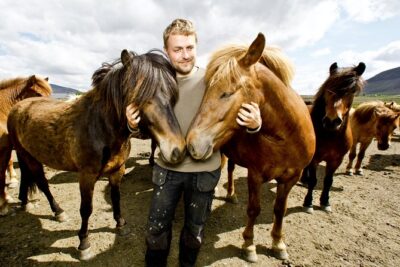
Icelandic Horseback Riding Tour Including Pick Up from Reykjavik
Read our review →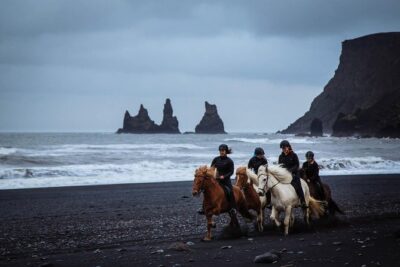
Golden Circle, Fridheimar Farm & Horses Small Group Tour from Reykjavik
Read our review →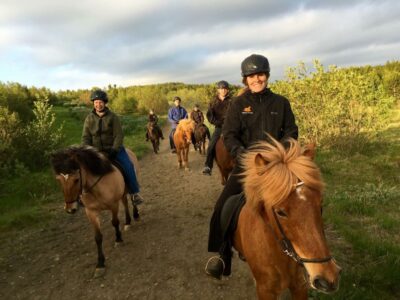
Small-Group Horse Volcano Riding Tour with Pickup
Read our review →Browse the lists this tour appears in