
Reviewed · 3-DAY EXPERIENCES
From Reykjavík: 3-Day Tour of the Wild Westfjords
The real prize here is Iceland’s wild Westfjords, a far-flung region of steep fjords, empty roads, bird cliffs, and beaches that shift from gold to red. In three days, you reach places that are hard to connect by public transport, including Dynjandi, Látrabjarg, and the Seven Fjord Road. I especially like the small minibus setting and the chance to meet guides such as David and Halldor, who add local color without turning the trip into a lecture.
I also like the mix of major sights and quieter stops: a Viking longhouse, a natural swimming pool, a turf-roofed fishing village, seals at Hvítanes, and a possible visit to the Arctic Fox Center. The main drawback is the pace. You spend long hours on the road, and the final return to Reykjavík can arrive around 20:30, later if weather or road conditions slow things down.
Key points to know before booking
- Three days cover a huge corner of Iceland: Expect long drives, frequent photo stops, and a packed route through remote country.
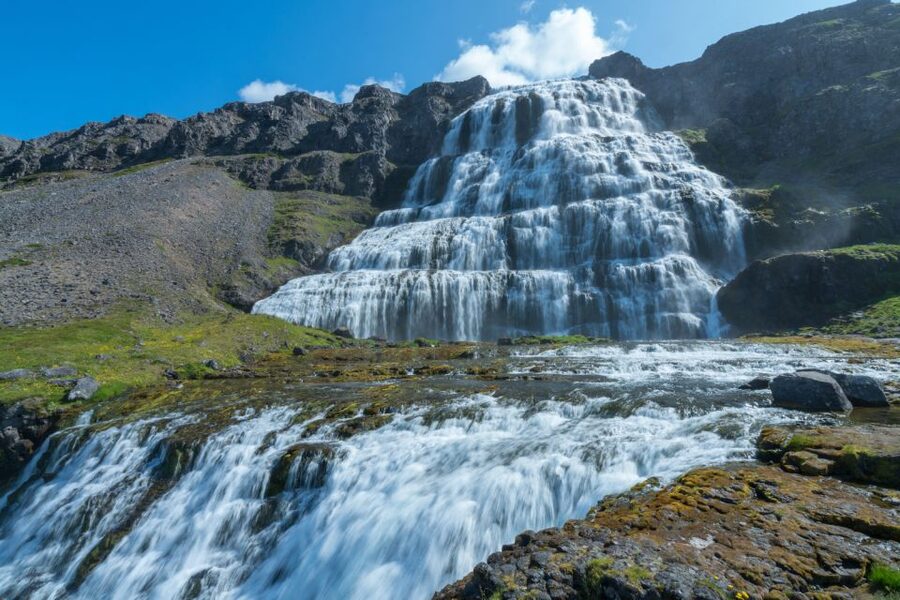
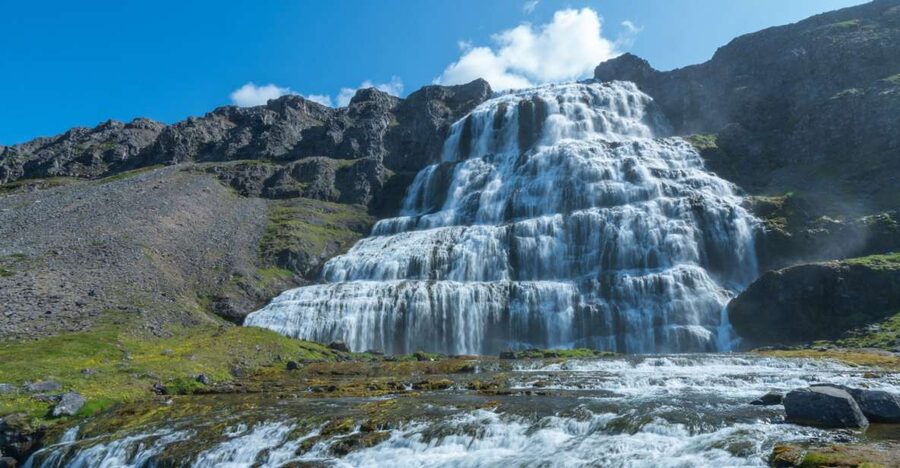
- Dynjandi is the visual high point: The broad, seven-step waterfall drops down the mountainside like a white wedding cake.
- Látrabjarg is best for summer birdlife: Puffins, cormorants, and fulmars gather along the cliffs, though sightings depend on season and conditions.
- The Seven Fjord Road is the scenic payoff: The road follows the coast past fjords, mountains, and glaciers, with very little development in view.
- You sleep in private en-suite rooms: Two nights and breakfast are included, while lunch, dinner, swims, and snacks are extra.
- Weather shapes the trip: Bring warm, windproof, waterproof clothing, and expect the route or ferry plan to change if safety requires it.
Why the Westfjords deserve three days
Iceland’s famous southern route is easier to reach, but the Westfjords offer a quieter, rougher kind of beauty. The region is made of long fingers of land reaching into the sea, with roads that curl around fjords and climb high mountain passes. You see fewer buildings and more rock, water, sky, and seabirds.
That remoteness is both the appeal and the practical challenge. This is not a quick hop between attractions. Your minibus covers a lot of ground, and the reward is access to places that take serious planning to reach independently. A group capped at 18 keeps the vehicle smaller than a standard coach and makes stops easier to manage, though you should still expect a shared schedule.
The $1,142 price is high at first glance. It includes transport from Reykjavík, an English-speaking guide, two nights in private rooms with en-suite bathrooms, breakfasts, the Eiriksstaðir entry fee, Arctic Fox Center entry, Wi-Fi, and USB charging at every seat. For a short visit to a remote region, that package can offer fair value, especially if you do not want to arrange mountain roads, accommodation, and changing weather on your own.
It is less attractive if you prefer slow mornings, long hikes, or choosing every meal and stop yourself. This is a sightseeing road trip, not a hiking holiday. You will have time to walk around many stops, but the route must keep moving.
A few more Reykjavik trips to weigh up
- 3-Day Ice Cave, South Coast, Golden Circle and Northern Lights
★ 5.0 · 634 reviews - 3-Day Golden Circle, Ice Cave and Glacier Lagoon Small-Group Tour
★ 5.0 · 302 reviews - From Reykjavik: 3-Day South Coast Winter Tour with Ice Cave
★ 4.8 · 171 reviews
Day 1: Viking roots, waterfalls, and Kleifaheiði
Pickup in Reykjavík is scheduled between 08:30 and 09:00. Be ready at 08:30, since the exact pickup point may be a designated bus stop rather than your hotel door in parts of central Reykjavík. The company confirms the location after booking.
The first major stop is Eiriksstaðir, a Viking heritage site connected with Eirik the Red and his son Leif the Lucky. You can enter the turf-roofed longhouse and get a feel for how an early Icelandic home was built and used. This gives the road trip a useful human starting point before the scenery takes over.
The route continues toward Borgarnes and the coast around Breiðafjörður, the broad waterway that leads toward the Westfjords. From here, the views become more open and the road begins to feel like the main attraction. You will make stops along the way, so keep your camera ready, but also bring a waterproof outer layer for getting out in exposed places.
At Vatnsfjörður Natural Reserve, you visit Þingmanná Waterfalls and a canyon. The stop adds variety to the coastal views, with falling water and rock formations rather than only long fjord vistas. As with many Icelandic stops, the appeal depends on weather. Low cloud can hide the upper slopes, while clear conditions reveal the scale of the surrounding mountains.
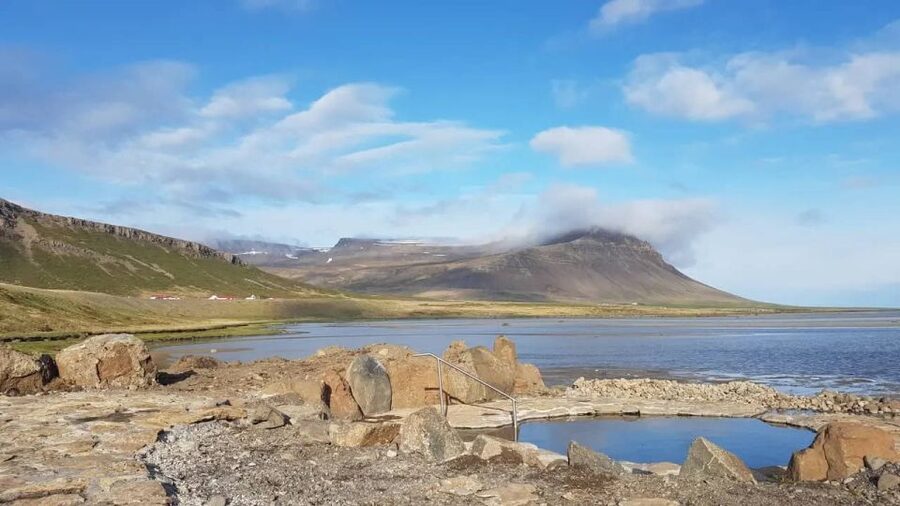
Birkimel Bay brings a sandy beach and the optional Krosslaug Swimming Pool. This is a small geothermal pool run by the local Youth Association, and the setting is part of its charm. You soak in warm water while looking out toward the bay, rather than sitting in a large commercial spa.
The swim is optional, and you need to bring your own swimwear and towel. A voluntary cash donation in any currency goes into a box for the Westfjords Youth Society. It is a modest stop, but it can be one of the most personal moments of the tour if you enjoy local places over polished attractions.
The day also crosses Kleifaheiði mountain range, where you see Kleifabúi, a five-meter-high stone statue. It honors the work involved in building the mountain road. This is a quick roadside stop, yet it helps explain why travel through the Westfjords takes time. Roads here cross high, exposed ground before dropping back toward the sea.
Day 1 is mainly a transition into the region, with history, waterfalls, a possible swim, and the first big fjord views. You should not expect a leisurely schedule. The value lies in seeing how the scenery changes as Reykjavík gives way to a much more remote part of Iceland.
Day 2: Látrabjarg birds, Rauðasandur sand, and Dynjandi
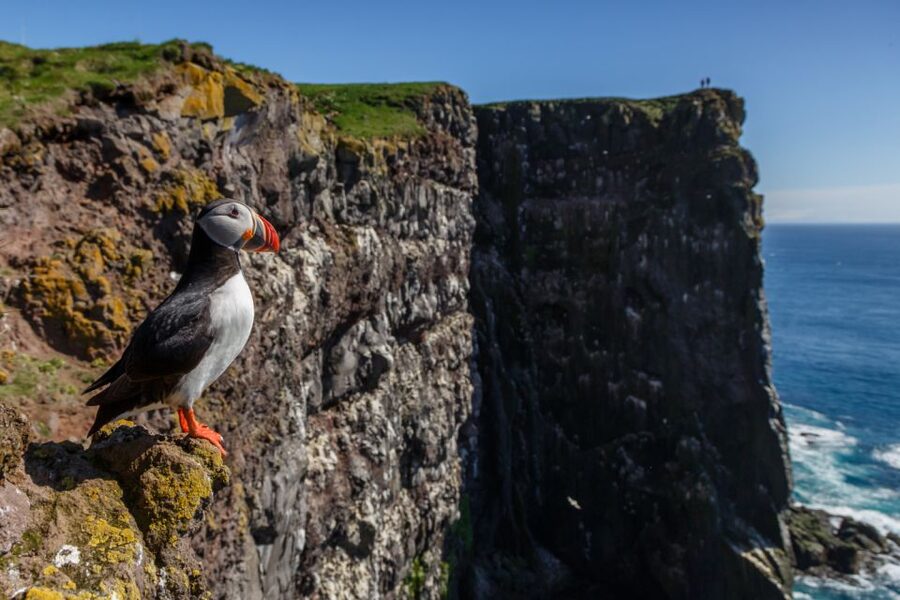
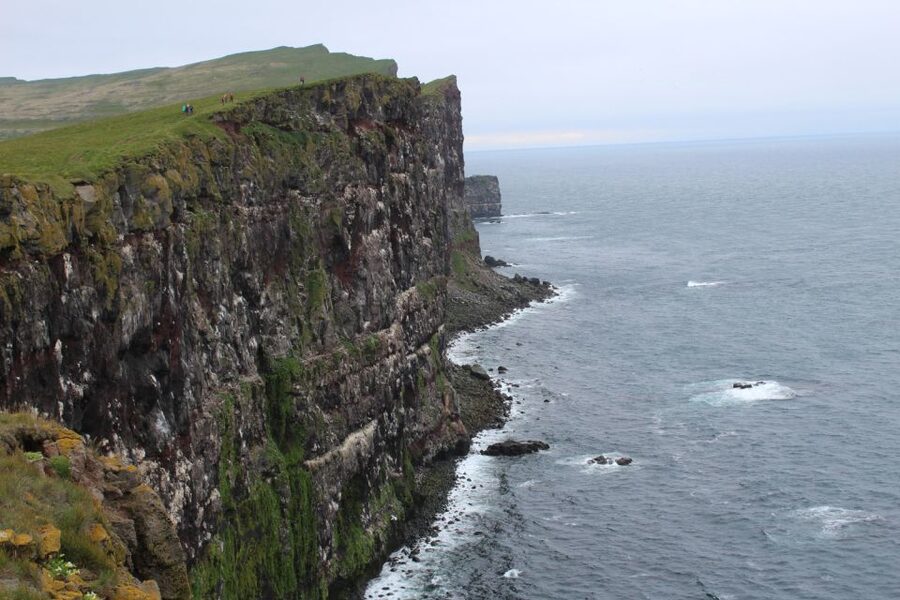
Day 2 focuses on some of the Westfjords’ strongest sights. Látrabjarg is the westernmost point in Iceland and one of the country’s major seabird cliffs. In summer, you may see puffins, cormorants, and fulmars along the cliff edges.
Bird watching here depends on the time of year, weather, and how close the birds are to the viewing areas. The cliffs are exposed, so wear sturdy shoes and warm layers. Keep a safe distance from the edges, even when trying to frame the perfect photograph.
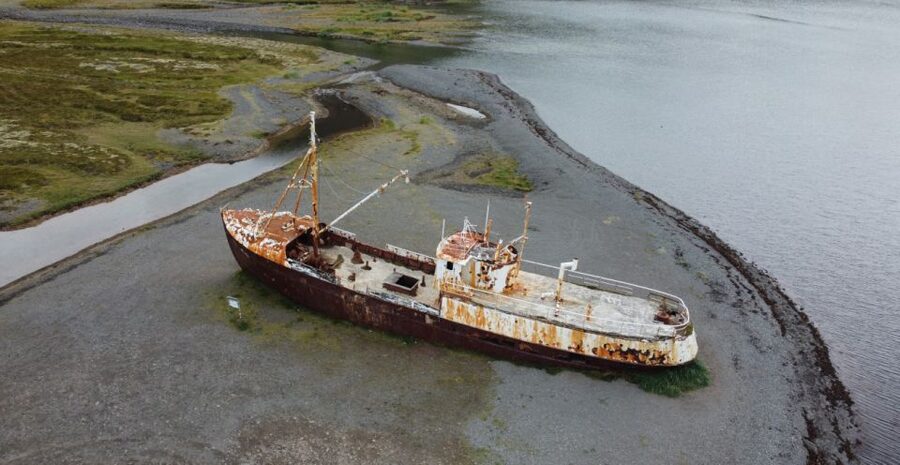
You also pass the Garðar shipwreck on the way to Látrabjarg. It is a reminder that this coast is beautiful but severe, with difficult waters and little shelter. The stop adds a human detail to what might otherwise be a long stretch of sea cliffs and open sky.
Rauðasandur gives you a very different coastal scene. Its sand can show red, gold, and other warm tones, changing with the light and weather. You can take a walk along the beach and enjoy a low, open shoreline after the steep cliffs at Látrabjarg.
The beach is not simply a photo stop. It is a place to slow your pace for a while, listen to the water, and notice how varied Iceland’s coastline can be. Still, do not count on a long beach walk. The route includes many sights, and the guide needs to keep the group on schedule.
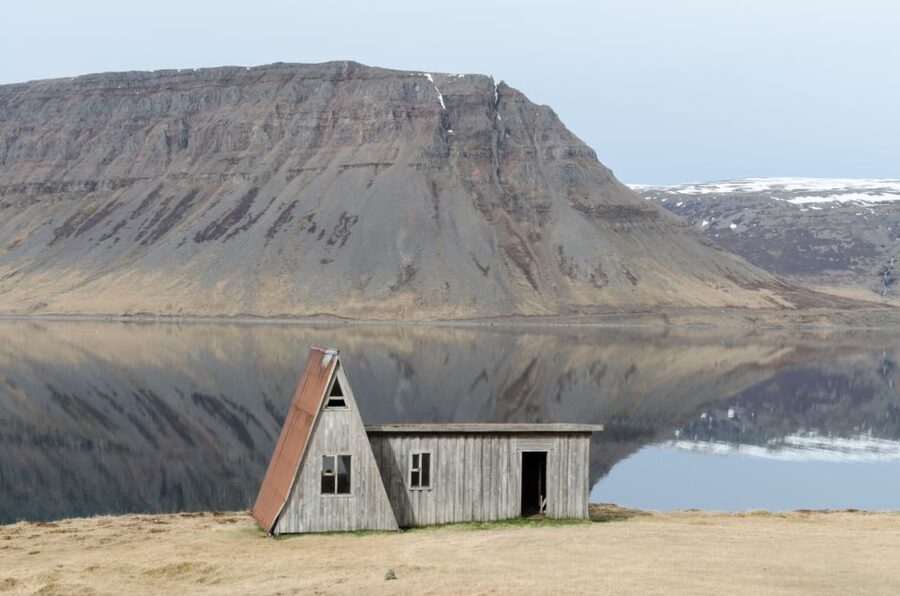
Along the way, you get views of Fossfjörður waterfall and the unusual A-House. These smaller sights help fill out the day between the major stops. They also give you more chances to ask questions and watch the scenery change from one fjord to the next.
Dynjandi is the day’s star. Instead of dropping as one narrow column, the waterfall spreads outward in a broad series of cascades. Its seven levels create the shape of a white wedding cake, with the upper fall feeding the wider drops below.
You should allow time to look at Dynjandi from different angles and take in the surrounding cliffs. The waterfall is powerful, but its setting matters just as much. It sits in a broad fjord environment where the water, rock, and open air make the sight feel much larger than a single cascade.
The day finishes in Ísafjörður, the largest settlement and practical center of the Westfjords. An overnight stay here gives you some evening time of your own, a welcome change after a full day of sightseeing. The supplied schedule does not promise a specific evening activity, so treat this as free time to walk around, eat, or rest.
Lunch and dinner are not included. The minibus makes scheduled stops where you can buy food, snacks, and drinks, but you should plan ahead for a long day. A small supply of snacks can be useful if you do not want to rely on every stop.
Day 3: Bolafjall, fishing heritage, and seven fjords
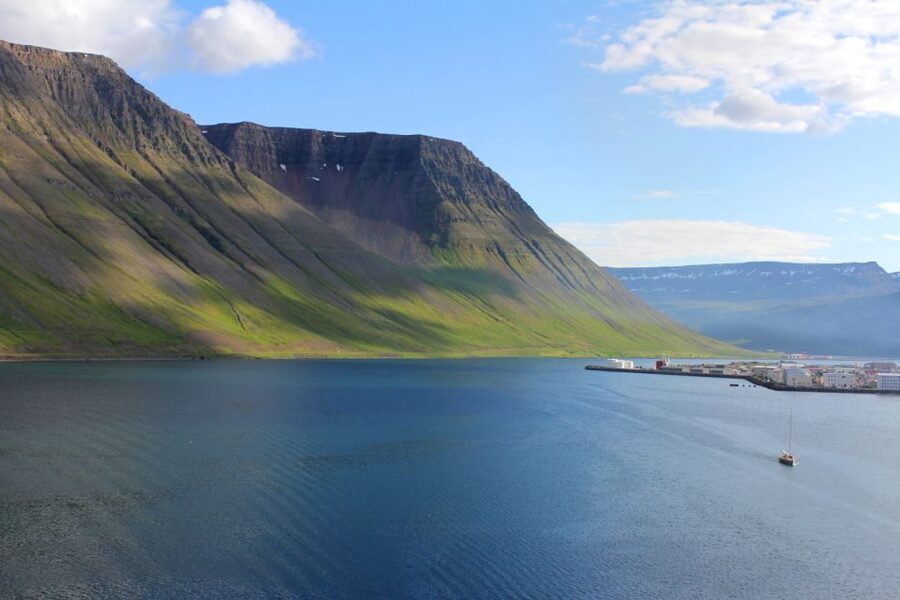
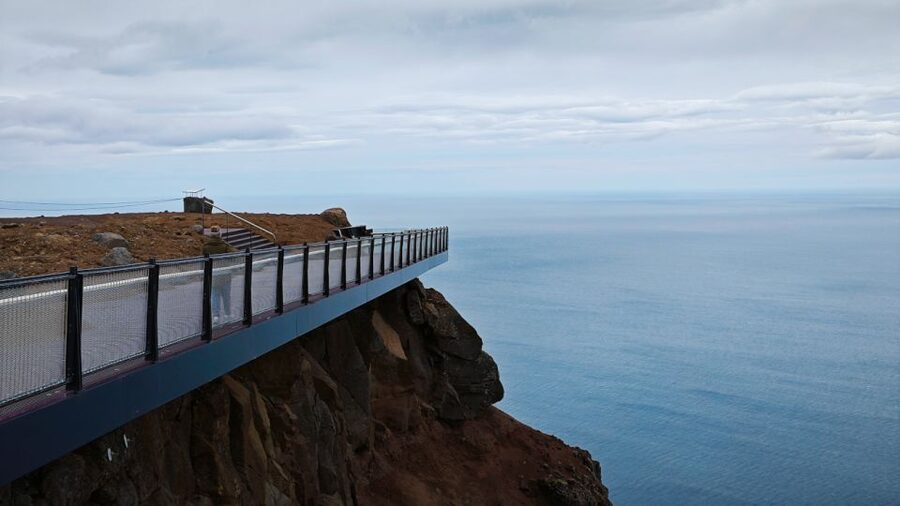
The last day starts high at Bolafjall, a 638-meter mountain with a viewing platform built over steep cliffs. The skywalk is designed for wide views, so clear weather makes a big difference. On a cloudy day, the experience may be more about standing above the cliffs than seeing far across the region.
This stop requires sensible clothing and footwear. Wind can be strong at exposed viewpoints, and the weather can shift quickly in Iceland. The tour operates in all weather, but road and safety conditions can affect what you see and how long you stay.
At Ósvör Fishing Village, you visit a collection of turf-roofed buildings that show the look of an old fishing settlement. The small scale makes this stop easy to understand. You can see how closely life in the Westfjords was tied to the sea, the weather, and the limited shelter offered by the coast.
Nearby Óshólaviti Lighthouse adds another coastal marker. Together, the fishing village and lighthouse provide a useful counterpoint to the grand mountain views. The Westfjords are not only about dramatic scenery. They are also about the people who worked in isolated places with difficult access.
Then comes the Seven Fjord Road, one of the best reasons to choose this tour. The road follows the coastline up and down seven fjords, with repeated views of water, mountains, and glaciers. You are not rushing from one single viewpoint to the next. The road itself becomes the sightseeing.
This is where the minibus matters. You can watch the scenery through the windows, stop at selected points, and let someone else handle the route. The road is long, so motion sickness sufferers should prepare carefully and choose a seat that helps them feel comfortable.
The area is also home to Arctic foxes, Iceland’s only native land mammal. Wildlife sightings are never guaranteed, so keep expectations sensible. If you do not see one in the open, the Arctic Fox Center offers a more reliable chance to learn about the species and supports its protection. Entry is included.
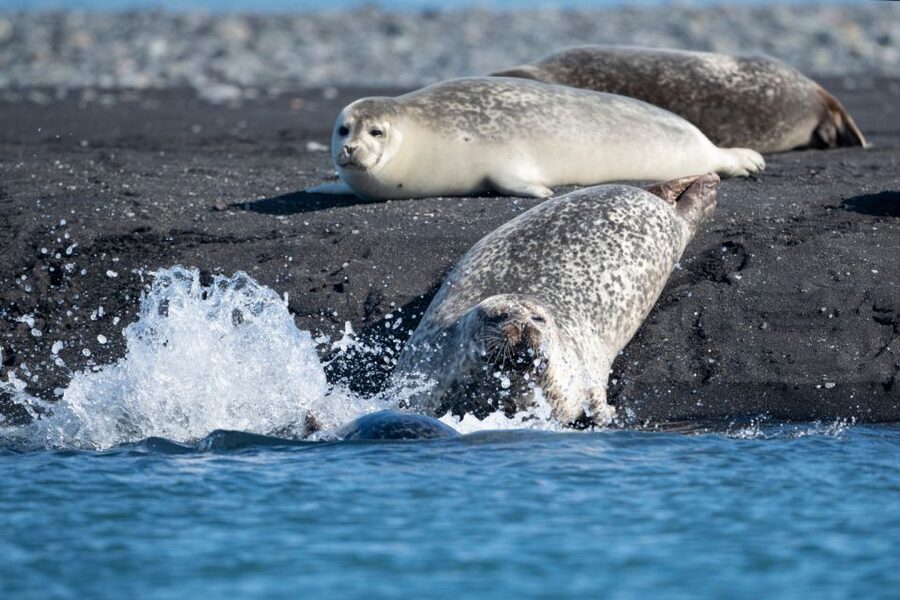
Hvítanes is one of the more accessible places in the Westfjords for spotting seals. You stop to look for them along the shore, though the animals may be distant or absent on the day. Bring binoculars if you have them, but do not treat this as a guaranteed close-up encounter.
The final listed stop is the colorful Grabrok Volcanic Craters. This brings a volcanic note to a trip otherwise shaped by fjords and coastal mountains. It also breaks up the return drive before the minibus continues toward Reykjavík.
Estimated arrival back in the capital is around 20:30. Weather and road conditions can push that later, so avoid booking a tight evening flight or an important late-night plan. A ferry ride may be part of the operating plan, but it can be cancelled for weather or safety reasons. In that case, the group drives to the Westfjords and the ferry fee is refunded.
Same island, a completely different kind of day:
- Reykjavik: Golden Circle Full-Day Tour with Kerid Crater
★ 4.8 · 24,485 reviews - Reykjavik Food Walk – Local Foodie Adventure in Iceland
★ 5.0 · 18,952 reviews - Iceland: Northern Lights Bus Tour from Reykjavik
★ 4.1 · 11,161 reviews - Reykjavík: South Coast Waterfalls, Black Sand & Glacier Tour
★ 4.8 · 11,030 reviews
What the minibus setup means for you
The tour uses a professional English-speaking guide and a minibus for no more than 18 people. That is small enough to feel more personal than a large coach, while still giving you the efficiency of an organized route.
Guide quality can shape a trip like this. David is described as an adventurous, nature-loving guide, and Halldor is noted for making the sights more interesting. You should expect guiding that adds context to the scenery rather than simply pointing out the next stop.
Wi-Fi is available on the bus, and every seat has a USB charger. These are small comforts, but they matter on long drives. You can use the travel time to check maps, message home, or keep your phone charged for photos.
Pickup and drop-off are included within Reykjavík, from your hotel or the nearest approved meeting point. The city center has restrictions on bus access, so a short walk to a designated stop may be required. The pickup location is confirmed within 24 hours of booking.
Food, rooms, weather, and the real cost
Two nights of accommodation are included in private rooms with en-suite bathrooms and breakfast. That is a useful level of comfort after long days in the minibus. If you travel alone, a single-room supplement is mandatory, which raises the actual price.
Lunch and dinner are not included. Scheduled stops let you buy meals or snacks, but you should budget for them separately. The same applies to the optional Krosslaug swim, where the contribution is voluntary, and to any other swimming pool visit. Bring swimwear and a towel if you want the option.
Pack for changeable conditions:
- Warm layers
- Windproof and waterproof outerwear
- Sturdy walking shoes
- Swimwear and a towel
- Snacks and a refillable water bottle
- Binoculars, if bird and seal spotting matter to you
The tour runs in all weather, but that does not mean every stop will look the same in every condition. The Westfjords are most rewarding when you accept that clouds, rain, wind, and sudden clear spells are part of the setting.
Who should book this Westfjords trip?
I would choose this tour if you have only three days, want to see the Westfjords without driving, and prefer a planned route with a guide. It suits photographers, bird watchers, first-time visitors to Iceland, and anyone who values remote scenery more than nightlife or luxury facilities.
It is also a good match if you want more than the standard Reykjavík and Golden Circle circuit. Dynjandi, Látrabjarg, Rauðasandur, Bolafjall, and the Seven Fjord Road give you a strong introduction to the region in a short window.
I would hesitate if you dislike long drives, need a flexible daily schedule, or want to spend hours hiking at each stop. The tour covers a great deal of ground, and some days will feel full from morning until evening.
Should you book it?
Book this three-day Westfjords tour if your priority is access. You get remote roads, major waterfalls, bird cliffs, colorful beaches, seals, fox conservation, and fjord views without arranging the route yourself. The private rooms, breakfasts, charging points, and small group help justify the price.
Before booking, make sure you are comfortable with the long road days and the late return to Reykjavík. Pack for rough weather, keep your food plans practical, and leave room for schedule changes. For a short, focused look at Iceland’s wild western edge, this is a strong choice.
FAQ
How long is the tour?
The tour lasts three days and includes two nights of accommodation.
Where does pickup take place?
Pickup is included within Reykjavík, from your hotel or the nearest approved meeting point. Parts of central Reykjavík restrict bus access, so some hotels use designated bus stops. The exact location is confirmed within 24 hours after booking.
What time is pickup?
Pickup takes place between 08:30 and 09:00. You should be ready at your pickup location from 08:30.
What language is the tour conducted in?
The live tour guide speaks English.
How many people are in the group?
The tour is limited to 18 participants and operates by minibus.
Are meals included?
Breakfast is included with the accommodation. Lunch and dinner are not included, but scheduled stops allow you to buy meals, snacks, and drinks.
Is the Krosslaug swimming pool included?
The visit to Krosslaug is optional. A voluntary cash donation to the Westfjords Youth Society is requested, and you must bring your own swimwear and towel.
What happens if the ferry is cancelled?
The ferry may be cancelled because of weather or safety conditions. If that happens, the group drives to the Westfjords and the ferry fee is refunded.
Just added around Reykjavik
- Reykjavik: Whale and Puffin Watching RIB Boat Tour★ 4.6 · 179 reviews
- Reykjavik: Whale Watching Express★ 4.3 · 227 reviews
- Reykjavik: Whale Watching & Lava Show★ 5.0 · 4 reviews
- Reykjavik: Whale & Marine Adventure Tour★ 4.3 · 71 reviews
- From Reykjavík: Viking Horseback Tour in Hafnarfjörður★ 4.9 · 112 reviews
- Reykjavík: Horse Riding Tours★ 4.9 · 127 reviews
- Luxury Private Transfer from Reykjavik to Keflavik Airport★ 5.0 · 9 reviews
- Winter South Coast Day Tour by Minibus from Reykjavik★ 5.0 · 109 reviews
3-Day Experiences, compared.
3-Day Ice Cave, South Coast, Golden Circle and Northern Lights
Read our review →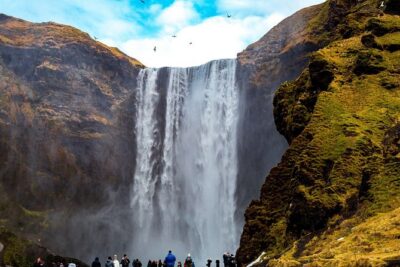
3-Day Golden Circle, Ice Cave and Glacier Lagoon Small-Group Tour
Read our review →
3-Day Golden Circle, South Coast, & Glacier Tour
Read our review →
3 Day Summer South Coast, Golden Circle and Jökulsarlon glacier lagoon
Read our review →
3-Day Golden Circle, South Coast & Ice Cave – Small Group Tour
Read our review →
Iceland 3-Day Tour Golden Circle, Glacier Lagoon, & Ice Cave
Read our review →
3 Day Tour Jokulsarlon – Golden Circle – South Coast – Glacier Hike – Boat Tour
Read our review →Browse the lists this tour appears in